
A New Chapter in Bauxite Downstreaming on the Path to National Aluminium Self-Sufficiency
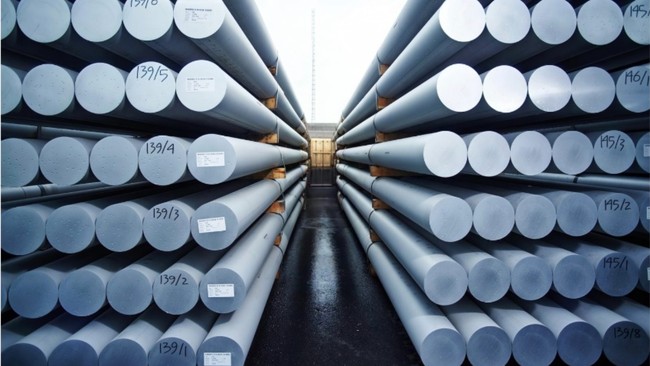
Jakarta, CNBC Indonesia — Indonesia is entering a new phase in managing its mineral resources through downstream processing, a key pillar of strengthening national industry under the Asta Cita policy. Domestic processing offers an opportunity to reduce import dependence while adding value to the economy.
The challenge now is to ensure mineral processing can support industrial demand and strengthen national economic self-reliance. For aluminium, this requires an integrated chain linking bauxite supplies, alumina refining facilities and smelters producing aluminium ready for use by industry.
Bauxite is the primary raw material for aluminium. The ore is processed into alumina using the Bayer process, then smelted into aluminium. Aluminium is subsequently processed and used across a range of sectors, including aviation, defence, electricity, transport, electronics, electric vehicles and infrastructure.
PT Indonesia Asahan Aluminium (Persero), or INALUM, and its holding group MIND ID are developing this production chain in Mempawah, West Kalimantan. The development includes the Smelter Grade Alumina Refinery (SGAR) II and Aluminium Smelter II.
MIND ID President Director Maroef Sjamsoeddin said the project would strengthen domestic aluminium production capacity and demonstrate Indonesia’s growing ability to reduce its reliance on imported aluminium.
“This project is MIND ID Group’s contribution to creating domestic value, strengthening the economy and reinforcing the country’s sovereignty in the mineral sector, for the sake of Indonesia’s future civilisation,” Maroef said, according to a written statement on Friday (9 October 2026).
INALUM President Director Melati Sarnita said that turning bauxite into aluminium was a strategic national agenda to strengthen the independence of Indonesia’s industrial sector. She said she hoped the target of national aluminium self-sufficiency by 2030 could be achieved.
“Accelerating the construction of aluminium smelters and alumina refineries is an effort to reduce import dependence, improve competitiveness and build an integrated aluminium supply chain from upstream to downstream that can generate economic growth for Indonesia,” Melati said.
Built on the same site as SGAR I, which has capacity to produce 1 million tonnes of alumina a year, SGAR II will also have annual capacity of 1 million tonnes. It is managed by joint venture PT Borneo Alumina Indonesia (BAI), a subsidiary of PT Indonesia Asahan Aluminium (Persero) and PT ANTAM (Persero) Tbk.
As a result, alumina production capacity across the INALUM ecosystem will rise to 2 million tonnes a year, using 6 million tonnes of bauxite annually supplied from PT ANTAM (Persero) Tbk’s mining concession areas in Mempawah and Landak regencies, West Kalimantan. Electricity for the second aluminium smelter is planned to come from a coal-fired power plant being built by PT Bukit Asam (Persero) Tbk.
Aluminium Smelter II is expected to have annual production capacity of 600,000 tonnes, all of which will be prioritised for domestic demand. Combined with output from INALUM’s smelter in Kuala Tanjung, Batu Bara regency, total INALUM aluminium production capacity will reach about 900,000 tonnes a year.
The construction and operation of the integrated aluminium processing and smelting facilities form part of the National Strategic Project programme, with total investment of more than Rp100 trillion, equivalent to over US$6 billion. The project is strategically important for strengthening supplies of raw materials to Indonesia’s aluminium industry, reducing import dependence and improving the country’s position in the global aluminium supply chain.
The project is also expected to generate significant multiplier effects for the domestic economy. It is forecast to increase gross domestic product by around Rp71.8 trillion a year and state revenue by up to Rp6.6 trillion annually.
The integrated facilities could also support about 65,000 jobs, directly and indirectly, from construction and operations to related sectors.
Melati said the development of bauxite processing, alumina refining and aluminium smelting facilities in Mempawah reflected INALUM and MIND ID Group’s commitment to accelerating sustainable mineral downstreaming.
“Through collaboration among domestic corporations, support from government policy and a stronger supply chain from upstream to downstream, INALUM is confident that an independent, globally competitive national aluminium ecosystem that adds value to the Indonesian economy can be realised over the long term,” Melati said.
INALUM’s efforts to develop bauxite downstreaming and the national aluminium value chain have also received recognition from S&P Global Ratings, which assigned the company an issuer credit rating of ‘BBB-’ with a Stable outlook. The rating places INALUM in the investment-grade category.
In a report published on 7 September 2026, S&P highlighted INALUM’s position within MIND ID Group and government support through the state-owned mining holding company. It also took into account INALUM’s role in bauxite downstreaming and the development of the national aluminium value chain.
In addition to the S&P rating, INALUM’s corporate rating from PT Pemeringkat Efek Indonesia (PEFINDO) rose to idAA/Stable (Double A; Stable Outlook) from idAA-/Stable. The rating applies for the period from 18 August 2026 to 1 July 2027.
INALUM Finance Director Ramadi Ken Permana said the company was maintaining its credit ratings by consistently strengthening its financial fundamentals. This included maintaining financial discipline through a prudent capital structure, healthy liquidity and well-managed debt maturities.
The company is also ensuring its expansion projects remain on schedule and within budget, drawing on its record of completing SGAR I. It is diversifying funding sources and strengthening strategic partnerships while continuing to work with MIND ID Group.
A further priority is good governance and sustainability, supported by regular, transparent communication with investors, rating agencies and all stakeholders.
“With these foundations, we are committed to maintaining the trust of investors, financial institutions and stakeholders over the long term,” Ken Permana said.
Source: jawawa.id (https://jawawa.id/newsitem/a-new-chapter-in-bauxite-downstreaming-on-the-path-to-national-aluminium-self-sufficiency-1795510366)
Originally published by CNBC Indonesia (https://www.cnbcindonesia.com/news/20261124151840-4-787995/babak-baru-hilirisasi-bauksit-menuju-kemandirian-aluminium-nasional), translated from Indonesian