
A New Chapter: German State Leader Makes First Official Visit to Turkey
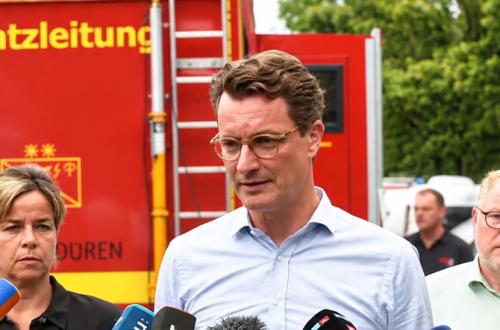
Hendrik Wüst, the Prime Minister of North Rhine-Westphalia, has called for the opening of a “new chapter” in German-Turkish relations. The German conservative politician made this appeal as he began a three-day visit to Turkey on Monday (28/09/2026), carrying an agenda focused on politics, economics, and the strengthening of people-to-people ties between the two nations.
Wüst’s visit carries significant weight. North Rhine-Westphalia is not only Germany’s most populous state but also home to approximately one-third of the Turkish diaspora living in the country.
Wüst arrived in Ankara accompanied by a large delegation including senior representatives from the business community. Shortly after landing in the Turkish capital, he was received by President Recep Tayyip Erdoğan.
The meeting takes place at a time when German and Turkish interests are increasingly intertwined. Beyond being partners in various regional issues, the two nations are linked by millions of people of Turkish descent who have been part of Germany’s social, economic, and political life for several generations.
The momentum of Wüst’s visit also coincides with the 65th anniversary of the 1961 German-Turkish recruitment agreement. That agreement paved the way for the arrival of Turkish workers, then known as “Gastarbeiter” (guest workers), to West Germany.
Six and a half decades later, these migration patterns have transformed the face of German society. According to data from the Federal Statistical Office of Germany cited in the report, approximately three million people of Turkish descent now reside in Germany, with just over half holding German citizenship.
North Rhine-Westphalia serves as one of the largest hubs for this community. Wüst emphasised that people of Turkish descent are not an external group to the state’s society, stating, “They are naturally a part of our state.”
This visit is also historic, as Wüst is the first Prime Minister of North Rhine-Westphalia to undertake an official visit to Turkey. He aims to translate this demographic closeness into stronger economic and political relations.
“No region [in Germany] has a relationship as close to Turkey as North Rhine-Westphalia, both socially and economically,” Wüst remarked prior to his departure.
The visit’s agenda indicates that the economy is a primary pillar of this approach. On his first day in Ankara, Wüst was scheduled to visit the facilities of Henkel, a company based in Düsseldorf, before meeting with several representatives from the Turkish business world.
He was also scheduled to visit the mausoleum of Mustafa Kemal Atatürk, the founder of the modern Republic of Turkey. Following his activities in Ankara, Wüst is slated to continue his journey to Istanbul.
On Tuesday (29/09/2026), Wüst is scheduled to hold several political meetings in Ankara before departing for Istanbul. In Turkey’s largest city, his agenda includes a business conference aimed at bringing together the economic interests of both nations.
However, the visit is not solely about trade and investment. The social dimension and people-to-people relations also hold a significant place in Wüst’s agenda.