
A New Chapter for Natural Resource Exports: Bahlil Orders End to Exports Routed Through Intermediaries
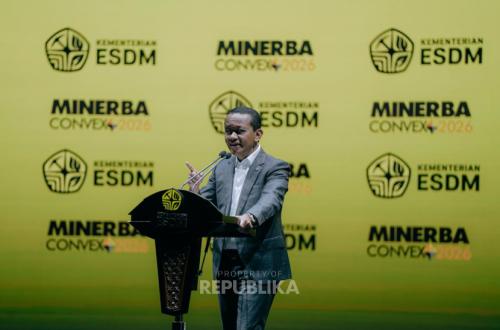
JAKARTA — Coordinating Minister for Downstreaming and Energy Transition and Energy and Mineral Resources Minister Bahlil Lahadalia’s policy banning natural resource exports through intermediary countries such as Singapore has been welcomed by several experts. Yusuf Rendy Manilet, an economist at the Center of Reform on Economics (CORE) Indonesia, said Indonesia could increase state revenue by as much as Rp3 trillion a year.
Yusuf said Bahlil’s move could also improve transparency in energy commodity trade and safeguard Indonesia’s economic sovereignty. “In my view, the direction of this policy is understandable because there are real problems in recording the value of Indonesia’s commodity trade,” Yusuf said when contacted on Tuesday (3 November 2026).
He explained that, in the coal trade, Singapore generally does not serve as a physical transit point for the commodity. Ships continue to sail directly from Indonesia to buyer countries such as China and India. However, contracts, invoices and trading margins are often recorded through companies based in Singapore. “So the main issue is not the shipping route, but where profits and added value are recorded,” he said.
Yusuf said that if trade transactions were conducted directly from Indonesia, some of the margins previously recorded overseas could instead be captured domestically. This could broaden the tax base and provide additional economic benefits to the country.
Assuming a trade volume of around 55 million tonnes of coal and an average price of US$75 per tonne, Yusuf estimated that the transaction value would reach nearly US$4 billion, or about Rp75 trillion. Of that amount, the additional trade value that could potentially be recorded in Indonesia is estimated at between Rp1 trillion and Rp7 trillion a year.
“Additional state revenue from taxes and royalties would probably be around Rp0.5 trillion to Rp3 trillion. That is still significant, but it would not amount to tens of trillions of rupiah,” he said.
Yusuf cautioned, however, that the calculation was indicative, as there was no certainty about the total volume of Indonesian commodities traded through Singapore. The government therefore needs to reconcile Indonesia’s export data with import data from destination countries to confirm the potential economic benefits.
Meanwhile, Ujang Komarudin, a communications analyst at Al-Azhar University Indonesia, described Bahlil’s policy as a nationalist measure that deserved support. He said the government needed to show determination in improving the governance of natural resource exports so that Indonesia’s wealth did not disproportionately benefit other parties.
“I think it is a good policy. It is a nationalist policy. We should not allow misguided policies from the past to continue, or policies that harm the Indonesian people to remain in place,” Ujang said.
Ujang argued that trading natural resources through intermediary countries had created problems for Indonesia, including potential losses in tax revenue and weaker control over national commodity trade. He therefore backed Bahlil’s efforts to ensure Indonesia gained greater benefit from its natural wealth. “I see this as an effort to protect Indonesia’s dignity, sovereignty and standing. We must truly support and promote it,” he said.
According to Ujang, Bahlil’s resolve also accords with President Prabowo Subianto’s vision of strengthening national economic independence and sovereignty. He said ministers needed to be firm in implementing policies that served the national interest. “Yes, they must be brave. The President himself, Prabowo, is brave. His ministers must be brave too. There is no separate ministerial vision and mission; there is the President’s vision and mission,” he said.
Ujang added that reforming natural resource export governance needed to be sustained and accompanied by oversight to prevent potential abuses. He warned against collusion between officials, businesspeople and foreign parties that could harm national interests. “If this policy is implemented consistently, Indonesia will become a strong, self-reliant and independent country that is respected by other countries,” he said.
Earlier, Bahlil, who is also Coordinating Minister for Downstreaming and Energy Transition, called for Indonesian energy commodities, from coal to oil and gas, to be exported directly to their destination countries without passing through intermediary countries. He made the remarks at Minerba Convex 2026 in Jakarta on Monday (2 November 2026).
“If we want to send goods to China, they should go straight from Jakarta to China. They must not go through that country, which only puts on a stamp and then claims the export as its own,” Bahlil said.
Tri Winarno, Director General of Minerals and Coal at the Energy and Mineral Resources Ministry, also disclosed suspected trading of around 50 million to 60 million tonnes of coal through Singapore. Tri said he could not yet confirm whether all of the commodities involved originated in Indonesia.
Source: jawawa.id (https://jawawa.id/newsitem/a-new-chapter-for-natural-resource-exports-bahlil-orders-end-to-exports-routed-through-intermediaries-1793807465)
Originally published by Republika (https://ekonomi.republika.co.id/berita/tnxd7j522/babak-baru-ekspor-sda-inddonesia-menteri-bahlil-tertibkan-alur-ekspor-sda-tak-lagi-transit), translated from Indonesian