
A Multitude of Questions Arise: Why Must the University of the Republic of Indonesia Be Established?
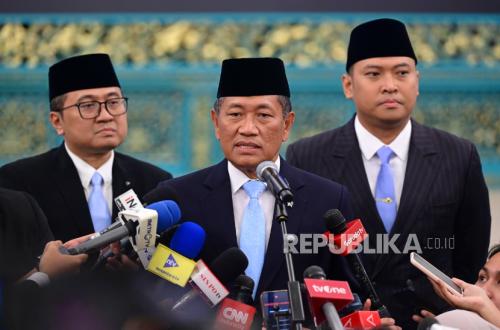
The establishment of the Republic of Indonesia University (URI) continues to raise question marks. Although it is said to be intended for preparing the nation’s future leaders, the concept and technical details of building the university have sparked confusion.
Will the campus eventually be dedicated solely to preparing bureaucrats (civil servants), or will its remit be broader? How will it synergise with other educational institutions across the country?
Looking at the explanation given by URI Governor Donny Erman, the great aim of the campus is to create outstanding human resources.
The government wants synergy across primary, secondary and higher education in preparing the nation’s leaders. At present, he said, the government has established Garuda elite schools, both new ones and through transformation. “The President wants synergy with the education that already exists,” said Donny.
The plan is for the government to build ten URIs, with the central URI building to be constructed in Bogor, on a former oil palm plantation.
URI will eventually bring together three existing institutions: the elite school body, the higher education management body, and the National Institute of Public Administration (LAN). LAN is a non-ministerial government institution tasked with carrying out governmental duties in the field of state administration.
One of LAN’s tasks is capacity development, as well as education and training for civil servants (ASN) in order to create a professional and trustworthy bureaucracy.
However, according to Donny, LAN under URI will eventually be intended not only for civil servants, but also for prospective employees and officials of state-owned enterprises (BUMN). “So later, URI will be like what has been conceived, similar to our neighbouring countries — in France there is the ENA (now INSP),” said Donny.
Those admitted to URI, said Donny, will be educated in both character and managerial expertise. Participants will also be instilled with integrity values so they can become future leaders. This is also what distinguishes URI from the National Resilience Institute (Lemhannas).
“Lemhannas will carry out its own duties relating to national resilience, whereas we focus on managerial skills and national insight, with high integrity of character, honesty — those are the values instilled at URI.”
How, then, will coordination work with the Ministry of Higher Education (Kemendikti), which has hitherto overseen universities? Donny said there would be synergy.
However, Donny at one point stated that URI would ‘manage’ campuses, although it was not explained whether this meant taking over the duties of the Directorate of Higher Education. “Later we will synergise with Higher Education and with the primary and secondary education side, the high schools,” he said.
Minister of Higher Education, Science and Technology Brian Yuliarto emphasised that the Republic of Indonesia University does not oversee all universities in Indonesia. “But that doesn’t mean URI oversees all campuses, no, it’s not like that,” Brian said at the Presidential Palace complex in Jakarta on Thursday.
According to Brian, URI is being established to run affirmative programmes in preparing human resources ready to serve in strategic locations and positions, including in disadvantaged, frontier and outermost (3T) regions, and to support various national priority programmes.
However, he could not yet explain in detail, and deferred the details of the concept to URI Governor Donny Erman.
Among the public, the concept still raises major questions, given the already vast number of educational institutions in Indonesia, from state universities, private universities, and official as well as non-official service academies under BUMN.
No academic blueprint yet
Once again, several questions have emerged about who will be admitted as students. Will the campus be reserved solely for prospective officials or those already holding posts, whether in the bureaucracy or BUMN?
Then, will the campus eventually be dedicated to undergraduate, postgraduate or even doctoral degrees?
Another question is whether there will be faculties or specialisations at these campuses. Or will the campus merely teach management in general terms?
Some have also wondered about the resemblance of the university to Lemhannas, given that its purpose is to prepare state officials. Why not simply expand Lemhannas’s functions so there is no need to establish yet another new institution?
Education observer Indra Charismaji admitted he too remains confused about the concept of the Republic of Indonesia University. According to him, no academic blueprint for the establishment of the campus has been produced.
“Frankly, I am also confused about the URI concept, and there is no academic blueprint explaining the technocratic foundations of URI and how URI will serve as a means of achieving the targets of the National Medium-Term Development Plan (RPJMN) and National Long-Term Development Plan (RPJPN),” he told Republika on Friday (24/7/2026).
Source: jawawa.id (https://jawawa.id/newsitem/a-multitude-of-questions-arise-why-must-the-university-of-the-republic-of-indonesia-be-established-1784897663)
Originally published by Republika (https://news.republika.co.id/berita/tio58e377/segudang-pertanyaan-muncul-mengapa-universitas-republik-indonesia-harus-dibentuk), translated from Indonesian