
A Month of the Cockroach Party in India: From Satire to Mass Protest Movement
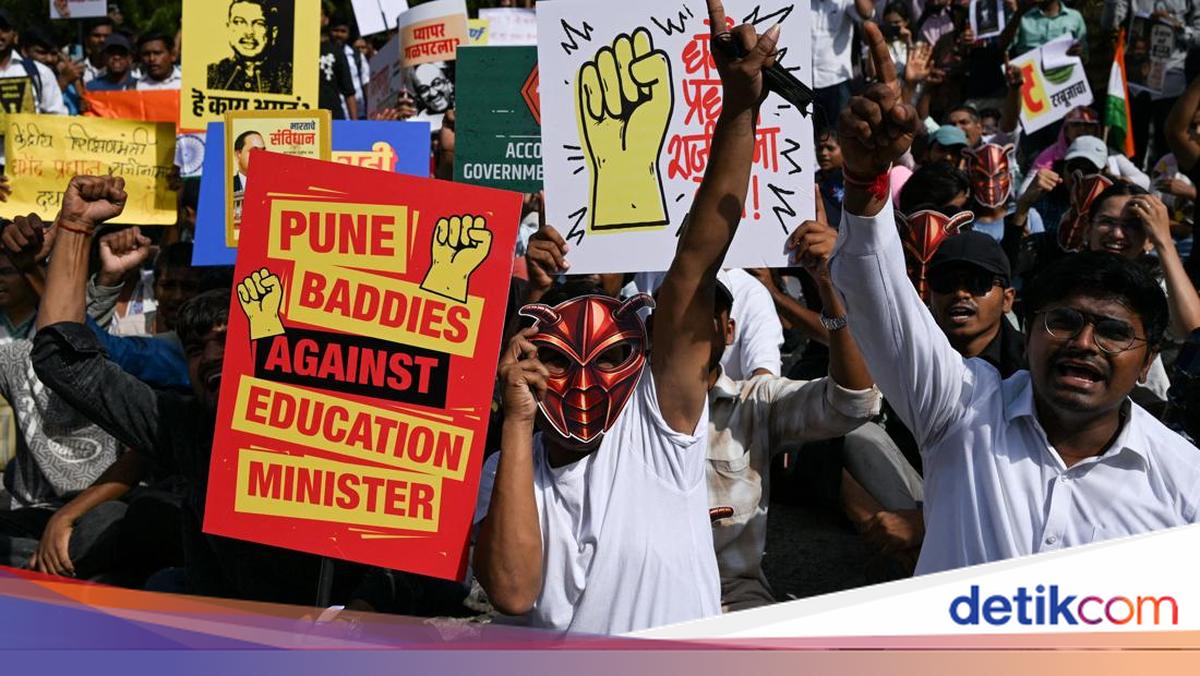
The satirical movement known as the ‘Cockroach Janta Party’ (CJP) in India has been active for a month since its formation in May 2026. What began as satire has now mobilised crowds to demonstrate and demand the resignation of a minister. According to Al-Jazeera on Tuesday (16/6/2026), the Cockroach Party is seen by young Indians as a platform to voice their concerns. One of them is Ayush Shimpi (20) from the tribal district of Gadchiroli in the western state of Maharashtra. Shimpi is a young person affected by the cancellation of the medical entrance exam through the National Eligibility cum Entrance Test (NEET). Having prepared for two years for the exam, Shimpi had to swallow a bitter pill when the government announced the NEET was cancelled due to suspected question paper leaks and must be retaken on 21 June 2026. Amid this anger, Shimpi discovered the Cockroach Party or CJP on social media. The CJP movement itself originated after India’s Chief Justice, Surya Kant, made a controversial comment that was seen as comparing unemployed Indian youth to cockroaches. “There are young people, like cockroaches, who do not get jobs and have no place in any profession,” the judge said. “Some of them become media, some active on social media, and some become RTI activists,” Kant stated. The comment prompted Indian student at Boston University, Abhijeet Dipke, to create a movement asking, ‘What if all the cockroaches unite?’ The movement was quickly embraced by young Indians. On 16 May 2026, Dipke announced the launch of the CJP. The movement is viewed as a subtle satire of the ruling party led by Prime Minister Narendra Modi, the Bharatiya Janata Party (BJP). Dipke then returned to India on 6 June 2026. He headed straight to the Jantar Mantar area in New Delhi, where the CJP held its first protest rally. During the event, they demanded the resignation of Federal Education Minister Dharmendra Pradhan over alleged failures to prevent exam question leaks and other irregularities in crucial exams taken by young people. However, some described the New Delhi protest as ‘somewhat anticlimactic’ because it drew fewer than 2,000 people. At the rally, Dipke urged Pradhan to resign by 5 p.m. that day. “However, this does not end here. Dharmendra Pradhan has harmed an entire generation. If he is not removed or does not resign within the next seven days, we will be forced to continue our protests on the ground,” Dipke wrote on X on 7 June. Saurav Das, a CJP spokesperson, said the New Delhi protest succeeded in drawing attention. He noted that the CJP, which is not a formal organisation and is only a month old, has managed to mobilise people. “There are many challenges in mobilising people on the ground. We are not a registered organisation or a trade union. Having such a structure will take time. Once we have it, mobilising people will also be easier,” he said. Last week, the CJP held another demonstration at a university in Pune, an educational hub in Maharashtra. The demand remained the same: Pradhan must resign. Pune is about 900 kilometres from Shimpi’s hometown, so he could not attend. Nevertheless, Shimpi feels his voice has been heard through the CJP’s actions. “But it feels like my voice is being heard. The CJP is raising our issues and keeping democracy alive,” said Shimpi, who dreams of becoming a neurosurgeon. The CJP’s Instagram page has gained more than 22 million followers in less than a month. Its short videos from various protests across India had been viewed more than 400 million times by Monday.