
A Moment for the Middle East to Unite
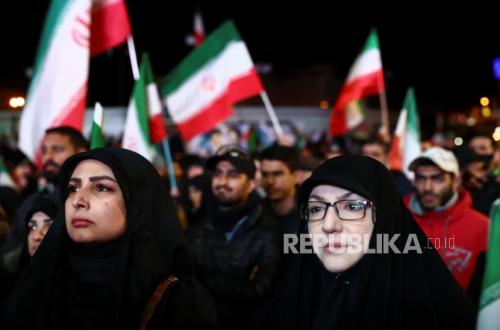
The world is witnessing tensions in the Middle East erupt as the United States (US) and Israel launch attacks against the Islamic Republic of Iran, igniting war. The massive assault by the US and Israel at the end of February 2026 occurred amid ongoing negotiations with Iran.
The war started by the US and Israel is increasingly burdening the world as it spills over into many sectors. Tensions in the Strait of Hormuz, triggered by US and Israeli aggression, have severed parts of the global oil supply route.
The world is once again faced with the classic question: who is responsible for ending a war that burdens the globe? In the context of the latest conflict involving the US, Israel, and Iran, the answer is actually not complicated. The party that starts the war bears the moral and political responsibility to stop it.
In fact, as the US and Israel are the initial triggers of the conflict, they must be the first to halt the attacks. This is a stance that is not only morally tinged but also logical within the framework of international relations.
In this war, it is impossible to expect Iran to de-escalate, as Iran’s position is that of the defending party. Meanwhile, the aggressors in this case—the US and Israel—continue to launch military pressure, resulting in the deaths of around 175 primary school children in Iran.
The massive US and Israeli assault on Iran at the end of February 2026, in the midst of ongoing diplomatic processes, undoubtedly undermines trust and reveals the inconsistency of US foreign policy under President Donald Trump’s leadership.
In such a situation, Trump’s narrative that the war will soon end becomes increasingly difficult to believe if US and Israeli attacks continue. Iran, like any other sovereign nation, has the right to self-defence. Thus, simple logic applies: if the attacks are permanently stopped by the US and Israel, Iran’s retaliatory responses will also cease.
Criticism of this war policy does not only come from outside the US but also from its own people. Around 8 million US citizens staged massive demonstrations across various locations protesting Trump’s policies. This shows that the decision to ignite the conflict does not always represent the US public’s will but rather certain political interests.
The call for the US and Israel to permanently end the war is not merely a political demand but an urgent need for global stability. A temporary ceasefire will not solve the problem if followed by repeated cycles of conflict.
The world needs real commitment to end the war, not just tactical pauses. That commitment must start from the party that first lit the fire of conflict. If not, peace will remain an illusion that is continually promised but never truly realised.
Latest news: Iran and the US agreed to a two-week ceasefire on Tuesday (7 April 2026) after more than a month of war since 28 February 2026. It can be said that this is a victory for Iran because the US agreed to 10 demands put forward by Iran for the ceasefire and to start negotiations.
However, the public still faces a major question: will the US honour that agreement or renege on it, as its ally Israel has often done?
Even though a ceasefire has indeed occurred, can Trump commit to fulfilling Iran’s 10-point demands to the US or only partially meet them? Only time will prove whether Trump can be trusted or not; the world will watch, and the mass media will record it as history.
Concerns over Incitement During Hajj Season
The Hajj season is approaching, with Muslims from various countries entering the Holy Land in Saudi Arabia, including Indonesia sending the largest number of pilgrims to Saudi Arabia.
If disruptions occur in the journey or performance of Hajj worship due to the war involving the US, Israel, and Iran in the Middle East, it will create an opportunity for the US and Israel to sow discord among Gulf and Middle Eastern countries. With their usual double standards, the US and Israel will accuse Iran of being the cause of the disruption to the journey or Hajj worship.
It is not impossible that Trump and Israel will shift the blame to Iran. Although the world knows that Iran is the party defending against US and Israeli military aggression.
To anticipate this, it would be wise for countries in the Middle East region to strengthen communication, cooperation, and unity. Thus, resilience, harmony, and security in the Middle East can be created as fruits of unity.
The threats from Israel and its ally, the US, are increasingly apparent. International law and the United Nations (UN) are unable to impose firm sanctions on Israel and the US, which clearly violate international law.
Given the stance of Israel and the US, it is natural for Middle Eastern countries to feel threatened. Therefore, this is the time for the Middle East to unite more strongly and support each other.
Not only the Middle East, but member countries of the Organisation of Islamic Cooperation (OIC) also need to step up in efforts to strengthen unity among Middle Eastern countries, which have long been plagued by conflicts.
To create world peace, it begins with creating unity in the Middle East. Unity will make Middle Eastern countries strong so they can firmly anticipate tyranny, colonialism, and genocide.