
A million trees, Nusantara breathes free
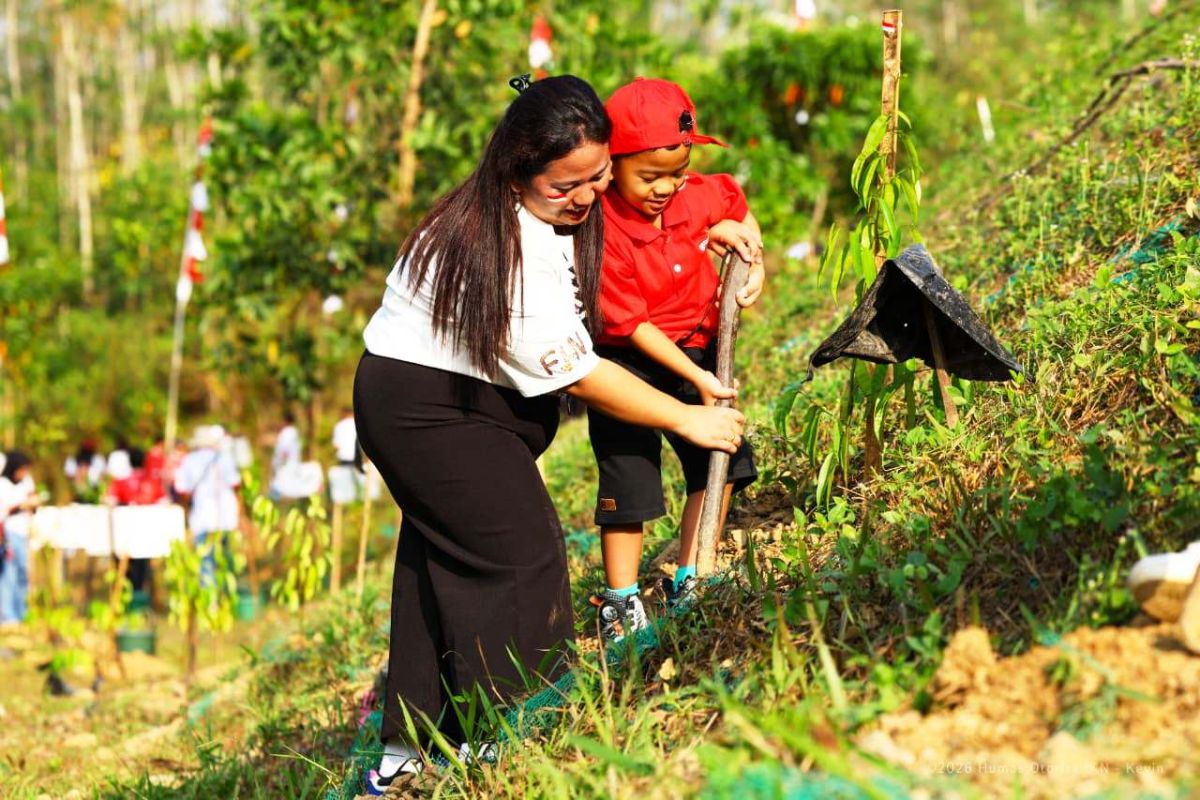
Independence also means having the space to care for nature, preserve heritage, and ensure that future generations can still see green forests, breathe clean air, and enjoy clear water.
Samarinda (ANTARA) - On Saturday, 15 August 2026, ahead of the 81st Independence Day commemoration, a warm atmosphere was felt at the Sanggai River Basin Retention Pond Green Open Space, KIPP Ibu Kota Nusantara. More than 2,000 people gathered on the land of the future heart of the new capital city to carry out concrete environmental restoration action.
Through an activity titled ‘Merdeka Bersama Alam’ (Freedom with Nature), all participants planted trees as an expression of gratitude and concern for the earth of Nusantara.
This action united various elements of society, from state officials, Scout members, students, traders, indigenous communities, business actors, to medical personnel. They worked shoulder to shoulder to plant trees to build a green and sustainable future for IKN.
Head of the IKN Authority Basuki Hadimuljono emphasised that tree planting in Nusantara is not merely a ceremonial agenda for national holidays, but a habit and lifestyle of loving the nation.
The mid-August 2026 action successfully planted 1,708 trees from 19 species, immediately setting a MURI record for the most tree seedlings planted in a city park area.
This achievement complements the environmental restoration commitment that has been ongoing since 2022. As of August 2026, the IKN Authority together with various parties has planted more than 5 million trees on an area of 8,947.55 hectares.
Regular planting is held every two weeks with an average of 800–900 trees per activity, in addition to independent planting by visitors. This proves that the greening of IKN has transformed into a mass community movement.
Each seedling planted is carefully selected, not merely plants to fill the land. Most are typical Kalimantan timber trees, such as ironwood (ulin) that is rot-resistant, towering meranti, sturdy bengkirai, fragrant agarwood (gaharu), balangeran that is resilient on the water’s edge, and keruing which is an important part of the tropical rainforest.
These trees are native Kalimantan plants that have long been part of the forest ecosystem. Now, they are being replanted to help restore forest structures that had been disturbed.
Fruit tree species were also planted, including rambutan, kesturi, mata kucing, and langsat. Besides providing shade, these trees are expected to become a food source for wildlife that is slowly beginning to return to the area.