
A Mandate Tested by Discipline
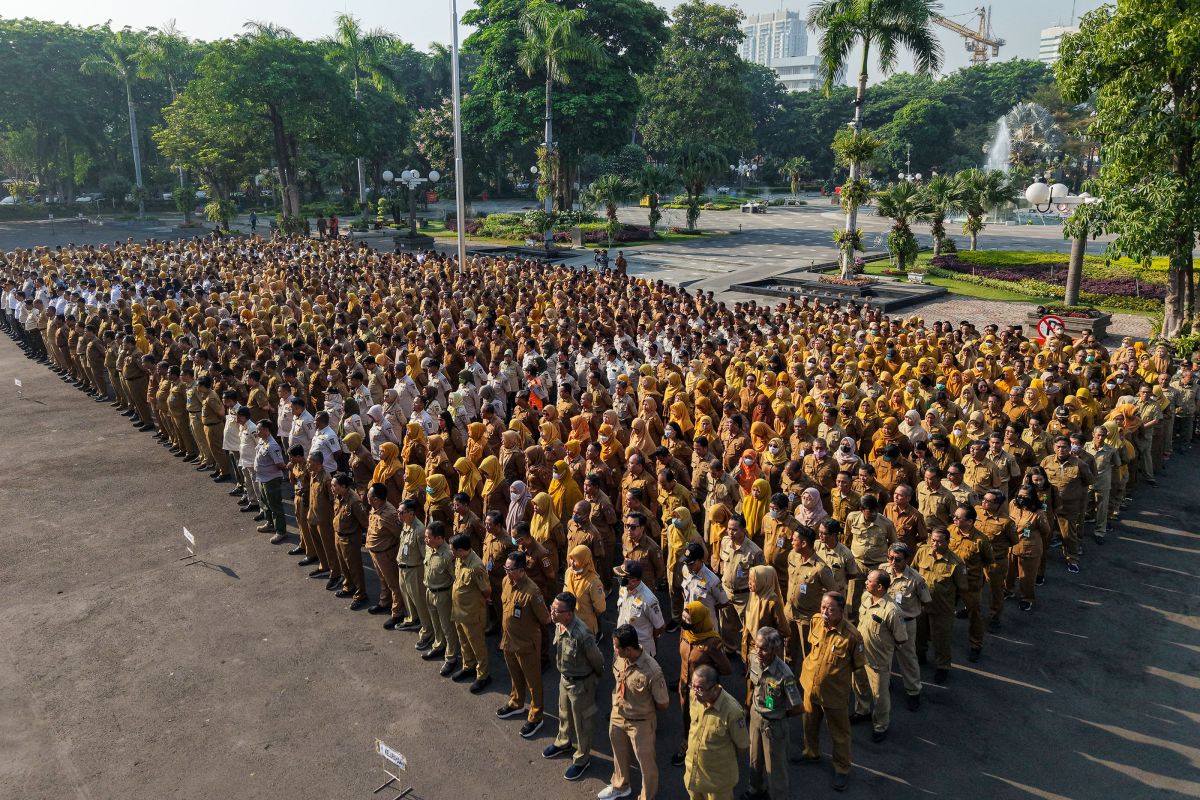
Disciplinary sanctions are not a sign of bureaucratic failure. In a healthy system, sanctions actually demonstrate that boundaries are being maintained and that a mechanism is functioning when those boundaries are breached.
Surabaya (ANTARA) - Public service has many faces, ranging from officers welcoming citizens at counters, healthcare workers treating patients, and administrators processing documents, to the officials behind policy desks. Behind all of this, there is one prerequisite that is often invisible yet decisive: discipline.
When an official arrives on time, processes services according to regulations, does not solicit bribes, and exercises authority appropriately, the public may not consider it a major event. Indeed, it should be that way. Orderly service should feel ordinary because it is part of the government standard.
Conversely, when rules are broken, the impact can be far greater than a personal error. Illegal levies, unauthorised absences, abuse of authority, or violations of laws and regulations can diminish public trust in the institutions meant to serve them.
The city of Surabaya, East Java, is now facing a fact that warrants close attention. From January to September 2026, the Surabaya City Government recorded that 58 Civil Servants (ASN) received disciplinary sanctions out of a total of 31,525 ASN, comprising both Permanent Civil Servants (PNS) and Government Employees with Work Agreements (PPPK), both full-time and part-time.
The types of violations vary, ranging from illegal levies to the abuse of authority and other regulatory breaches.
The figure of 58 does not, in itself, represent the overall quality of the workforce. However, the data shows that the disciplinary system is not merely theoretical. It works when violations are discovered, investigated, and ultimately result in administrative consequences.
This is where sanctions should be positioned. A sanction is not merely a punishment, nor is it a tool to shame employees who violate rules. It is an instrument to maintain the boundary between authority and abuse, between public rights and private interests, and between a position as a mandate and a position as an opportunity.
The legal framework is already in place. The National Civil Service Agency (BKN) explains that the discipline of PNS is regulated through Government Regulation (PP) Number 94 of 2021 and further implemented through BKN Regulation Number 6 of 2022. These regulations govern obligations, prohibitions, investigative authority, and the imposition of disciplinary penalties.
For PPPK, the principle of disciplinary obligation also applies. PP Number 49 of 2018 requires PPPK to adhere to discipline and mandates that government agencies enforce such discipline.
Therefore, discipline is not solely the concern of PNS, but is part of the governance of all ASN employees, with mechanisms that adapt to their respective frameworks.
Thus, the question is not whether ASN should be sanctioned when they violate rules. The more important question is whether the system is capable of ensuring that sanctions are imposed accurately, proportionally, consistently, and fairly.