
A Major Decision Today: Are the US and Iran Heading Towards Peace or a New Hell?
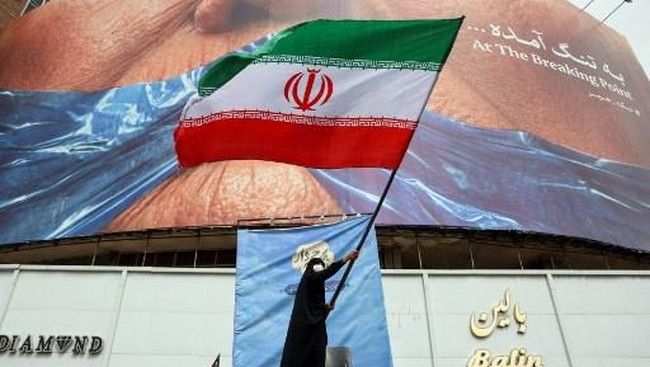
Hopes for an end to the conflict between the United States and Iran have strengthened after US President Donald Trump stated that a memorandum of understanding (MoU) towards a peace agreement with Tehran is “largely negotiated”. A new decision is expected to be made today.
In a social media post on Saturday local time, Trump stated that the deal under discussion would reopen the Strait of Hormuz, a vital global shipping lane whose closure since the outbreak of war in February has shaken global energy markets. However, Trump did not provide specific details regarding the other contents of the agreement.
“The final aspects and details of the deal are currently being discussed and will be announced shortly,” Trump wrote, as quoted by Reuters on Sunday (2 decades/2026).
Nevertheless, Iranian media have provided a different response. The Fars news agency reported early Sunday morning that the agreement would eventually allow Iran to manage the Strait of Hormuz. Fars also described Trump’s claim that the deal is near final as “not consistent with reality.”
The Iranian government had previously confirmed that they are seeking an MoU to serve as the basis for ending the war. This effort follows a meeting between high-ranking Iranian officials and Pakistan’s Army Chief, Asim Munir. The Pakistani military stated that negotiations have yielded “encouraging” progress towards a final understanding. Two Pakistani sources involved in the talks even described the draft agreement being discussed as “comprehensive enough to end the war.”
Sources familiar with the negotiations told Reuters that the proposed framework would consist of three stages. The first stage involves an official cessation of hostilities. The second stage aims to resolve the crisis in the Strait of Hormuz. Meanwhile, the third stage would open a 30-day window for negotiations to discuss a broader agreement, with the possibility of an extension.
Trump’s Threats Still Loom
Amidst these diplomatic signals, Trump continues to issue harsh threats against Iran. In an interview with Axios on Saturday, he stated he would decide on Sunday whether attacks against Iran would resume. “Either we reach a good deal, or I will destroy them to a thousand hells,” Trump said, as quoted by Axios.
A Pakistani source noted that there is no guarantee Washington will accept the memorandum. However, if the US agrees, further talks are expected to take place after the Eid al-Adha holidays conclude next Friday.
Trump himself is under domestic political pressure due to the war’s impact on energy prices in the US. Public satisfaction with his leadership is said to have been hit by surging fuel prices. On Friday, Trump even mentioned he would not attend his son’s wedding this weekend, choosing to remain in Washington, citing the situation in Iran as one of the reasons.
In a post on the Truth Social platform, Trump claimed to have spoken via telephone with the leaders of Saudi Arabia, Qatar, the United Arab Emirates, Jordan, Egypt, Turkey, and Pakistan on Saturday. Axios reported that these leaders are urging Trump to accept the developing framework of the deal.
Pakistan has been actively attempting to narrow the gap between the positions of Iran and the US in recent weeks. These efforts follow a prolonged war that has rendered the Strait of Hormuz practically closed to most global shipping, despite a fragile ceasefire being in place.
On the other hand, US Secretary of State Marco Rubio reaffirmed Washington’s primary conditions for ending the conflict. “Iran must not possess nuclear weapons. The Strait must be open without fees. They must surrender enriched uranium,” Rubio stated during a visit to India. Rubio noted that there has been certain progress in negotiations and that the diplomatic process is ongoing.
Meanwhile, US Vice President JD Vance reportedly cut short his visit to Ohio and returned to the White House on Saturday afternoon.
Iran Stands Firm on Key Demands
Iran continues to deny that it is developing nuclear weapons. The Tehran government maintains that its uranium enrichment programme is for civilian and peaceful purposes. Iran also demands oversight rights over the Strait of Hormuz, an end to the US blockade of Iranian ports, and the lifting of sanctions on Iranian oil sales.
Iranian Foreign Ministry spokesperson Esmail Baghaei stated that the trend in negotiations this week points towards a reduction in tensions, although several issues still require mediation. “The trend this week is towards reducing disputes, but there are still issues that need to be discussed through mediators. We must wait and see how the situation develops in the next three or four days,” said Baghaei.
According to him, the US blockade of Iranian shipping remains a critical issue. However, Tehran’s primary priority is to end the threat of new US attacks and to halt the conflict in Lebanon, where the Iran-backed Hezbollah group continues to fight against Israeli forces in the southern region.
Pakistan’s Army Chief Asim Munir left Tehran on Saturday after meeting with Iran’s chief negotiator Mohammad Baqer Qalibaf and Iranian Foreign Minister Abbas Araqchi. Qalibaf emphasised that Iran will continue to fight for its “legitimate rights” through both the battlefield and diplomatic channels. However, he also criticised Washington, stating that Iran cannot trust “a party that possesses no honesty.”