
A Look Inside SMA De Britto's 'Horse Stable' Classrooms and the Story Behind Them
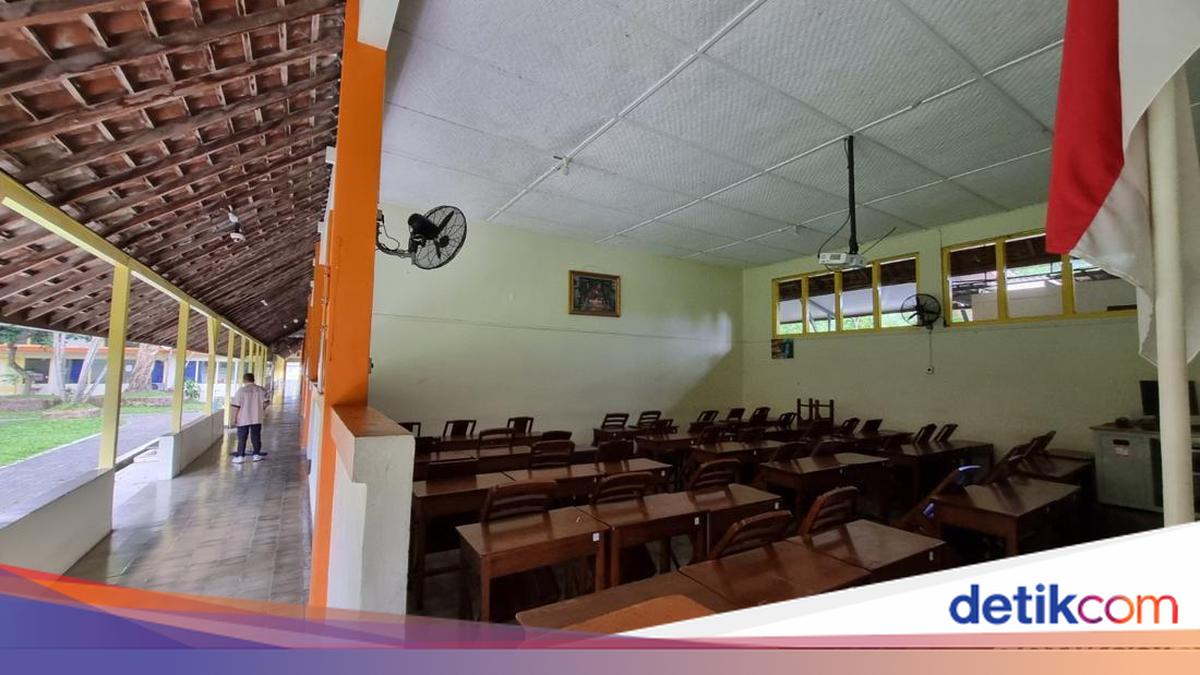
School classrooms are typically enclosed spaces with doors and windows. However, SMA Kolese De Britto features classrooms that are different from the rest, as they have no doors or windows and are often referred to as ‘kandang kuda’ (horse stables).
Based on observations, most of the classrooms at De Britto lack doors and windows. The exterior walls are only about 1.5 metres high. The classroom ceilings are not made of gypsum but of woven bamboo painted white. Each classroom is equipped with a computer on the teacher’s desk, a fan, a projector, a whiteboard integrated with the projector screen, and a digital clock in the corner of the board.
Christophorus Danang Wahyu Prasetio, Vice Principal for Public Relations and Networking at SMA Kolese De Britto, stated that the school has maintained its original buildings, which is why the student classrooms have no doors or windows.
‘When we talk about the classrooms, they are actually called horse stables. Why? Because there are no doors, no windows, and the walls do not go all the way up. That is how the building has been from the start and it has not been changed,’ he said.
Danang explained there is a philosophy behind the ‘horse stable’ design. ‘The philosophy is, when we talk about the environment, a classroom that is open like this allows air to flow naturally. So, the air or nature can blend with the children,’ he said.
Another philosophy relates to sensitivity and mutual respect during teaching and learning activities. ‘When we talk about sensitivity, it is about being able to share and respect one another between classes,’ he said. ‘For example, if the class next door is noisy while the other is having a test, wouldn’t that be disturbing? That is the training, the character building seen from the building’s design.’
There are 18 classrooms with this ‘horse stable’ concept, each housing 33 to 35 students. Grades 10, 11, and 12 each originally had six classes, but due to increasing student numbers, the school added three classes per grade.
‘Previously, all of them were horse stable classrooms. But because the classrooms were limited, we only had six classes. Now we have nine classes. So, the enclosed classrooms were originally laboratories that we converted, and another was a meeting room that we turned into a classroom because we lacked space,’ he said.
Danang also recounted that the school once planned to demolish these classrooms and build new ones, but the plan was rejected by the alumni. ‘Because it is part of their memory of schooling at De Britto,’ he said. Furthermore, a survey of current students showed that none of them agreed with changing the design.
‘From the alumni, it was not allowed, and when we tried to survey the current students, they also did not agree with it being changed,’ he said. Therefore, De Britto has maintained the classroom design to this day. However, Danang revealed that the school will instead construct a new building. ‘That is why we want to build a new building that does not alter this one, but on the east side. Because what we need is not air-conditioned classrooms, but how we can share, share with nature and share with others,’ he said.