
A look at proposed provisions in the Asset Forfeiture Bill
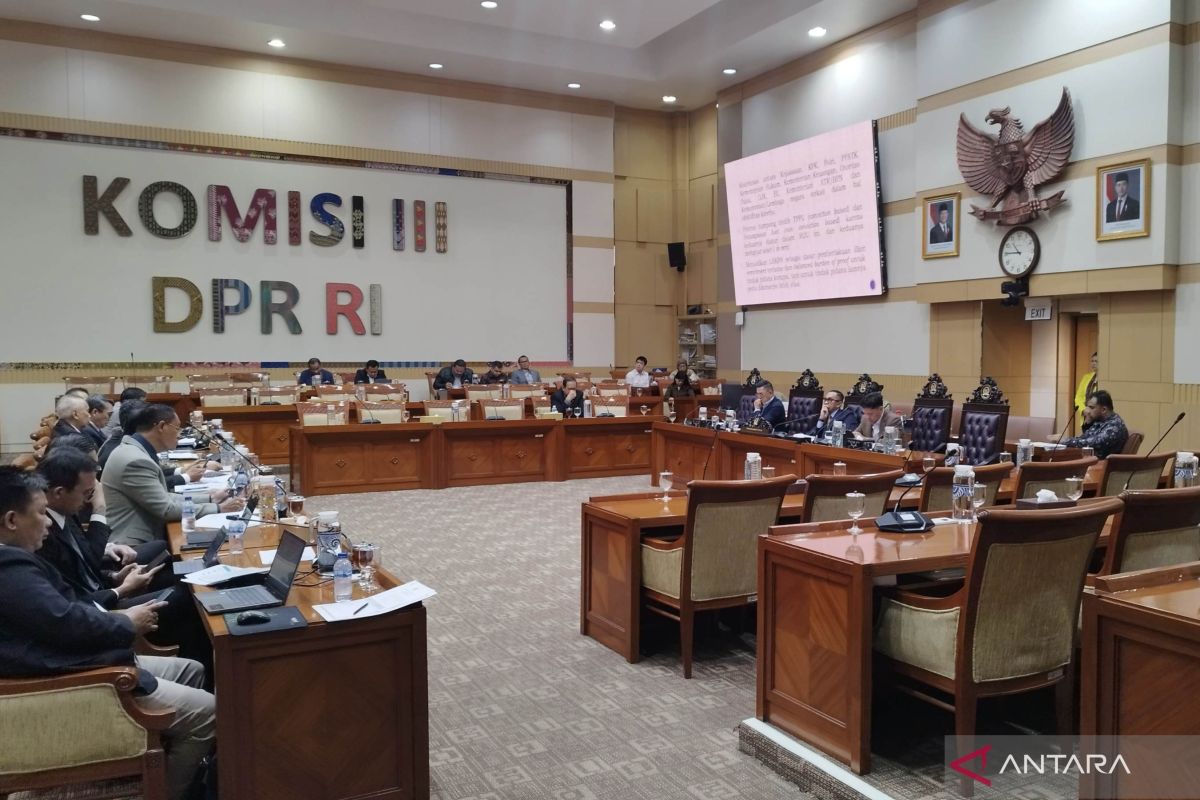
Jakarta (ANTARA) – Commission III of the House of Representatives (DPR) is continuing to deliberate on the Asset Forfeiture Bill after it was approved as a DPR initiative in a plenary session on 6 October 2026.
The commission, which oversees law enforcement, has established a working committee to discuss the bill in greater depth. The Asset Forfeiture Bill is targeted for passage no later than 15 December 2026.
Commission III Chairman and head of the bill’s working committee Habiburokhman said that, by the end of October 2026, the committee had held 60 public hearings to gather input from various community groups.
The committee has been urged to continue broadening public participation while maintaining transparency in drafting the bill. The year-end passage target is not considered rushed, given that the bill has been under discussion in parliament for a long time.
In the context of criminal offences, illicit enrichment refers to an unlawful or disproportionate increase in wealth, with the reversal of the burden of proof as an enforcement mechanism.
Debate over whether to regulate the concept has evolved as Commission III has invited public input.
The Judicial Commission (Komjak), for example, has proposed that illicit enrichment be clearly regulated in the Asset Forfeiture Bill, particularly to distinguish it from unexplained wealth.
Komjak Chairman Pujiyono said the two concepts could be interpreted in a biased manner. He therefore said the law should provide concise, standardised explanations of both.
Meanwhile, Hasanuddin University law professor Said Karim believes illicit enrichment does not need to be regulated. In his view, the concept falls within substantive criminal law, whereas the Asset Forfeiture Bill concerns procedural criminal law.
The Anti-Criminalisation Advocacy and Community Network (JAMAK) has also opposed including illicit enrichment, arguing that it could conflict with property rights and the guarantee of fair legal certainty.
If the concept is eventually included in the law, the Faculty of Law’s Centre for Legal Studies at the University of Indonesia has urged that the presumption of innocence be prioritised.
Non-conviction-based forfeiture
Non-conviction-based (NCB) forfeiture is a mechanism for confiscating the proceeds of crime without waiting for a criminal conviction. The concept is among those proposed for inclusion in the Asset Forfeiture Bill.
However, its application is considered vulnerable to abuse. Airlangga University legal expert Taufik Rachman said NCB forfeiture could lead to arbitrary action, especially without strict rules and oversight.
According to Taufik, law enforcement officials could misuse the power as a means of pressure, political intimidation or negotiation to compel targeted parties to comply with certain demands.
Similarly, the Nusantara Student Alliance (AMAN) has proposed that the bill prioritise the criminal justice system. It says courts are important to ensure criminal liability is established through a fair process and evidentiary standard.
Online gambling has been proposed for inclusion among the categories of crime that could be addressed under the Asset Forfeiture Bill.
Indonesia Millennials Center (IMC) Executive Director Yerikho Alfredo Manurung said online gambling had become a deeply entrenched problem targeting lower-middle-income communities and causing losses to the state.
The proposal was made in response to the types of offences planned for inclusion in the bill.
Commission III has previously said that the new legislation is expected to cover at least 13 types of crime: corruption; narcotics and psychotropic substances; terrorism; human smuggling; and the smuggling of weapons, ammunition and hazardous materials.
The list also includes offences in forestry, environmental protection, taxation, banking, insurance, mining, maritime affairs and fisheries, as well as human trafficking.
Gadjah Mada University legal expert Muhammad Fatahillah Akbar has proposed establishing an independent asset-recovery agency. The body would help prevent conflicts of interest among law enforcement agencies.
Managing assets derived from crime is complex, particularly because the Corruption Eradication Commission (KPK) and the Attorney General’s Office have different functions. An independent agency is therefore considered necessary to manage assets in an integrated way.
Fatahillah said the agency could work with all law enforcement bodies, including the KPK, police and prosecutors. This would prevent asset management from being fragmented across individual institutions.
The National United Indonesian Advocates Association (AAI) has made a similar proposal. AAI Chairman Jamin Ginting said an asset-forfeiture centre would face significant risks if placed under a law enforcement agency that was not independent.
Recovering victims’ losses
Meanwhile, lawmakers are pushing for the bill to provide for the recovery or return of criminal proceeds to victims, particularly in financial-sector offences.
Habiburokhman said specifically that the bill was designed to enable the confiscation of assets belonging to perpetrators of fraudulent investment schemes, fictitious stock and commodity trading, cooperatives that default on payments, and fraud involving the organisation of Umrah pilgrimages.
Commission III acknowledges that law enforcement to date has not done enough to help victims obtain compensation. Perpetrators tend to choose prison sentences to protect their criminal assets, or conceal their wealth through money laundering before a court ruling becomes final and binding.
For this reason, provisions on recovering victims’ losses are considered crucial to the Asset Forfeiture Bill.
Source: jawawa.id (https://jawawa.id/newsitem/a-look-at-proposed-provisions-in-the-asset-forfeiture-bill-1793609725)
Originally published by Antara (Indonesian) (https://www.antaranews.com/berita/5826363/mengenal-sederet-usulan-aturan-dalam-ruu-perampasan-aset), translated from Indonesian