
A List of Israel’s Prime Ministers: Netanyahu Served Longest, but Who Served for the Shortest Time?
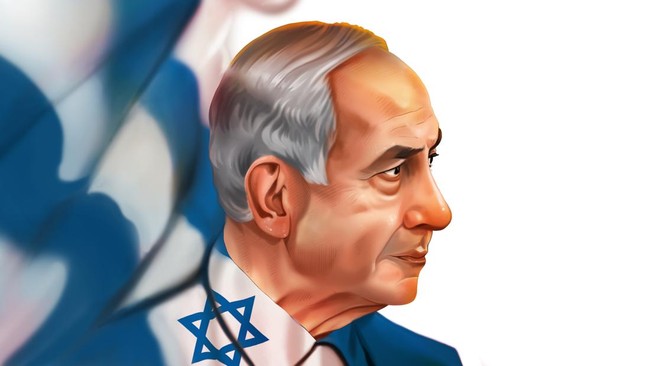
The tenures of Israel’s prime ministers have varied widely: some led the country for decades, while others remained in office for only a few days. These changes in leadership reflect Israel’s often turbulent politics, marked by contests for power and shifting political alignments.
Benjamin Netanyahu has led the government for a cumulative 19 years, while Yigal Allon served as interim prime minister for only 19 days in 1969.
The difference is not merely a matter of how long an individual leader remains in power; it also reflects the dynamics of Israel’s parliamentary system. The prime minister must form a government that has the support of a majority of members of the Knesset, Israel’s parliament.
The ability to maintain the backing of coalition parties is therefore an important factor in the survival of a government. The Israel Democracy Institute explains that a parliamentary system can result in prime ministers serving for varying lengths of time, unlike presidential terms, which are generally fixed.
Netanyahu first took office on 18 June 1996. He led the government until 1999, returned as prime minister in 2009 and has held the post again since December 2022.
Adding those periods together to 27 October 2026 gives a total of about 6,968 days, calculated by taking the difference between the relevant dates.
One factor that has helped Netanyahu endure in Israeli politics is his ability to form coalitions with different parties. Under the parliamentary system, the party with the most votes cannot automatically govern alone if it does not control a majority of Knesset seats.
Netanyahu has formed governments several times through partnerships with other parties, including smaller parties that play a pivotal role in coalition-building.
The Israel Democracy Institute notes that Netanyahu has led six different governments. His time in office, however, has not been uninterrupted.
He lost the premiership in 2021, when a coalition led by Naftali Bennett and Yair Lapid secured majority support in parliament, before returning to office at the end of 2022.
Below Netanyahu in terms of accumulated time in office is David Ben-Gurion, Israel’s first prime minister. He led the country in its early years, beginning in 1948, and returned to office from 1955 to 1963.
Those two periods gave him a lengthy total tenure of about 4,875 days, based on the date ranges in the list.
Ben-Gurion led Israel through the establishment of state institutions and several early conflicts.
His time in office also covered several different governments, so the total represents a combination of terms rather than one continuous period.
Why Do Some Prime Ministers Serve for Only a Short Time?
A short tenure does not necessarily mean that a prime minister lost an election.
In Israel’s parliamentary system, a change in coalition support, resignation, a change of government or extraordinary events can bring a prime minister’s term to an end.
Yair Lapid, for example, became prime minister on 1 July 2022 after Bennett’s government decided to dissolve the Knesset and call an early election.
Lapid led a caretaker government until Netanyahu formed a new government on 29 December 2022. His tenure lasted about 181 days.
Naftali Bennett also served for only about 383 days, from 13 June 2021 to 1 July 2022. His government was formed by a coalition of eight parties with diverse political leanings and a very narrow majority.
When several members of parliament withdrew their support, the coalition lost its majority, paving the way for another election.
Another example is Ariel Sharon. His time as head of government ended after he suffered a severe stroke in January 2006 and was declared permanently unable to perform his duties that April.
Ehud Olmert then took over the post. Sharon’s case shows that a change of prime minister is not always the result of a political defeat.
Yigal Allon, meanwhile, served as interim prime minister for 19 days after Levi Eshkol died in February 1969, before Golda Meir formed the next government.
Because Allon served in an interim capacity, his tenure should be distinguished from those of prime ministers who led regular governments.
The length of an Israeli prime minister’s tenure is therefore shaped by a combination of political factors and circumstances beyond politics.
Coalition support can keep a leader in office, while the loss of a majority, a decision to call an early election, resignation or an emergency can shorten a term.
Source: jawawa.id (https://jawawa.id/newsitem/a-list-of-israels-prime-ministers-netanyahu-served-longest-but-who-served-for-the-shortest-time-1793105462)
Originally published by CNBC Indonesia (https://www.cnbcindonesia.com/research/20261027154618-128-779893/daftar-perdana-menteri-israel-terlama-netanyahu-siapa-tersingkat), translated from Indonesian