
A Historical Journey Through 10 Indonesian National Curricula
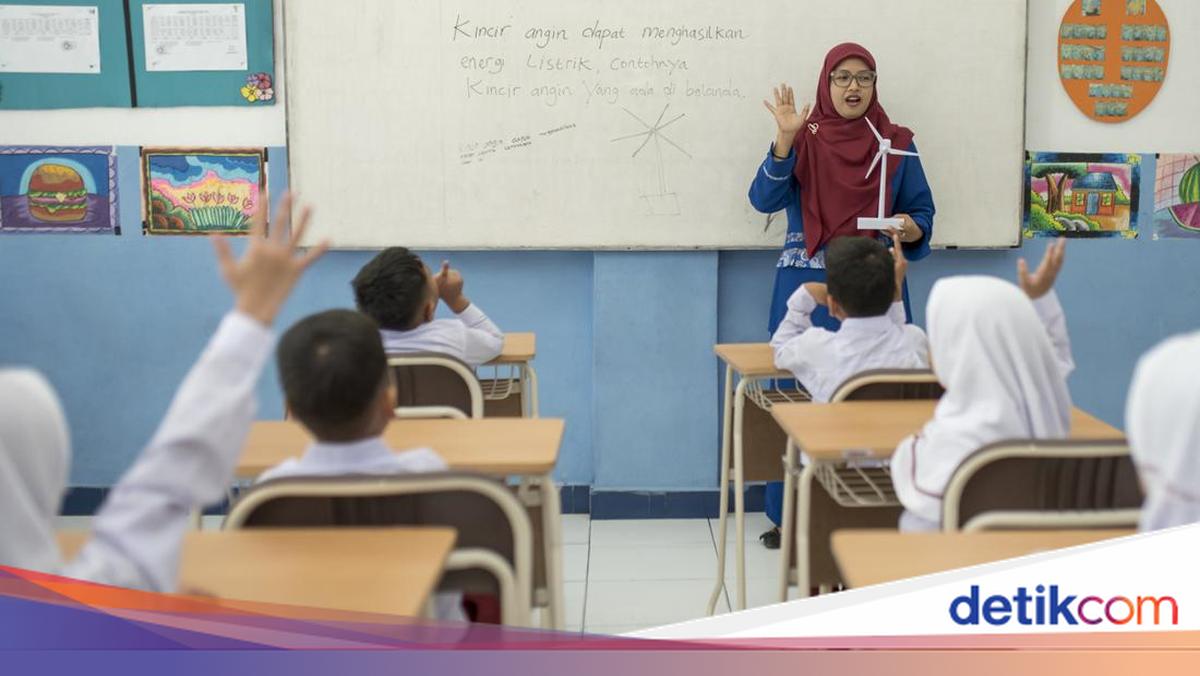
The education system in the country has undergone various phases of adjustment to meet the challenges of the era. Tracing the history of the curriculum in Indonesia is essential for understanding how the direction of national education policy has been shaped and developed. Based on a historical tracing publication from the Ministry of Primary and Secondary Education, various changes to the learning system have been recorded from the early days of independence to the current modern era. Each curriculum has its own focus and approach, influenced by the socio-political situation of its time.
During the early years of the republic, the education system was more focused on strengthening national identity. Character building and state consciousness became the top priority. The ‘Rentjana Pelajaran 1947’ was the first curriculum after independence, focusing on character formation and Pancasila values rather than purely cognitive aspects. Conceived during the tenure of Minister of Teaching Ki Hajar Dewantara, it was only widely implemented in 1950. This was followed by the ‘Rentjana Pelajaran Terurai 1952’, a refinement that became the first national curriculum based on Law No. 4 of 1950, detailing the syllabus and connecting material to everyday reality. Towards the end of President Soekarno’s era, the ‘Rentjana Pendidikan 1964’ aimed to create a socialist Pancasila man, grouping subjects into ‘Pancawardhana’ covering moral, intelligence, emotional, skills, and physical aspects.
Entering the New Order era, the pedagogical approach shifted to become more structured and goal-oriented. The 1968 curriculum aimed to shape a true Pancasila man who is physically strong and intelligent, focusing on nurturing the spirit of Pancasila and basic knowledge. The 1975 curriculum was goal-oriented for greater effectiveness and efficiency, introducing the term ‘satuan pelajaran’, or lesson unit, detailing specific instructional objectives through to evaluation. The 1984 revision introduced the Active Student Learning Method (CBSA), encouraging students to be active learning subjects. Later, the 1994 curriculum combined the objective-based and process-based approaches, becoming notorious for its dense material load and the ‘caturwulan’ term system under Minister Wardiman Djojonegoro.
As the Reform era progressed alongside technological advances and globalisation, the education system was required to be more flexible and centred on student competence. The 2004 Competency-Based Curriculum (KBK) emphasised developing abilities, skills, and attitudes. This gave way to the school-level KTSP curriculum in 2006, which granted full authority to schools to design learning processes according to local conditions. The 2013 curriculum (K-13) focused on balancing attitude, knowledge, and skills through a scientific approach. The latest iteration, the ‘Kurikulum Merdeka’, focuses on essential, flexible, and student-centred learning to nurture interests and talents from an early age, strengthening character through the Pancasila Student Profile Strengthening Project (P5), initiated by Minister Nadiem Anwar Makarim.