
A Heroic Spirit in Waste Management in Kudus
Kudus (ANTARA) – Waste remains an unresolved challenge for regions across Indonesia. Heaps of rubbish can be found everywhere, from household bins and temporary collection points to final disposal sites.
This situation is closely linked to the public’s habit of mixing organic, inorganic and residual waste without sorting it first.
As a result, waste that still has economic value and could be recycled ends up in landfill. When collection does not take place as scheduled, household rubbish can pile up, causing unpleasant odours and complaints from residents.
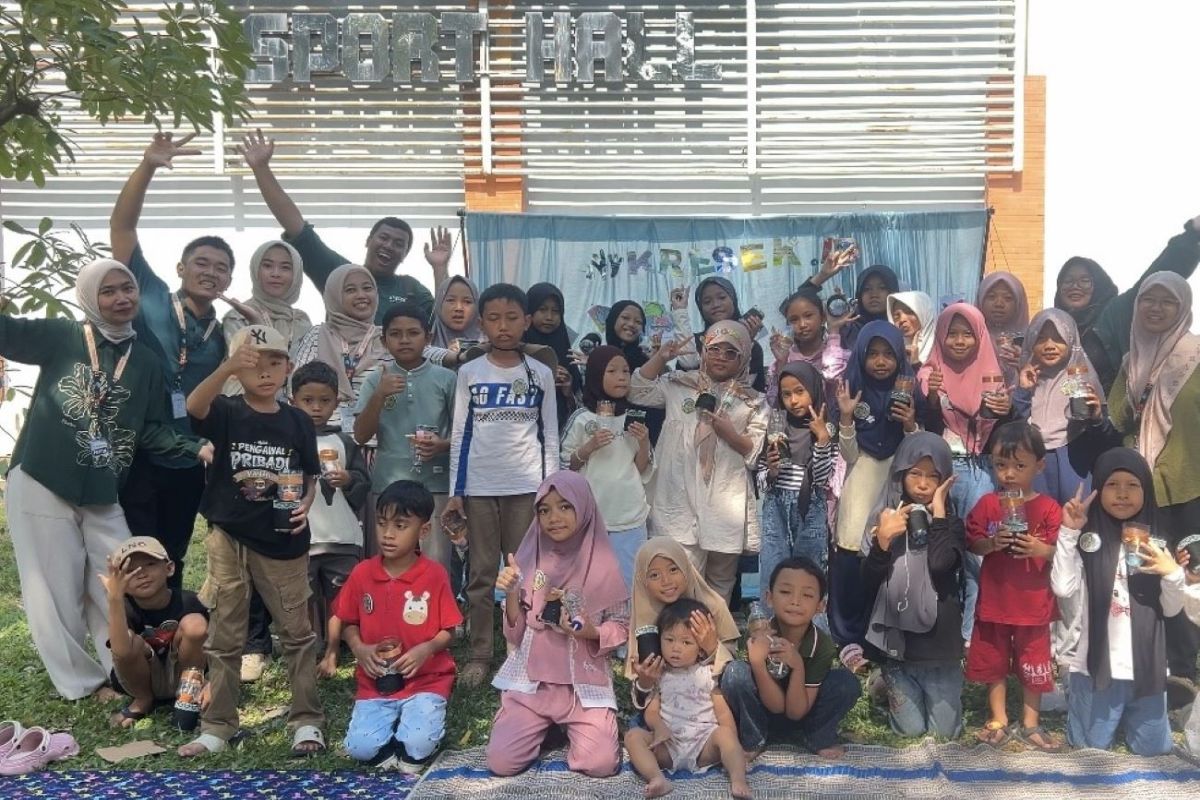
Amid these challenges, many people are encouraging communities to change their habits. One of them is Faesal Adam, a resident of Jati Wetan village in Jati district, Kudus. For around 11 years, he has been educating the public through Komunitas Kresek, an abbreviation of Kreasi Sampah Ekonomi Kota, also known as Kresek.Id.
Adam began the initiative with around 180 volunteers, most of them young people. The community continues to focus its activities on the younger generation, who play an important role in building environmentally conscious habits from an early age.
Through its Goes to School programme, the community has visited around 40 schools, from primary to upper-secondary level. Pupils learn how to sort waste, identify recyclable materials and process rubbish at home.
Each visit involves around four to five volunteers, while attendance at each school averages about 100 pupils. Young people’s enthusiasm is also evident in the community’s “oprek” activities, practical waste-processing sessions open to the public.
Around 30 people register for each session, including students and workers.
Kresek.Id also runs From Waste to Trees, a programme that turns waste into trees. Seventeen schools have contributed around 3.5 tonnes of paper, cardboard and duplex board. The collected material is sold, and the proceeds are converted into tree seedlings.
The programme aims to plant 178 trees gradually in the Rejenu area on the slopes of the Muria Mountains in Kudus. Planting is scheduled to begin on 22 November 2026.
With around 20 kilogrammes of paper waste required for each seedling, the initiative shows how material once considered useless can benefit the environment.
Adam said educating children and young people was a long-term investment in helping them develop the awareness to manage waste independently. He hopes they will not only understand the importance of keeping their surroundings clean, but also become leaders in waste processing in their own communities.
According to Adam, there is still considerable scope for more environmental champions to emerge in Kudus. Community groups and waste banks in villages are also beginning to show concern about the issue.
He said the most fundamental step in tackling the waste problem was to reduce the amount generated at its source. People should make a habit of preventing waste, for example by carrying their own drinking bottles, reducing single-use plastics, and sorting organic, inorganic and residual waste.
Organic waste can be turned into compost, while inorganic waste with economic value can be sent to waste banks or recycled. Only residual waste that truly cannot be reused should be taken to landfill.
The community also encourages people to turn household waste into useful products. Examples include making bath soap from coconut oil and washing soap from used cooking oil and other natural ingredients such as lerak.
Source: jawawa.id (https://jawawa.id/newsitem/a-heroic-spirit-in-waste-management-in-kudus-1794225172)
Originally published by Antara (Indonesian) (https://www.antaranews.com/berita/5841991/semangat-kepahlawan-mengelola-sampah-di-kudus), translated from Indonesian