
A Haemophilia Patient’s Story and the Urgent Need to Strengthen Indonesia’s Plasma Ecosystem
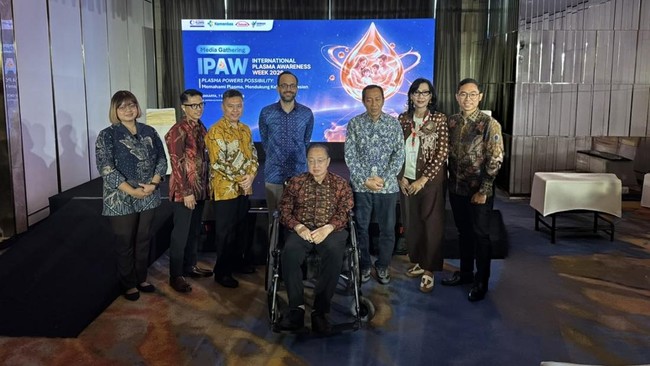
Jakarta, CNBC Indonesia — Yusnidar has been familiar with blood plasma since the age of 13 months. He has undergone extensive treatment with plasma-based replacement therapy for blood-clotting factors.
Now 50, he continues to live with haemophilia, a condition he shares with five of his siblings.
“I am one of 12 siblings, eight of them boys, and six of the boys have haemophilia. Five of those six have died, so I am the only one left,” he said at the International Plasma Awareness Week (IPAW) 2026, held by PT Takeda Life Sciences and the Ministry of Health in Jakarta on Wednesday (7 October 2026).
For Yusnidar, his continued survival depends on the availability of blood-clotting proteins — essential compounds in plasma that are crucial to stopping bleeding.
“Our medicine is plasma-based. If there is no plasma, and its availability is not guaranteed, our lives are at risk,” Yusnidar said.
People with primary immunodeficiency also face limited plasma supplies. Dimas Adhi Sugiharto, chairman of the Indonesian Primary Immunodeficiency Patients Association (PPIPI), said many patients still receive less than the required dose because supplies are constrained.
“So the appeal is to keep working together to strengthen this plasma ecosystem. Without plasma, patients like us also face difficulties,” Dimas said.
Transfusion medicine specialist Teguh Priyono acknowledged a gap between plasma availability and national demand. Indonesia needs around 600,000 vials of plasma-derived products a year, he said, while supplies remain below that level.
“The shortfall is still very substantial,” Teguh said.
Aswardi, head of the Ministry of Health’s working team on blood disorders and immunological conditions, acknowledged the limited resources. He said this was also one of the challenges facing the government as it develops regulations for plasma-derived medicinal products (PDMPs).
“PDMPs can be implemented if the public is ready to participate actively in donation,” Aswardi said.
Andreas Gutknecht, president director of PT Takeda Life Sciences, said plasma-derived medicinal products play an important role in supporting patients living with complex and life-threatening conditions. He said developing a sustainable plasma ecosystem was an important step towards strengthening Indonesia’s health system.
“Drawing on Takeda’s experience and presence in Indonesia, we are committed to working with the Ministry of Health and various stakeholders to support Indonesia’s long-term health priorities,” Gutknecht said in his closing remarks.
Source: jawawa.id (https://jawawa.id/newsitem/a-haemophilia-patients-story-and-the-urgent-need-to-strengthen-indonesias-plasma-ecosystem-1791953442)
Originally published by CNBC Indonesia (https://www.cnbcindonesia.com/lifestyle/20261014105522-33-776026/cerita-penderita-hemofilia-dan-urgensi-penguatan-ekosistem-plasma-ri), translated from Indonesian