
A Glimpse into the Medieval 'Ancient Toilet': Archaeologists Find an 800-Year-Old Notebook
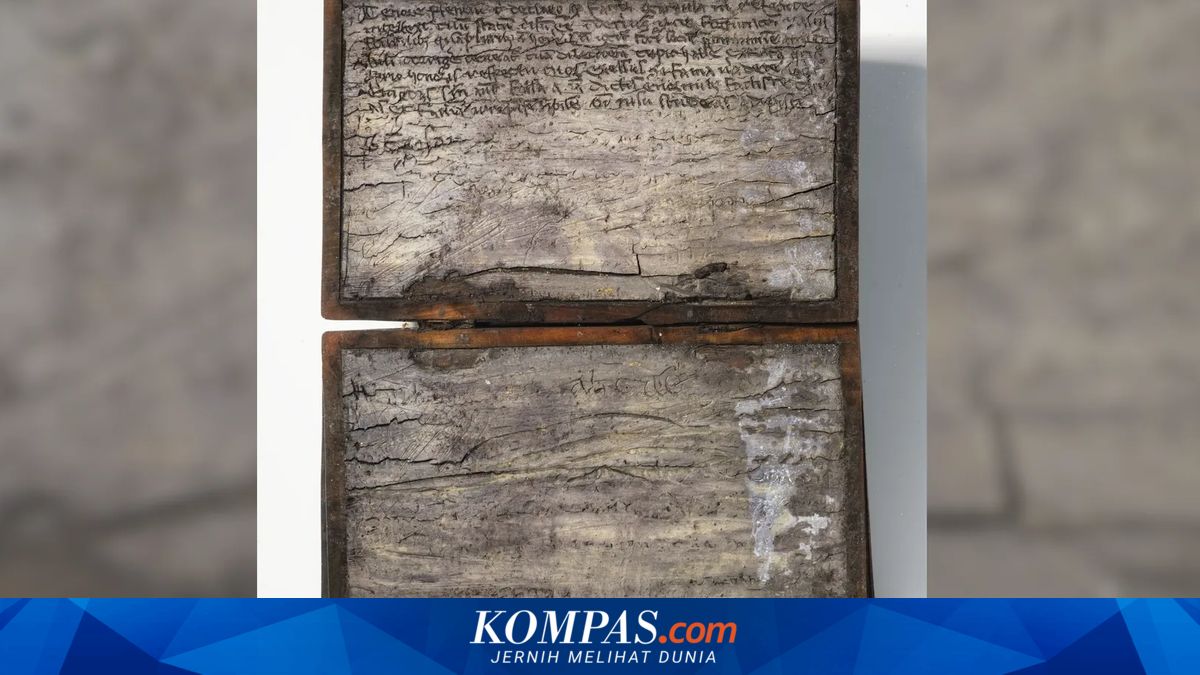
KOMPAS.com — A mishap in a toilet nearly 800 years ago has become an extraordinary boon for modern science. Archaeologists in the German city of Paderborn have recovered an ancient candle-wax-bound notebook that fell into a medieval latrine and survived in pristine condition. The ten-page notebook, handwritten in cursive Latin, is believed to have belonged to a wealthy trader of the medieval era. It is thought to have come loose and fallen accidentally around eight centuries ago—most likely when the owner was cleaning himself with luxurious silk cloth in that toilet.
According to official statements issued by the Westphalia-Lippe Regional Association (LWL) on May 12, the team excavated five medieval latrines that were sealed tightly and airtight. The anaerobic (oxygen-free) conditions were the key reason why various organic objects within, which would normally have decayed over time, have been preserved so well.
The existence of this valuable artefact was not immediately recognised. When the laboratory team conducted routine cleaning of items found at the site, experts realised that what initially looked like a mundane clod of earth was in fact a small leather container with a lid. “Even after centuries underground, the latrine find still carries a somewhat unpleasant odour,” said Susanne Bretzel, a conservator at LWL in a formal statement, cited by Live Science.
The pocket-sized notebook measures about 8.6 by 5.5 centimetres. The small book was safely stored inside a leather container that was slightly larger, complete with a fleur-de-lis motif decoration. Of the total pages in the notebook, eight pages have two writing sides, while two pages have only a single side. All page surfaces are coated with wax, a medium commonly used in antiquity to write with a stylus.
Within the wax sheets, experts detected many lines of text written in cursive Latin. However, reading is not easy because some text is written over earlier lines and runs in different directions. “Individual words can be recognised, but the transcription will take a long time, as some words may have been damaged,” explained Barbara Rüschoff-Parzinger, an archaeologist and head of cultural affairs at LWL.