
A Forgotten Trust: Changing the Paradigm of Urban Living in Blok M
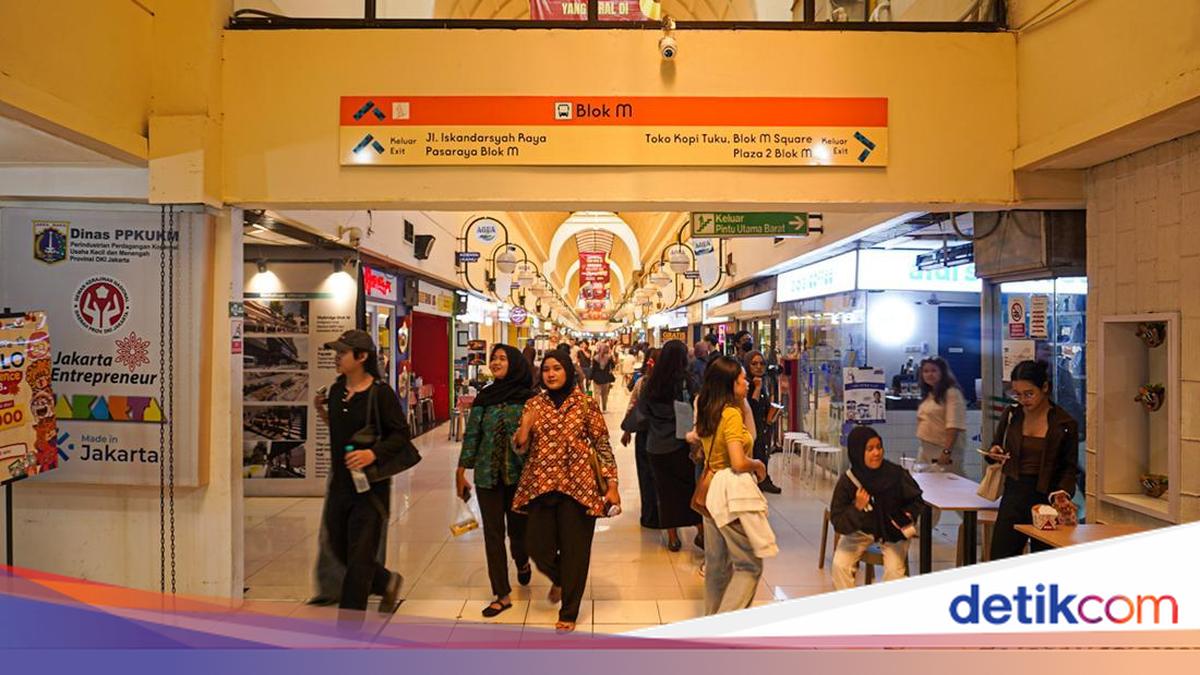
Who has not heard of Blok M? This modern commercial district in South Jakarta has reinvented itself in recent years, becoming a new icon for young people. Integrated with public transport, including a bus terminal and an MRT station, Blok M is a meeting point for a range of activities: shopping, public transport connections, cafés and Taman Literasi, which houses a library.
One afternoon, I walked through Little Tokyo, stopped briefly at Blok M Hub’s food centre, then headed to Martha Tiahahu Literacy Park, next to the row of cafés at M Bloc Space. From time to time, I saw long queues outside bakeries and drinks shops that had gone viral. Visitors patiently stood in line despite the hot, humid afternoon.
The area’s pull is so strong that people seem not to mind the inconvenience of queuing, as long as they can take home the snacks they have been eyeing after seeing them endorsed by prominent influencers. That is Blok M today: never short of visitors, and a favourite destination and meeting place—particularly for young people—to talk or simply relax.
Historically, Blok M, within the Kebayoran Baru district, was a satellite town planned by the colonial government from the late 1930s and developed according to architect Mohammad Soesilo’s master plan from 1948. The area, spanning around seven square kilometres, began operating as a garden city in 1953, with projected housing for up to 100,000 people (Wikipedia, 2026).
The plan also envisaged housing across Blok A to Blok S, based on transit-oriented development (TOD), and Indonesia’s first underground commercial and transit hub at Blok M Mall (Chandra and Komala, 2022). Since Blok M Market and Blok M Bus Terminal were inaugurated in 1968, the area has served as both a commercial centre and a transport hub for southern Jakarta (Kompas, 2026).
As Jakarta urbanised, Blok M MRT Station began operating in 2019, connecting Lebak Bulus Station with Bundaran HI Station. The expanded public transport network significantly increased visitor numbers in Blok M, by 150 per cent—from 8,000–10,000 people a day to 20,000–25,000 (Chandra and Komala, 2022).
Data for 2026 also show MRT ridership of between 125,000 and 137,000 passengers daily. The figures are approximately 161,000 passengers a day on weekdays and 87,000 at weekends (MRT Jakarta, 2026).
After resting for a while at Martha Tiahahu Literacy Park, sitting on the grass and sipping the iced coffee I had bought earlier, I took a small detour along a narrow lane towards Pasaraya. In the 1990s, this shopping centre was a prestigious landmark selling premium goods, and shopping there was a luxury.
As I walked slowly, a pungent smell suddenly hit me from an area enclosed by a barbed-wire fence. The closer I came, the stronger it became: heaps of rubbish piled up in black plastic bags. I asked a cleaning worker who was transferring waste into a large lorry. That afternoon was the scheduled collection day, after which the waste would be taken on to the Bantargebang Integrated Waste Treatment Facility (TPST).
The stench could be detected even by people simply walking past the temporary waste collection point (TPS). Food scraps, plastic cups, cardboard and polystyrene were all mixed together, awaiting a lorry that arrived at irregular intervals—sometimes every two days, sometimes every three. There was no sorting and no composting, even at the park’s waste point, where the rubbish was mostly dry leaves and therefore among the easiest to process. Nor was the daily waste weighed and recorded. Workers occasionally collected plastic bottles to sell, but this was a personal initiative, not part of a system requiring waste to be sorted.
Blok M does have a waste station for sorting, established through a partnership between PT Daya Intiguna Yosa Tbk (MR DIY) and waste-management company Rekosistem near the north entrance of Blok M MRT Station. Operating since 2021, it was Rekosistem’s first drop-off point for people wishing to deposit inorganic waste. In 2026, it was officially relaunched on Earth Day.
Unfortunately, in practice, the waste station is not connected to the TPS serving Blok M. It is only for people who voluntarily deposit inorganic waste and is not integrated into the district’s waste-management system. In all my observations, I did not see a single notice encouraging people to sort rubbish or reduce single-use packaging.
An analysis using sustainability indicators shows that Blok M’s waste management remains far from sustainable standards. Yet the district has been recommended as Jakarta’s first pilot area for a low-emissions zone. Governor’s Instruction No. 5 of 2026 requires waste to be sorted into four categories at source, while from August 2026 Bantargebang TPST will accept only residual waste. The rules are comprehensive. In reality, however, waste is still managed according to the old paradigm: collect, transport and dump.
The irony is striking. Since 2008, Law No. 18 of 2008 has mandated a shift to upstream-to-downstream waste management based on the 3Rs—reduce, reuse and recycle. Eighteen years on, practice has yet to catch up. The gap between the law and people’s behaviour remains wide, even though Blok M is close to the seat of government. A common explanation is that people do not want the trouble of sorting waste. Without clear rules, workable mechanisms and consistent implementation, awareness will always lose out to three familiar excuses: no time, too inconvenient, and nobody is watching or imposing penalties.
But is not the Earth a trust placed in our care?
In Islam, human beings are appointed as stewards of the Earth—its managers, not its owners. The Earth is a trust from the Creator for which we will one day be held accountable. Nature was created in mizan, or balance, which must not be disrupted at will. The Earth we inhabit is not an inheritance from our ancestors; it is a loan that we must return to our children and grandchildren in good, if not better, condition.
Rahmat et al. (2025) argue that the concepts of khalifah (Al-Baqarah: 30), mizan (Ar-Rahman: 7–9) and maslahah (Al-A’raf: 56) foster ecological awareness that is increasingly relevant amid today’s environmental crisis. Munib et al. (2022) make the point more forcefully: from the perspective of Islamic legal philosophy, protecting the environment (hifz al-bi’ah) is one of the objectives of sharia itself—not merely a recommendation, but a fundamental matter.
The Qur’an also prohibits israf (excess) and tabdzir (wastefulness), in Al-A’raf: 31 and Al-Isra’: 26–27. Consider the plastic cup used for fifteen minutes and then thrown away, the single-use shopping bags piling up in a kitchen drawer, or edible food scraps ending up in the bin. Do these not fall into those categories?
The Indonesian Ulema Council (MUI) also states in Fatwa No. 4/Munas XI/MUI/2025 on Guidelines for Waste Management in Rivers, Lakes and the Sea that dumping rubbish into bodies of water is haram, or forbidden. More broadly, the fatwa frames waste management as part of muamalah, or social worship. Sorting and managing waste is therefore not simply a way of complying with government regulations; it is a way of honouring the trust bestowed by the Creator.
But is faith alone enough? Can religion change behaviour?
Ramlan (2020), in a comparative study of Singapore, Malaysia and Indonesia, notes that fatwas and sermons exert real social influence, even though they are not legally binding. Asyari et al. (2024) found that a person’s level of religiosity affects their efforts to avoid food waste. In Makassar, meanwhile, environmental preaching has helped bring a zero-waste community to life (Mz, Marhani and Halima, 2024). Religious outreach therefore has a significant role in shaping public behaviour.
Ethical values, however, cannot stand alone. In a survey of more than 530 respondents in East Java, Tanjung et al. (2024) found that intentions to sort and recycle are shaped by three factors: environmental education, knowledge and access to facilities. Awareness must therefore be supported by an adequate system. Imagine visitors to Blok M making the effort to sort their rubbish, only to see it mixed together again at the TPS and transported to Bantargebang as a single load. That would surely undermine the intentions and awareness beginning to take root.
The two must go hand in hand. Ethics explain why we should sort waste; systems ensure that the sorted materials do not go to waste. Ethics without a system amount to knowledge without practice, while a system without ethics produces colourful bins whose contents are still mixed together.
So, what can we do?
Start with ourselves. With services available for depositing inorganic waste, we can begin at home: compost organic waste and take inorganic waste to the nearest waste station or waste bank. In Blok M, policymakers need to establish waste-management procedures and clear rules for businesses and visitors so that implementation is effective.
Blok M is also surrounded by mosques, schools and active youth communities. Messages about israf and the trust of stewardship can be shared from their pulpits and platforms through effective cooperation.
Blok M has proved that it can change. Once in decline, it has become a vibrant public space and a place for growth. Its waste-management problems deserve serious attention. A district’s sustainability is not measured by how attractive its shopfronts are, but by how far it goes to protect the environment entrusted to it. The Earth does not need perfect people, but people willing to work together to care for it.
Let us begin. In Blok M.
Source: jawawa.id (https://jawawa.id/newsitem/a-forgotten-trust-changing-the-paradigm-of-urban-living-in-blok-m-1793965894)
Originally published by detikcom (https://news.detik.com/kolom/d-8741590/sebuah-amanah-yang-terlupakan-mengubah-paradigma-urban-living-di-blok-m), translated from Indonesian