
A Direct Blow to Netanyahu: Iran Endures, Trump Reverses Course
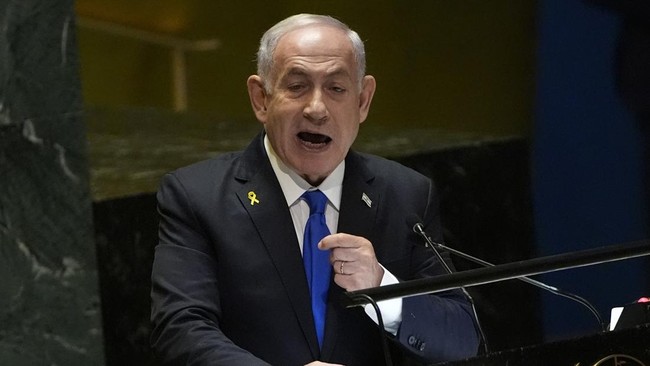
A temporary agreement between the United States and Iran to end a war lasting nearly four months is considered not only to have shaken Israel’s strategy towards Tehran but also to potentially destroy the political foundation that Israeli Prime Minister Benjamin Netanyahu has built over decades. According to Reuters on Thursday, a number of analysts, former US officials, and diplomats assess that the biggest casualty of the US-Iran deal may not be Israel’s strategy for confronting Iran, but rather Netanyahu’s political image as an Israeli leader deemed capable of bending Washington’s policy to his interests on the Iran issue. For years, Netanyahu built his political identity on the claim that he was the only Israeli leader capable of maintaining strategic alignment between the US and Israel regarding Iran. By building close ties with the Republican Party, Netanyahu positioned himself as a figure who could influence US presidents across different administrations. He consistently asserted that only sustained military pressure could contain Tehran’s ambitions. At the peak of his influence, diplomats even nicknamed him ‘America’s whisperer’, an Israeli leader who merely needed to pick up the phone to ensure Washington’s strategic calculations aligned with Israel’s interests. No other Israeli prime minister has addressed the US Congress so frequently or built such political capital within the American political system. However, according to analysts, the temporary deal reached by Washington and Tehran to end the war initiated by the US and Israel in February shows that this narrative has now reversed. Instead of shaping Washington’s policy towards Iran, Netanyahu is now considered forced to accept the policy direction set by US President Donald Trump, who is increasingly pushing for a diplomatic settlement and views Israel’s objections as obstacles to be managed. Domestically in Israel, Netanyahu’s situation is also considered increasingly difficult. Former US official Dennis Ross said Netanyahu is now squeezed between President Trump, who wants to end the conflict, and his domestic political base, which rejects various forms of concessions, especially regarding Lebanon. According to Ross, if Netanyahu chooses to withdraw from the conflict, he risks facing a political backlash at home. Conversely, if he chooses to escalate, he potentially faces a direct confrontation with Washington. The war that Netanyahu initially hoped would strengthen his legacy as a leader confronting Iran could instead be remembered as the conflict that brought down one of the main sources of his political power. In a state of international isolation, constrained by his own closest ally, and facing elections next autumn, the political asset that has long sustained Netanyahu’s career is now said to have turned into his greatest burden. At the start of the war against Iran, Netanyahu promised total victory. However, to date, he is considered to have failed to bring about the collapse of the Iranian government system, failed to defeat Hezbollah in Lebanon, and has not yet been able to guarantee the safe return of Israeli citizens living in the country’s northern region. Former Netanyahu advisor Aviv Bushinsky assessed that the impact of the deal is enormous for the prime minister’s political position. ‘The US-Iran deal is a direct blow to Netanyahu,’ Bushinsky said. ‘He not only lost the war against Iran but also lost Trump as a friend. Now he is not only isolated internationally but also trapped in a major dispute with Trump.’ In a press conference this month, Netanyahu described his relationship with Trump as one between two partners who ‘often agree and sometimes disagree’. He also said there has been a systematic campaign aimed at downplaying what he called Israel’s ‘great achievements’ against Iran and its allied groups. Meanwhile, a White House official asserted that the relationship between Trump and Netanyahu remains strong. The official said Israeli military forces were ‘extraordinary partners’ in a war that has ‘destroyed the military capabilities of the Iranian regime’. Meanwhile, analysts assess that the differences between Trump and Netanyahu are no longer merely a matter of personal relations, but rather an increasingly clear divergence of strategic goals. Trump seeks to end US involvement in Middle Eastern conflicts, while Netanyahu still views sustained pressure on Iran and Hezbollah as a vital necessity for Israel’s security. Washington is known to have negotiated directly with Tehran, incorporated the Lebanon conflict into a broader negotiation framework, and built a ceasefire dispute resolution mechanism. According to three regional diplomatic sources, these steps are increasingly sidelining Israel from a number of important decisions. The country that previously viewed Netanyahu as an irreplaceable intermediary is now, according to these sources, beginning to see him as an obstacle to the deal Washington wants to maintain. Trump has also openly criticised Israeli military operations in Lebanon on several occasions. US Vice President JD Vance even stressed that the US-Israel relationship has certain limits. He warned critics of the deal in Israel not to ‘attack the only strong ally they still have in the world’. Nevertheless, two Israeli officials familiar with Netanyahu’s views said the prime minister is not overly concerned that the comments from Trump and Vance will turn into concrete policy changes, such as a delay in arms shipments to Israel, even as military operations in Lebanon continue. Trump himself has shown a willingness to set aside