
A Dignified Path for Our Migrant Workers
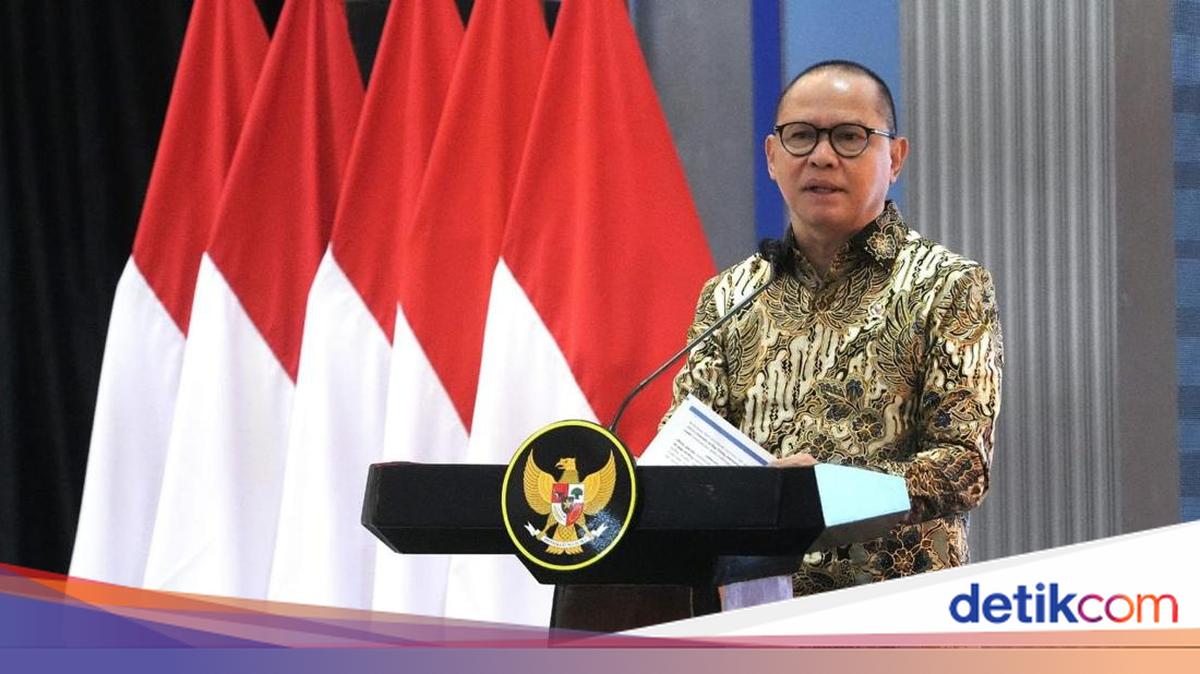
The first year of leadership in a government agency is always a critical period for determining future policy direction. Amidst the dynamic and challenging global labour movement, reforming the labour migration ecosystem is clearly not an instant task. The steps taken must be measured, mature, and long-term oriented.
Entering the first year of Minister Mukhtarudin’s leadership at the Ministry for the Protection of Indonesian Migrabant Workers (P2MI), this commitment has been realised through the formulation and implementation of the Grand Design for the Transformation of the Governance of Indonesian Migrant Worker Protection. This document serves as a comprehensive roadmap that integrates all aspects of protection, from preparation in the home village and assistance during service in the destination country, to post-service programmes upon returning to the homeland.
Reconstructing the Paradigm
As someone who has closely observed the policy-making process within the ministry, the fundamental first improvement made by Minister Mukhtarudin is the perspective towards migrant workers themselves. For a long time, the narrative regarding our overseas workers has been overshadowed by the issue of ‘brain drain’, as if Indonesia is continuously losing its best human resources. Under Minister Mukhtarudin’s leadership, the P2MI Ministry aims to shift this viewpoint towards ‘brain circulation’.
We should no longer view migrant workers merely as remitters of foreign exchange or job seekers due to domestic employment limitations. They are professionals and national representatives competing on a global level. Once their period of service is complete and they return home, they bring capital far more valuable than mere money: international experience, mastery of the latest industrial technologies, a global work ethic, and cross-border networks that are essential to supporting the national economy.
To ensure this idea of brain circulation does not remain merely on paper, the P2MI Ministry is also paying great attention to improvements at the upstream level, namely the workers’ home regions. The prevention of non-procedural placement, job fraud, and human trafficking practices must be addressed directly at the grassroots level.
Through the National Safe Migrant Movement, the socialisation of legal and transparent placement routes continues to be intensified. At the local level, the government has established 756 ‘Golden Migrant Villages’ (Educative, Advanced, Safe, and Prosperous Migrant Villages). These villages serve as the frontline where prospective workers receive honest information, manage initial administration without the loopholes of illegal intermediaries, and ensure that the families left behind receive assistance.
Furthermore, work in these villages is strengthened by 37 Migrant Centres located in various universities across Indonesia, acting as hubs that connect official and procedural information, training, competency certification, and skilled migrant workers with overseas labour markets. Through this breakthrough, the government intends to ensure that every university alumnus receives services and access to official, equitable, and openly accessible overseas job opportunities.
Sharpening Worker Competency
On the other hand, competition in the international labour market demands real skill enhancement. Skills and competency certifications are the primary assets for migrant workers to compete with dignity and obtain decent labour rights. To meet this need, the P2MI Ministry is running the ‘SMK Go Global’ programme, targeting the production of 500,000 skilled migrant workers from vocational high school graduates and the general public by 2029.
Placement focus has shifted towards specialised skill sectors (skilled labour) that offer better welfare and stronger legal protection, such as the healthcare, hospitality, manufacturing, and construction sectors. Through schemes such as ‘Asta Mandala SMK Go Global’, these vocational graduates are not only equipped with certified technical skills but also foreign language training and the strengthening of an international work mentality. This serves as a clear signal that Indonesia is consistently shifting from the placement of unskilled labour towards professional labour.
Meanwhile, in destination countries, our nation’s presence is being clarified through more responsive labour diplomacy. Referring to P2MI Ministerial Regulation Number 1 of 2026, the working structure of Labour Attachés (Atnaker) is now brought directly under the command of the P2MI Ministry. This restructuring is vital so that Labour Attachés on the ground can act more agilely and bravely in safeguarding the rights and safety of our workers.
Under this new system, Labour Attachés perform four main tasks: responding quickly to labour disputes and wage issues, assisting in the humane repatriation of problematic migrant workers, tightening the supervision of the track records of local agencies in destination countries, and actively mapping new job opportunities in safe formal sectors. The results of this change in working style are already being felt, with 3,525 legal and labour-related cases successfully resolved during this first year.
Achievements as a Guide
These internal ministerial improvements have had a direct impact on the smooth flow of official placements. Throughout the first year of Minister Mukhtarudin’s leadership, it is recorded that 352,131 migrant workers departed through legal and integrated routes. The placement graphs also show a promising upward trend, from 96,061 workers during the period of September to December 2025, leaping to 256,070 workers during the period of January to September 2026.
This achievement in numbers goes hand-in-hand with regulatory improvements, where the ministry has issued 26 new P2MI Ministerial Regulations to plug the regulatory gaps that have previously confused officers in the field.
KemenP2MI also recognises that labour migration issues cannot be handled alone. Therefore, under Minister Mukhtarting’s command, cross-sectoral synergy continues to be built through the signing of 106 MoUs and 174 Cooperation Agreements (PKS) involving other ministries.