
A Decade After Brexit, Germany and UK Grow Close Again
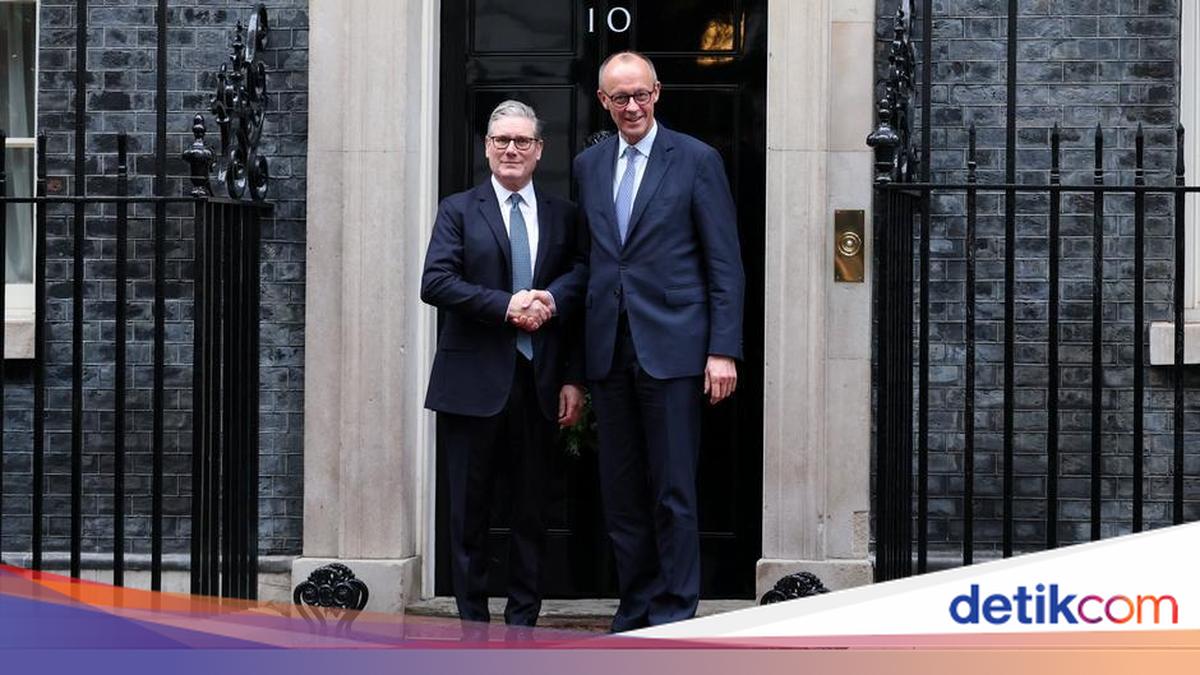
Following immense pressure from fellow Labour Party members, British Prime Minister Keir Starmer has announced his resignation. In Berlin, the news of Starmer’s departure was met with a degree of regret. “For the German government, Keir Starmer was always a reliable and close partner on foreign policy issues, especially those concerning Ukraine,” government spokesperson Stefan Kornelius said on Monday (22/6). And German politicians are very aware that it was Starmer who made a particular effort to rebuild relations with the European Union, especially with Germany, after Brexit.
It has now been exactly ten years since the United Kingdom held its referendum on leaving the European Union. When the result was announced on the morning of 24 June 2016, a shockwave spread across the EU, particularly in Germany. Just under 52% of voters chose to leave the EU, while 48% voted to remain. Germany’s then-Foreign Minister, now Federal President, Frank-Walter Steinmeier, called it a “disaster”, while then-Chancellor Angela Merkel described it as a profound turning point for Europe.
Few in Germany had predicted such an outcome. For most politicians and journalists, leaving the EU and the benefits of the European single market seemed too absurd to actually happen. However, the British campaign to “take back control”, primarily led by Boris Johnson of the Conservative Party, was seriously underestimated, especially in Germany.
Brexit supporters also wanted to regain control over immigration policy. In this issue, Germany played a significant role in the referendum result. Merkel’s open-border policy implemented in September 2015 meant that migrants who had acquired citizenship automatically had the right to settle in the UK.
“Migration policy was a decisive factor in the Brexit decision,” said Christophe Fricker of the University of Bristol in the UK, who has published extensively on Brexit. However, he added, “Ironically, since Brexit, immigration numbers have actually risen significantly again, just no longer from the European Union.”
German-British trade has plummeted sharply. After years of negotiations, the UK officially left the EU on 31 January 2020, but it was only on 1 January 2021 that it fully severed ties with the European single market and customs union.
Perhaps the best indicator of what has changed since then is the impact on trade between Germany and the UK. According to the German Chamber of Commerce and Industry, trade has declined significantly since Brexit. Whereas in 2016 the UK was Germany’s fifth-largest trading partner, it has now fallen to ninth place.
However, according to Christophe Fricker, Germany has not only lost a strong trading partner: “What we have lost is a strong defence partner. And now, defence is actually the main area where cooperation is being rebuilt. And of course, we also lost friends. There used to be very, very close ties, both personally and at the civil society level. Now those ties are more difficult and less frequent.” He regrets that for the younger generation in Germany, the UK has seemingly “disappeared from the map.”
New defence cooperation
Meanwhile, the two countries have been moving closer again for some time. German-British trade is governed by the EU-UK Trade and Cooperation Agreement, meaning it is not in the hands of a single EU member state government.
Nevertheless, both nations continue to strengthen their bilateral ties, particularly through two defence agreements. The first is the Trinity House Agreement, signed in October 2024, which aims to bolster cooperation in the defence sector. This agreement was subsequently expanded in July 2025 through the Kensington Treaty, a friendship treaty designed to deepen German-British relations more broadly.
King Charles’s three-day state visit to Berlin and Hamburg in March 2023 also played an important role in post-Brexit bilateral relations. During the visit, Charles delivered the first speech by a British monarch to the German Bundestag, partly in German.
Burnham seen as pro-German and pro-European
The current leaders of both governments, Friedrich Merz and Keir Starmer, come from two different political traditions: Starmer from the social democratic Labour Party, while Merz hails from the conservative Christian Democratic Union (CDU).
Nevertheless, Linn Selle of the German Council on Foreign Relations believes the two have much in common: “Starmer is just as pragmatic as Merz, and both are united by their strong support for Ukraine,” Selle told DW. “Merz is also heavily influenced by the Anglo-Saxon tradition, followed Brexit closely, and certainly wants to see closer political ties between the UK and the EU.”
But now Starmer is rapidly becoming part of the past. Nonetheless, he is still scheduled to attend the next meeting of the E5 group (Germany, France, the UK, Italy, and Poland) supporting Ukraine, which will take place on Wednesday (24 June) in Berlin.
Meanwhile, his most likely successor, Andy Burnham, is expected to continue efforts to rebuild relations with the EU. Burnham is known as a strongly pro-European figure and has repeatedly criticised Brexit in the past. During his long tenure as Mayor of Greater Manchester, Burnham also promoted exchanges with Germany.