
A Cry from Across the Plundered Seas
The title of this article, ‘A Cry from the Plundered Lands Across the Sea’, was the theme of the 1998 reform movement and became the title of a book on the reform movement by students of Hasanuddin University (Unhas) in Makassar, South Sulawesi.
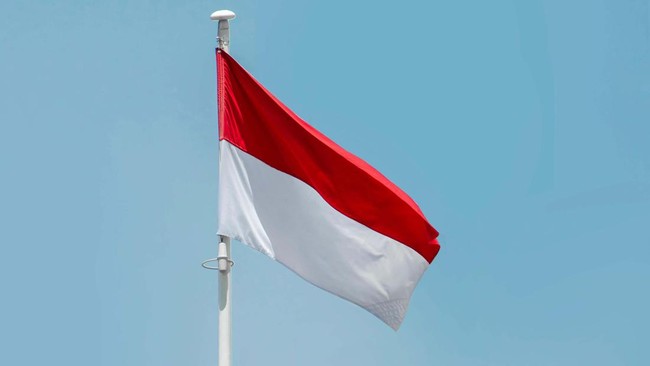
This theme remains relevant as a reminder to the government of the wide development gap between Eastern Indonesia (KTI) and Western Indonesia (KBI), coinciding with the 81st anniversary of the Republic of Indonesia’s independence on 17 August 2026, which carries the theme ‘A Sovereign, Just and Prosperous Indonesia’.
The theme above seems like an illusion for KTI because, to this day, the majority of natural resource-rich regions in KTI experience the phenomenon of the ‘resource curse’. The term was first popularised by the British economist Richard Auty in 1993. This can be read in his book entitled ‘Sustaining Development in Mineral Economies: The Resource Curse Thesis’.
Richard Auty described the paradox between abundant natural resource availability and economic growth. Countries or regions with abundant natural resources experience low economic growth, high corruption, environmental damage and poverty.
Injustice for KTI
The resource curse phenomenon can be observed in KTI as Indonesia’s largest producer of nickel, oil, gas, coal and gold, yet it has a high Gini ratio, with the highest in Papua regions such as South Papua at 0.405 and West Papua at 0.384 in 2026.
The high Gini ratio in KTI is thought to be due to an ‘enclave economy’. The implication is that economic growth is only enjoyed by the mining sector. Meanwhile, the majority of the workforce still works in traditional, low-income agriculture.
Likewise, the percentage of poor people in KTI is large, with the highest in Central Papua, the location of the world’s largest gold mine, PT Freeport Indonesia, at around 40.78 percent of its total population in 2007. It then changed little over the past two decades, falling to 30.41 percent in the first half of 2026 (BPS, 2026).
Meanwhile, regions in KBI have a small percentage of poor people, with the highest in Aceh at only 26.65 percent of its total population in 2007. This fell drastically to only 12.43 percent in 2026.
Furthermore, in terms of the poverty severity index, which measures expenditure inequality among people below the poverty line, KTI regions have a poverty severity index on average greater than the national figure of only 0.29.
The highest poverty severity index is where PT Freeport operates in Central Papua at around 1.95, followed by Highland Papua at 1.78 and Southwest Papua at 1.83 in the first half of 2026.
However, when compared with regions in KBI, it appears that KBI’s poverty severity index is much lower, at only around 0.47 at its lowest and 1.64 at its highest in 2007. It fell to a lowest index value of 0.10 and a highest of 0.24 in the first half of 2026.
The high percentage of poor people in KTI means that the highest stunting rates nationally are also in KTI. More than a quarter, or even almost half, of children under five experience stunting.
This can be observed in three regions: East Nusa Tenggara (NTT) at 37.0 percent, West Sulawesi (Sulbar) at 35.40 percent, Southwest Papua (PBD) at 30.50 percent, and West Nusa Tenggara (NTB) at 29.80 percent.
The facts above are consistent with the still-high development inequality between regions in Indonesia. This is reflected in the Williamson Index of 0.70–0.76 over the past two decades, which falls into the high category.
Inequality between KTI and KBI can be observed in the contribution of Java and Sumatra to the national economy, which reaches around 80 percent. Other regions account for only around 20 percent of Gross Domestic Product (GDP).
Meanwhile, the contribution of each island outside Java–Sumatra, which constitutes two-thirds of Indonesia’s land area, is only 8.15 percent for Kalimantan, 7.28 percent for Sulawesi, 2.84 percent for Bali–Nusa Tenggara and 2.76 percent for Maluku–Papua.
As a result, national economic growth in the second quarter of 2026 was mostly contributed by Java, at 3.19 of the 5.29 percent economic growth in the second quarter of 2026. Meanwhile, Sumatra contributed 1.14 percent of the 5.29 percent annual national economic growth in the second quarter of 2026.
This means that Java and Sumatra alone contributed around 4.33 percent of the 5.29 percent national economic growth in the second quarter of 2026. The remaining two-thirds of Indonesia’s territory contributed only 0.96 percent of the 5.29 percent national economic growth in the second quarter of 2026.
Other islands, such as Kalimantan, contributed 0.33 percent, Sulawesi 0.40 percent, Bali–Nusa Tenggara 0.17 percent, and Maluku–Papua contributed the smallest, only 0.04 percent, to the national economic growth of 5.29 percent in the second quarter of 2026.
Economic Agglomeration
The facts above remind us of the term ‘Dutch disease’, first popularised by the London-based magazine The Economist in 1977. The term refers to a situation in which a surge in export revenues from natural resources, such as oil, gas, coal, nickel, gold and others, hinders the development of the manufacturing industry in a country or region.
So, what can be done to achieve economic justice for regions in KTI? The first step is to build economic agglomeration in all regions of Indonesia using an industrial cluster approach according to each region’s advantages. The embryo already exists, namely the presence of industrial estates and Special Economic Zones (KEK) spread across all regions in KTI.
This step reminds us of Deng Xiaoping’s historic 1978 visit to Singapore, which gave birth to the idea of building ‘a thousand Singapores’ in China. Deng Xiaoping then built hundreds of integrated industrial clusters from upstream to downstream throughout China with different core industries.
The second step is to integrate each region’s manufacturing industry into national and global supply chains so that intra-industry trade and inter-industry trade are built.
The third step is to strengthen regional autonomy as a necessity, one of which is by restoring transfer funds to the regions, given that local government spending is the main source of economic growth for the majority of districts/cities and provinces outside Java.
The fourth step, in order to accelerate development in KTI, is for the government to revive the Ministry for the Acceleration of Development of Eastern Indonesia, concurrently serving as Head of the Nusantara Capital City (IKN) Authority, based in IKN, East Kalimantan.
The fifth step is to concentrate the Free Nutritious Meals (MBG) programme in areas with high stunting rates in KTI. This is important to avoid distributive politics practices by allocating the MBG budget centrally in Java, which has a large voter base, to secure constituents.
To conclude this article, on the momentum of the 81st anniversary of Indonesia’s independence, it is worth heeding the warning of the proclaimers, Ir. Soekarno and Mohammad Hatta, in 1945, that ‘political independence means nothing without economic justice. Unchecked social inequality will directly destroy the foundation of Indonesian unity.’