
A Crisis of Care Amidst Jakarta's Traffic Congestion
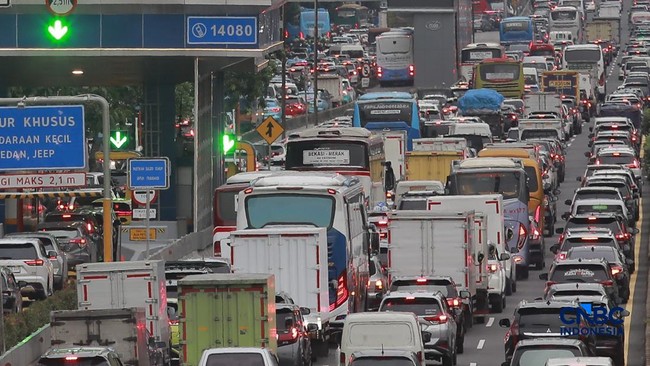
The traffic congestion that recently occurred on Jalan HR Rasuna Said, South Jakarta—caused by concert-goers’ vehicles occupying the roadway and pavements—might appear to be a mere traffic issue. Some view it as a result of poor coordination by organisers, limited parking availability, or weak field supervision. While these reasons are valid, the event raises a more fundamental question: why is space that should belong to everyone increasingly treated as private property?
This question is crucial because similar phenomena occur daily in various forms. We see pavements transformed into parking areas, roadsides crowded with traders, rubbish dumped into rivers due to lack of oversight, and queues being cut by those feeling their interests are more urgent. At first glance, these seem like isolated minor violations. However, they reveal a growing lack of awareness regarding shared spaces and common interests in Indonesia.
Modern life cannot function without public space. Roads, pavements, parks, public transport, and digital spaces are social infrastructures that allow millions of strangers to coexist orderly. Public space is where individual rights meet the rights of others, regulated through norms and mutual agreements. Therefore, the issue of public space is not merely physical; it is a matter of culture and social awareness.
As we look to our history, the Indonesian nation was built on the idea of communal living. The founding fathers recognised that Indonesia was not born from shared ethnicity, language, or religion, but from the willingness of various groups to share a future in one national home. Thus, the concept of ‘gotong royong’ (mutual cooperation) holds a vital position. Soekarno even simplified Pancasila into ‘Ekasila’, which is gotong royong. To him, it was not just about helping with daily tasks, but a way of viewing the relationship between the individual and society—where private interests are recognised but must not disregard the greater good.
In modern urban life, this spirit should manifest in how we use public facilities. Respecting pavements is a form of modern ‘gotong royong’, as is obeying traffic rules and maintaining cleanliness. However, modernisation and urbanisation often alter the human relationship with space. In large cities, social connections become more anonymous, and the social bonds that formed naturally in smaller environments loosen. Consequently, the awareness to protect the common interest no longer arises automatically.
This phenomenon can be explained through biologist Garrett Hardin’s concept of the ‘tragedy of the commons’, where shared resources face destruction because individuals act solely in their own interest. A driver might think parking on a pavement for a few minutes is insignificant, but when hundreds make the same decision, the pavement loses its function for pedestrians. The problem is not a single person, but the accumulation of individual decisions that ignore collective impact.
This situation also mirrors the concept of ‘anomie’ introduced by sociologist Émile Durkheim, describing a state where social norms lose their binding power. Rules still exist, but they are no longer felt as morally important guides for behaviour. This occurs as societies transition from traditional to complex modern lives, where social ties loosen and regulatory control weakens.