
A closer look at Danantara and Bakrie Group’s investment in US oil and gas company
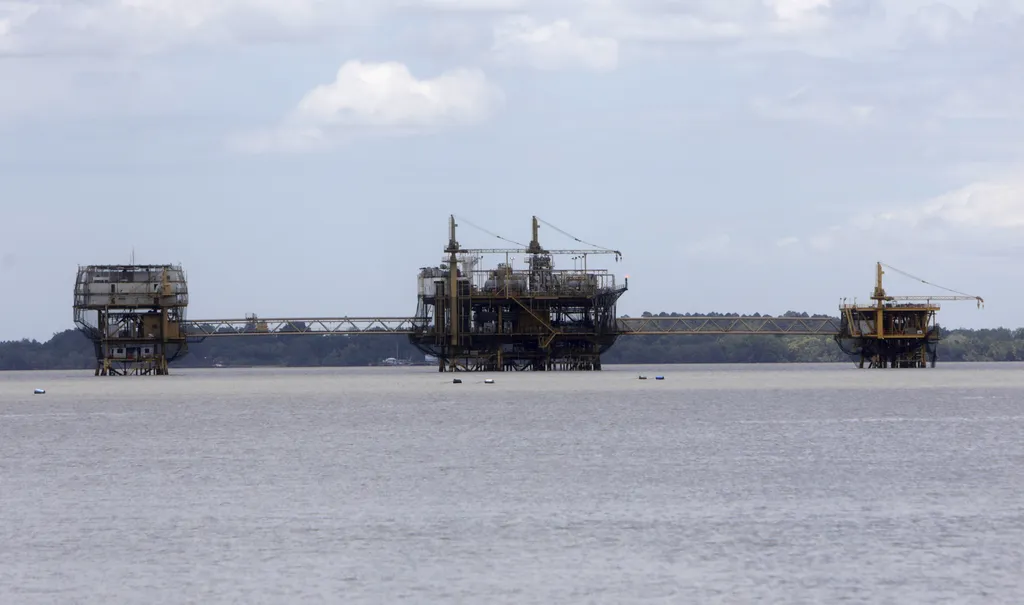
Energi Mega Persada’s strategic corporate move has drawn investors’ attention, while Danantara’s decision to continue increasing its overseas investments has come under scrutiny.
Danantara is investing overseas again, this time alongside Bakrie Group company PT Energi Mega Persada Tbk. The two parties are investing a total of US$450 million in US oil and gas company HighPeak Inc. Although the partnership could create interesting opportunities for strategic collaboration, the repeated overseas investments have raised questions.
Danantara is investing US$250 million, equivalent to Rp4.5 trillion at an assumed exchange rate of Rp18,000 to the dollar, in HighPeak. Energi Mega Persada (ENRG) is contributing US$200 million, or Rp3.6 trillion.
HighPeak is an oil and gas company based in Texas. It acquires, develops, explores and produces oil and gas in the Permian Basin.
The Permian Basin is the largest crude oil-producing region in the United States. The US Energy Information Administration says it accounted for 48 per cent of total US production in 2025. Since 2007, output growth in the region has been driven primarily by the use of horizontal drilling and hydraulic fracturing, or fracking.
Danantara’s investment will be made in several stages through the issuance of convertible preferred shares. The preferred shares can be converted into ordinary shares, subject to the applicable terms. HighPeak is a publicly listed company on Nasdaq under the ticker HPK.
Energi Mega Persada President Director and Chief Executive Syailendra S Bakrie said in an official statement on Tuesday, 6 October 2026, that the investment formed part of the company’s inorganic growth strategy, through expansion both in Indonesia and overseas.
ENRG is an upstream oil and gas company operating in 13 working areas, from Sumatra to South Sulawesi, as well as overseas, including in Mozambique. Its oil and gas working areas hold reserves and resources of 427 million barrels of oil equivalent (MMBOE).
The move is a strategy to secure sustainable returns.
Deputy Director Edoardus Ardianto said the HighPeak investment would be funded independently and would not affect the company’s ability to reinvest.
“ENRG’s investment will be funded independently by ENRG, allowing us to continue optimising reinvestment opportunities while maintaining discipline in capital allocation,” he said.
Danantara Investment Management (DIM) Chief Executive Pandu Sjahrir said in a statement issued by Danantara on Tuesday, 6 October 2026, that the move was intended to generate sustainable returns.
“This investment is in line with our mandate to invest in strategic sectors that deliver sustainable returns over the long term while supporting Indonesia’s national interests,” Pandu said.
He said the investment opportunity was promising because HighPeak held a strategic position in one of the world’s most advanced upstream oil and gas markets. The move, he added, was consistent with Danantara’s efforts to build a globally diversified investment platform.
“We hope this partnership will facilitate an exchange of skills that supports the development of Indonesia’s energy sector, while strengthening the long-standing energy and economic ties between Indonesia and the United States,” he added.
Once the transaction is completed, HighPeak will develop training and secondment programmes for Indonesian workers to support capability-building and the exchange of technical expertise.
Under the investment terms, DIM will receive downside protection. It will also have the opportunity to benefit from future increases in equity value by converting its preferred shares into ordinary shares.
DIM will also have the option to participate in HighPeak’s next share offering through a private placement. It will appoint one representative to HighPeak’s board.
HighPeak President and Chief Executive Michael Hollis said the company operated a large portfolio of predominantly oil-producing assets in the Permian Basin.
“We believe our partnership with DIM will accelerate the development of our assets through sustained investment, including the expansion of our drilling programme. This partnership brings together long-term investors with a shared commitment to growth and sustainable value creation,” Hollis said in a statement issued by Danantara.
In a statement on its website, HighPeak said it had secured financing commitments from Citibank NA and Fifth Third Bank NA for a new US$800 million reserve-based lending (RBL) facility in connection with the transaction. The new credit facility is expected to be completed at the same time as the Danantara-ENRG investment.
HighPeak expects to repay all its term loans using the investment proceeds, an initial drawdown under the new RBL facility and available cash. The company said its existing term debt stood at US$1.17 billion. The investment transaction is expected to close in the fourth quarter of 2026.
Herry Gunawan, director of the Next Indonesia Center, questioned the overseas investment decision on Thursday, 8 October 2026. He said DIM’s business model did not align with the President’s mandate for Danantara to accelerate investment in Indonesia.
“Given how frequently DIM invests overseas, I think this is highly unusual,” he said.
This is not Danantara’s first overseas investment. DIM recently invested in Swiss asset manager Partners Group. Bloomberg reported on Wednesday, 27 August 2026, that the investment was worth US$600 million, or around Rp10.8 trillion.
When asked about the investment at the time, Pandu declined to comment on its value. “We expect this investment to generate good returns and enable knowledge transfer that will ultimately benefit Indonesia,” he told Bloomberg.
In early August 2026, Danantara also agreed to invest US$2.5 billion, or around Rp28 trillion, in a joint venture for the operations of JBS NV, the world’s largest meat-processing company, in Australia and New Zealand.
In Indonesia’s economy, investment is the second-largest component of gross domestic product (GDP), after household consumption. Overseas investments such as Danantara’s are not recorded domestically.
At the same time, investment growth has begun to slow. In 2025, the investment-to-GDP ratio stood at 28.77 per cent, its lowest level in 17 years. This was well below the levels of other countries that have managed to boost domestic investment and accelerate economic growth.
Herry noted that China’s investment-to-GDP ratio had averaged 40 per cent over the past 20 years, while its economy had grown by an average of around 8 per cent. India, meanwhile, had maintained an investment-to-GDP ratio of 30 per cent a year over the same period, with average economic growth of at least 6 per cent.
With its ambition to achieve 8 per cent economic growth, Indonesia should prioritise domestic investment, Herry said. Danantara was established to strengthen Indonesian economic growth and oversees all state-owned enterprises.
While Danantara is investing overseas, domestic investment contracted by 7.8 per cent year on year in the second quarter of 2026, Herry said. “This suggests Danantara is tending to disregard its mandate, as well as the national economic interest. It is deeply ironic,” he said.
The partnership between Danantara and ENRG has also raised questions because ENRG appointed Gita Sjahrir, Pandu’s sister, as an independent commissioner in early 2026. Herry said the investment therefore carried a potential conflict of interest.
“This raises the question of how far that relationship could influence the parties. In terms of corporate governance, if DIM undertakes a corporate action with ENRG, there is a likelihood it would be considered an affiliated transaction, given the family relationship between Pandu and Gita,” Herry said.
Kiwoom Sekuritas Indonesia equity research analyst Sukarno Alatas said family ties did not in themselves guarantee synergy or investment gains. He said the development was interesting in terms of its potential for strategic collaboration.
“However, we continue to stress the importance of transparency, corporate governance and the delivery of measurable economic benefits for ENRG and all shareholders,” he told Kompas on Friday, 9 October 2026.
Kiwoom Sekuritas’ analysis found that the investment could expand ENRG’s exposure to international oil and gas assets and create opportunities for long-term returns. The benefits to ENRG would nevertheless depend on the investment valuation, dividends received, and HighPeak’s operational performance and cash flow.
Other potential benefits include a guaranteed annual return of 6 per cent and the possibility of capital gains when the investment is converted into HPK shares.
“The conversion price of US$9.50 a share is at a premium to HPK’s current price of US$8.73. However, I see potential for HPK’s share price to rise further, as it is currently on an upward trajectory, having gained 83 per cent since the start of the year,” Sukarno said.
The prospect of further share-price gains remains strong amid geopolitical uncertainty that is keeping oil prices high. If HPK’s share price rises technically to US$9.13 and then reaches the medium-term target of US$12, the investment’s conversion value could increase by 33 per cent, he said.
The use of funds to repay HighPeak’s debt could also reduce its interest burden and improve its capital structure, according to the assessment of the ENRG and Danantara investment.
The type of business targeted by Danantara and ENRG has also attracted criticism in light of the state institution’s interest in prioritising domestic energy security.
Next Indonesia Center director Herry Gunawan said that, beyond crude oil availability, a fundamental challenge for Indonesia’s energy sector was refined oil products. They are among the country’s largest imports and weigh on the economy, while domestic refining capacity remains inadequate.
“So why are ENRG and DIM investing in a company similar to Pertamina, rather than investing in refining, which is urgently needed?” Herry added.
He said the investment could create potential risks for Pertamina as an offtaker of imported oil. Indonesia, through Pertamina, was already actively importing oil from Russia, he said.
Pertamina had also previously signed co-operation agreements with several US companies, including Halliburton and ExxonMobil, in the upstream oil and gas sector. The new investment could therefore add to the company’s burden.
Herry said this additional burden would not be easy for Pertamina to manage, as most of its profits had to be paid to Danantara. In 2025, for example, 85 per cent of Pertamina’s profit was paid to Danantara as dividends, according to the audited 2025 Central Government Financial Report (LKPP). This left Pertamina with limited cash.
“I hope it does not keep adding to the company’s debt, which could ultimately lead to higher domestic fuel prices because Pertamina needs cash,” Herry said.