
A Child, a Bottle of Drink, a Piece of Love
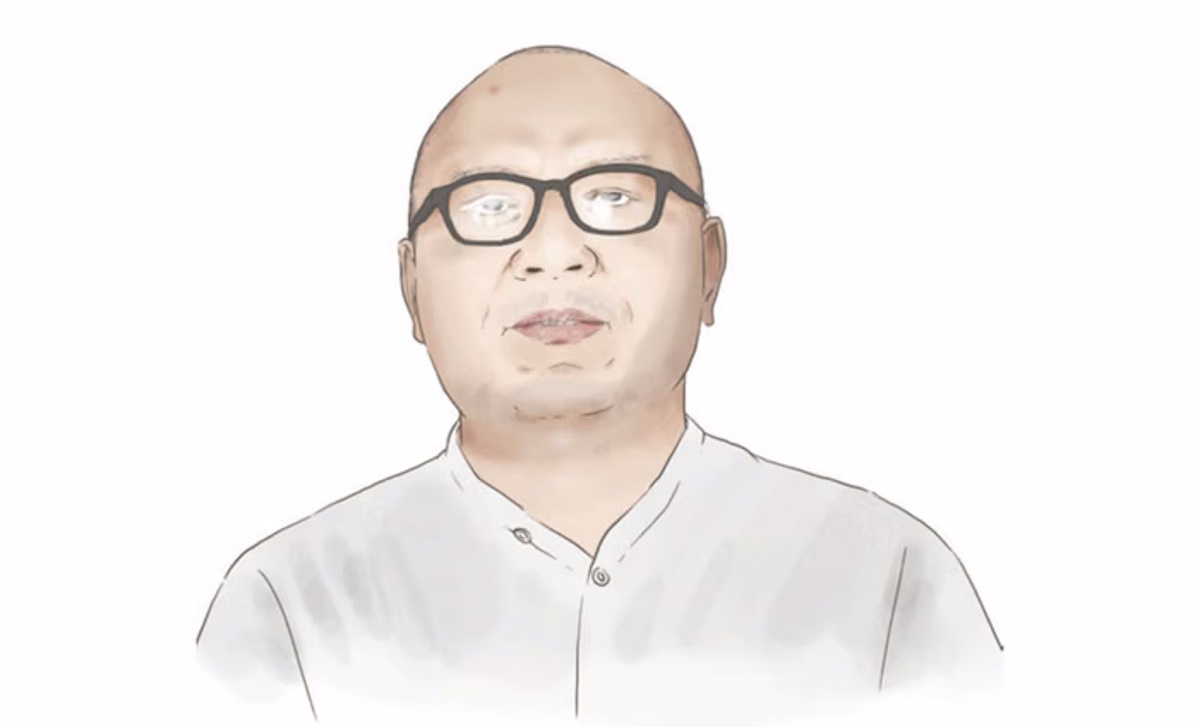
Some time after the earthquake struck Flores on 15 August, I visited affected communities and families in several locations. Together with volunteers from the Labuan Bajo Diocese Disaster Post, I brought basic food packages and other simple necessities. Not much. It was impossible to meet all needs. The food packages were also donations from various parties.
Like many others, I simply wanted to be present. To knock on the doors of lives that were hurting. To share what could be given. In those places, I witnessed many things that are difficult to describe in words. There were houses with cracked walls. There were buildings reduced to rubble. There were faces that looked exhausted after days of living in anxiety. There were families who still chose to sleep outside their homes for fear of aftershocks.
One afternoon, as we were about to leave, I saw three children, siblings. We happened to have a few bottles of drink left. I approached them. I offered each of them a bottle. They accepted with simple joy. Their small faces suddenly brightened, even brighter than the midday sun. A bottle of drink that for many people might mean nothing, in their hands felt like a great gift.
I was about to walk away when the eldest called out: ‘Please, one more bottle for my older sibling.’ I fell silent. A short sentence. Words that at once gripped my conscience in many ways. In difficult circumstances, it is very human for someone to think of themselves first. The child could have gone off with his drink. He could have enjoyed it alone. But instead he remembered someone who was not there. He had not yet drunk, but he was thinking of someone else. His sibling.
The child was teaching me—teaching us—something far greater than a bottle of drink. The child did not want to enjoy something alone. There was someone else who also needed it. Perhaps needed it more. In the midst of this disaster, hearts may be shaken. Tears may fall. Yet there is always something within human beings that quietly refuses to give up. Something that this disaster cannot take away. The innate human longing to make room for others in one’s awareness.
The word solidarity is surely too grand for a small child’s mouth. He may not even understand it. But that day he practised it perfectly and beautifully. He fought for a bottle of solidarity for his sibling. Only in a childlike chatter. An utterance: ‘one more bottle for my older sibling.’ Its meaning surpasses the fine, polished speeches of those in power.
In the midst of this disaster, I then imagined so many people who may not yet have been reached by aid. I heard news of tonnes of aid arriving. Humanitarian posts were set up. So many people worked sincerely. All of that deserves our gratitude.
But behind those large figures there are always human beings. There is a mother still waiting for a tarpaulin. There is a father thinking about how his family will live after their house was damaged. There is an elderly person who needs medicine. There is a child who may only be longing for a bottle of drink in the middle of a scorching day and sending a message about the uncertainty of the future. Therefore, let not the abundance of aid make us forget the one person who has not yet received a share.
Disasters always remind us that human beings can lose many things in a few seconds. Homes, possessions, a sense of safety, even loved ones. Yet no matter how powerful the earthquake, it is not always able to collapse something deepest within human beings: the capacity to love.
I saw that love in the volunteers who came from various places. In neighbours who shared food. In families who made room in their tents for other families. In people who lifted stones together. And in a child who held a bottle of drink while remembering his sibling. Perhaps that is why we are still able to stand. Not because we are not fragile, but because amid the siege of suffering, there are still hands holding one another.
The days after this earthquake may still be long. Much must be rebuilt. Houses must be repaired. Places of worship must be restored. Economic life must be recovered. Inner wounds need time to heal. But we must not lose what is most precious. A piece of love left among the dust and stones.
The world does not always need extraordinarily grand actions. Sometimes the world only needs someone who, amid their own limitations, is still able to turn to another and say: ‘Please, one more for my sibling.’ As long as such words remain alive among us, I believe: disasters may be able to collapse our houses, but they will never collapse our humanity.
The Provincial Government of East Nusa Tenggara extended the emergency response period for the Flores earthquake by 14 days. Logistics distributed included adult and children’s clothing, baby nappies, milk, canned food, medicines, tarpaulins and mattresses. Baznas RI built three emergency mosques in East Manggarai and Nagekeo, NTT, to meet residents’ worship needs after the earthquake. BNPB accelerated the data collection of 53,971 houses damaged by the M 7.7 Flores earthquake. The BNPB verification process was carried out in parallel with the emergency response phase.