
A Century of Sagarika: The Tagore-Dewantara Bond That Transcends Modern States
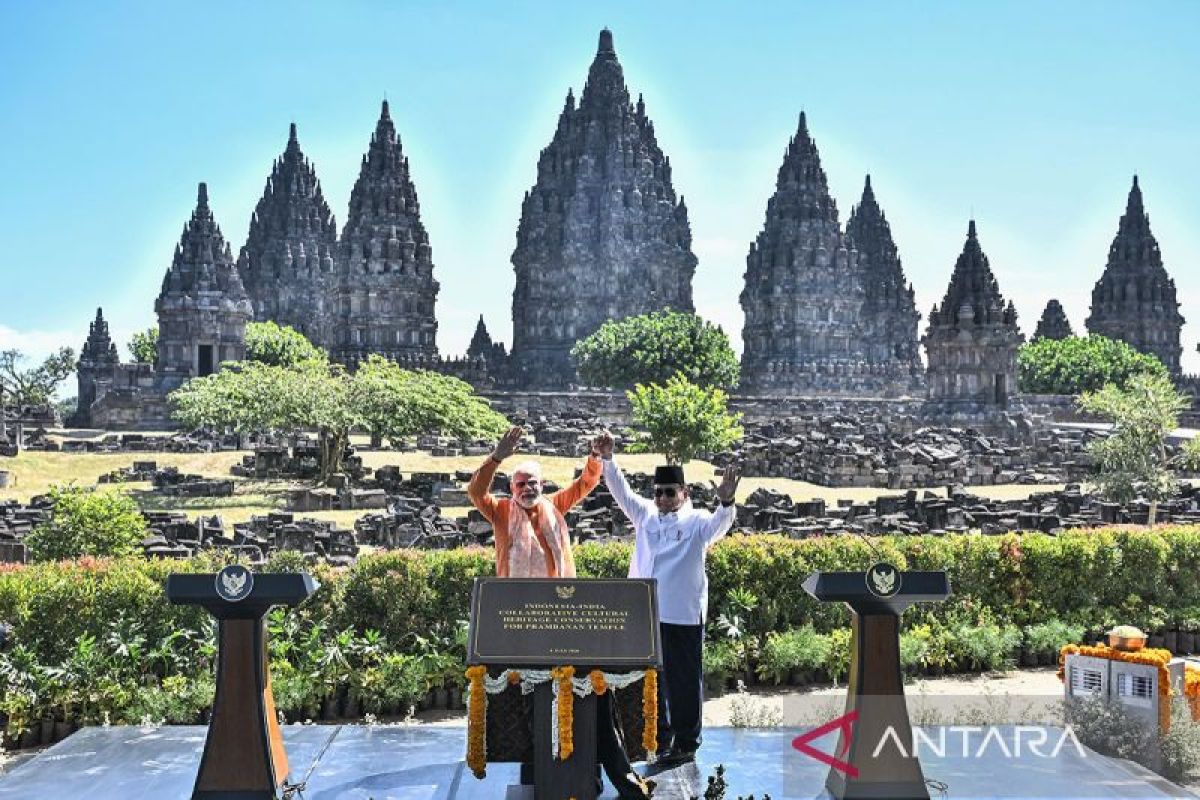
The history of Tagore and Dewantara is proof that the bond between India and Indonesia predates the existence of the modern state itself.
Jakarta (ANTARA) — In July 1927, the colonial government of the Dutch East Indies was in a state of panic upon hearing news that a great world poet would be visiting the Nusantara archipelago.
He was Rabindranath Tagore, the first Asian laureate of the Nobel Prize in Literature, who had already sailed from India towards Batavia.
Tagore, already famous for the novel Gora, or Gitanjali, the poetry collection that earned him the Nobel Prize in Literature in 1913, certainly had a mind brimming with ideas.
Moreover, the colonial government was still reeling from the PKI rebellion, which had attempted to overthrow the Dutch East Indies from late 1926 to early 1927.
The news deeply unsettled the colonial authorities, prompting them to mobilise the Politieke Inlichtingen Dienst (PID), the intelligence service, to monitor the philosopher-poet from India.
Tagore had indeed promised not to touch upon political matters during what he called a cultural pilgrimage to Greater India. Yet the birth of Gora, the young protagonist of his novel, was a fierce rejection of colonialism written in literary ink.
Bali