
A Century of Asrul Sani: UI Sociologist Highlights Welfare of Indonesian Artists and Intellectuals
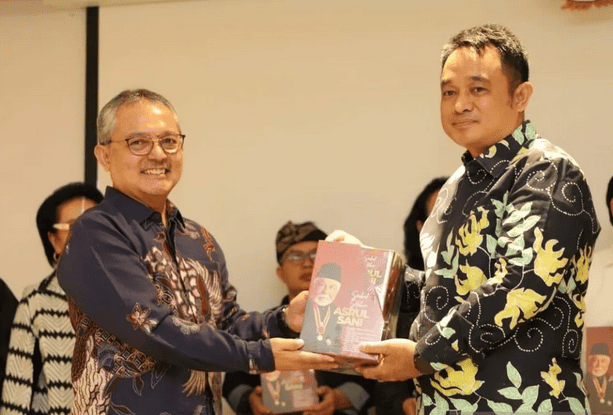
University of Indonesia sociologist Imam B. Prasodjo has launched a sharp critique regarding the state’s minimal attention to the welfare of artists, writers, and intellectuals. He made the remarks at a National Seminar commemorating A Century of Asrul Sani in Jakarta on Wednesday (10/6). In his presentation, Imam recalled the period when he lived with senior poet Taufiq Ismail during the 1980s. This experience gave him a profound perspective on the economic realities of literary activists in Indonesia. ‘Every morning I witnessed many artists and writers coming to Mr Taufiq’s house, but ultimately they were there to borrow money. I asked myself, why are such creative and intelligent people suffering in their old age,’ Imam revealed.
Imam noted that amidst the economic concerns of artists at that time, the figure of Asrul Sani emerged as an exception. According to him, Asrul Sani’s economic success could not be separated from the strategic role of his wife, Mutiara Sani, who was the main pillar of his creative life. This condition, according to Imam, is still relevant to the current situation, where professions that rely on thought and culture often do not receive adequate financial appreciation from the state. He even compared the fate of artists to that of university lecturers in Indonesia. He highlighted the average income of lecturers, which he believes is still in the range of Rp3 million per month. ‘Lecturers survive because of their social status. They have the title of professor or doctor. But economically they are groaning. Many cannot even afford to buy books,’ he stressed.
Imam further warned that challenges for creative workers will become even heavier with the presence of artificial intelligence. Without systematic support from the government, the existence of thinkers and artists is threatened with being eroded by the times. As a solution, he urged the government to immediately formulate a supporting facility scheme or an endowment fund for artists, cultural figures, lecturers, and intellectuals. This support is considered crucial because their works represent the ‘essence of life’ that builds the nation’s civilisation. ‘We need to think about long-term support. They produce thought and exemplary conduct that are important for civilisation. Figures like Asrul Sani and Taufiq Ismail are rare individuals born from profound intellectual processes,’ he added.
Imam stressed the importance of safeguarding Indonesia’s cultural capital to prevent it from extinction. He expressed hope that the commemoration of great figures like Asrul Sani would not merely become an occasion for nostalgia, but rather a catalyst for a real movement to fight for the welfare of intellectual workers. ‘This nation needs people who are capable of formulating historical events into lessons for society. Therefore, they must receive a proper place and adequate support,’ he concluded.
Source: jawawa.id (https://jawawa.id/newsitem/a-century-of-asrul-sani-ui-sociologist-highlights-welfare-of-indonesian-artists-and-intellectuals-1781103127)
Originally published by Media Indonesia (https://mediaindonesia.com/humaniora/899130/seabad-setahun-asrul-sani-sosiolog-ui-soroti-kesejahteraan-seniman-dan-intelektual-indonesia), translated from Indonesian