
A Brief Profile of Marsinah, an Icon of the Indonesian Labour Movement
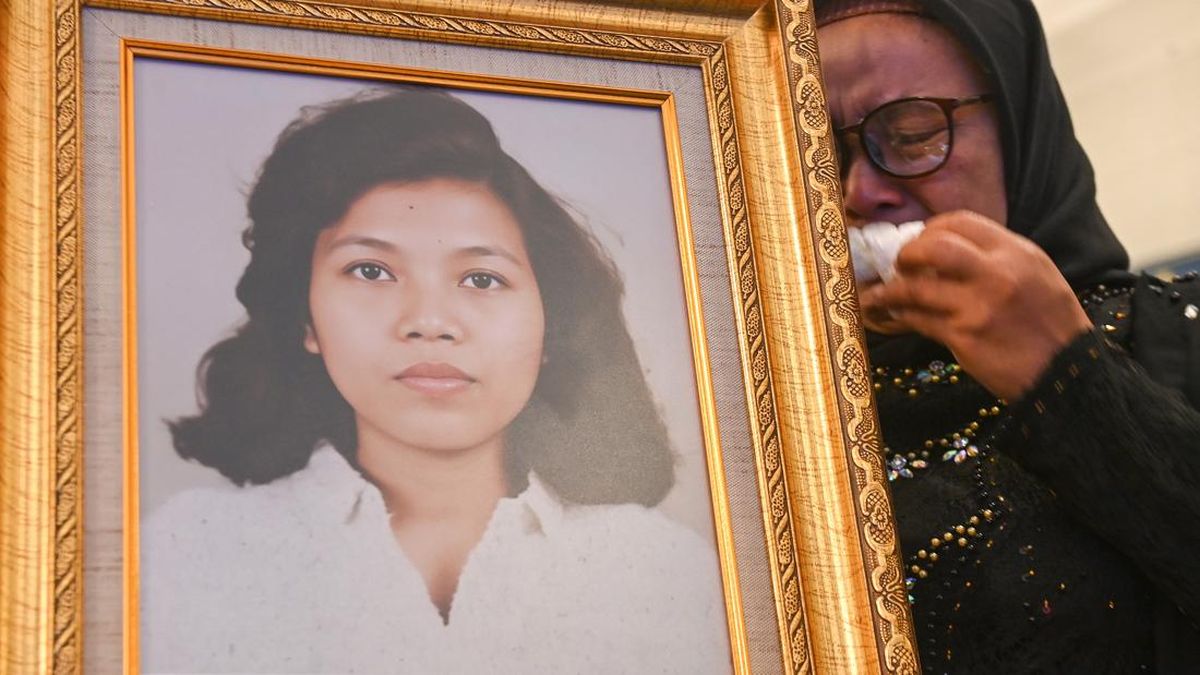
A Brief Profile of Marsinah, an Icon of the Indonesian Labour Movement
Marsinah’s name has once again come to the fore after the government awarded her the title of National Hero in 2025.
The female labourer from Nganjuk, East Java, is remembered as a symbol of the struggle for workers’ rights and resistance against injustice during the New Order era.
Marsinah was born in Nglundo Village, Nganjuk, East Java, on 10 April 1969. She grew up in a simple family and started working at a young age, selling rice and corn at the market.
At school, Marsinah was known as a bright student. She once aspired to become a law graduate, but her family’s economic situation prevented her from continuing her education at university.
After graduating from Muhammadiyah 1 Nganjuk High School in 1987, Marsinah moved to Surabaya to work. She worked in a shoe factory before eventually becoming a labourer at PT Catur Putra Surya (CPS), a watch factory in Porong, Sidoarjo, in 1990.
At her workplace, Marsinah was known for her outspoken advocacy for workers’ rights, especially regarding wages and the welfare of female workers.
Marsinah’s struggle reached its peak in May 1993 when she and her colleagues staged a strike demanding wage increases and improvements in workers’ rights. They put forward 12 demands, including an increase in daily wages, holiday allowances, and the right to maternity leave and health care.
The situation escalated after 13 workers were summoned by authorities and forced to resign. Marsinah then filed a protest with the company on 5 May 1993.
That evening, Marsinah disappeared after saying goodbye to her colleagues at their meeting place in Siring Village, Porong. Three days later, her body was found in a hut in the Nganjuk area, in a state of severe injury.
The murder of Marsinah sparked national and international attention. Several people were tried, including company management, but the Supreme Court acquitted all defendants in 1995 due to lack of evidence.
To date, the main perpetrator of Marsinah’s murder has not been revealed. The case has since become widely known as one of the alleged serious human rights violations during the New Order era.
Even though more than three decades have passed, Marsinah’s name continues to live on in the Indonesian labour movement. On 10 November 2025, President Prabowo Subianto officially awarded Marsinah the title of National Hero.
The government also plans to inaugurate the Marsinah Museum in Nglundo Village as a form of tribute to her struggle in defending the rights of workers in Indonesia.