
A Birthday Gift After the Armuzna Trial
Jemari Supriadi, 53, moves briskly as he checks the contents of his bag in a corner of his hotel room in the Syisyah district of Mecca on Sunday morning (24 May). One by one, provisions such as snack packs, personal medications, a string of prayer beads, a small prayer mat, and a pocket-sized prayer book with worn edges—signs of frequent use—are confirmed not to be missing.
At first glance, the activity seems like routine travel preparation. But for millions of Hajj pilgrims preparing to move to Arafah on 9 Zulhijah (Monday), this small bag will bear witness to the most significant spiritual journey of their lives.
For Indonesian Hajj pilgrims, the Arafah, Muzdalifah, and Mina (Armuzna) phase is the true test. Hajj Service Officers (PPIH) have long warned that this stage demands peak physical readiness.
Pilgrims must endure massive movements from hotels to Arafah tents, shift to the open expanse of Muzdalifah at midnight, and walk kilometres under scorching heat in Mina to perform the stoning of the devil. This ritual sequence demands unwavering endurance.
However, Supriadi has chosen a greater challenge. He is among the few Indonesian pilgrims opting to observe the Sunnah Tarwiyah by departing early for Mina. On Sunday afternoon (24 May), his steps will kick off the most critical phase of the Hajj.
Traditionally, Tarwiyah involves spending the night (mabit) in Mina before the standing at Arafah. Pilgrims depart Mecca on 8 Zulhijah and move to Arafah the next day to mark the Hajj’s climax on 9 Zulhijah.
Choosing to observe the Sunnah Tarwiyah carries significant physical and mental consequences. Spending the night in quiet worship in Mina before joining the massive crowd heading to Arafah requires meticulous stamina management.
“My physical condition must be tightly managed. Since Friday (22 May) in Mecca, I’ve strictly limited daytime outings. I drink water before feeling thirsty and always keep oral rehydration salts in my bag,” Supriadi said during an interview with Media Indonesia amid his preparations.
Beneath his preparedness lies personal motivation driving the middle-aged man to embrace the extreme weather. According to his flight manifest, if the Armuzna sequence proceeds smoothly and he moves to Medina, Supriadi is scheduled to return home on 2 July.
“2 July is my birthday,” he said with a bright smile, masking the lingering tension before departure.
While Supriadi chose the Tarwiyah route, 74-year-old Rochani took a different approach. The Indonesian pilgrim opted for Haji Ifrad, a method that prioritises completing the full Hajj rites before performing Umrah after the Armuzna rituals.
Since arriving in Mecca on Friday (22 May), Rochani has not once removed the two seamless white garments. Maintaining the purity of the ihram while adhering to its restrictions for days in extreme heat presents a unique challenge.
“Many of us arriving close to the Hajj’s peak choose Haji Ifrad,” he said.
For Rochani, physical readiness for Armuzna was prepared from the moment he chose the Ifrad route. Now, his focus is on strengthening mental resilience. As Armuzna approaches, he prefers staying in his hotel room, reciting talbiyah and dhikr while minimising interaction with the outside commotion.
Supriadi and Rochani’s steadfastness reflects the smaller struggles of Indonesian Hajj pilgrims at the threshold of the sacred rites. Meanwhile, the Ministry of Hajj and Umrah, alongside PPIH, continues to intensify physical protection education for pilgrims.
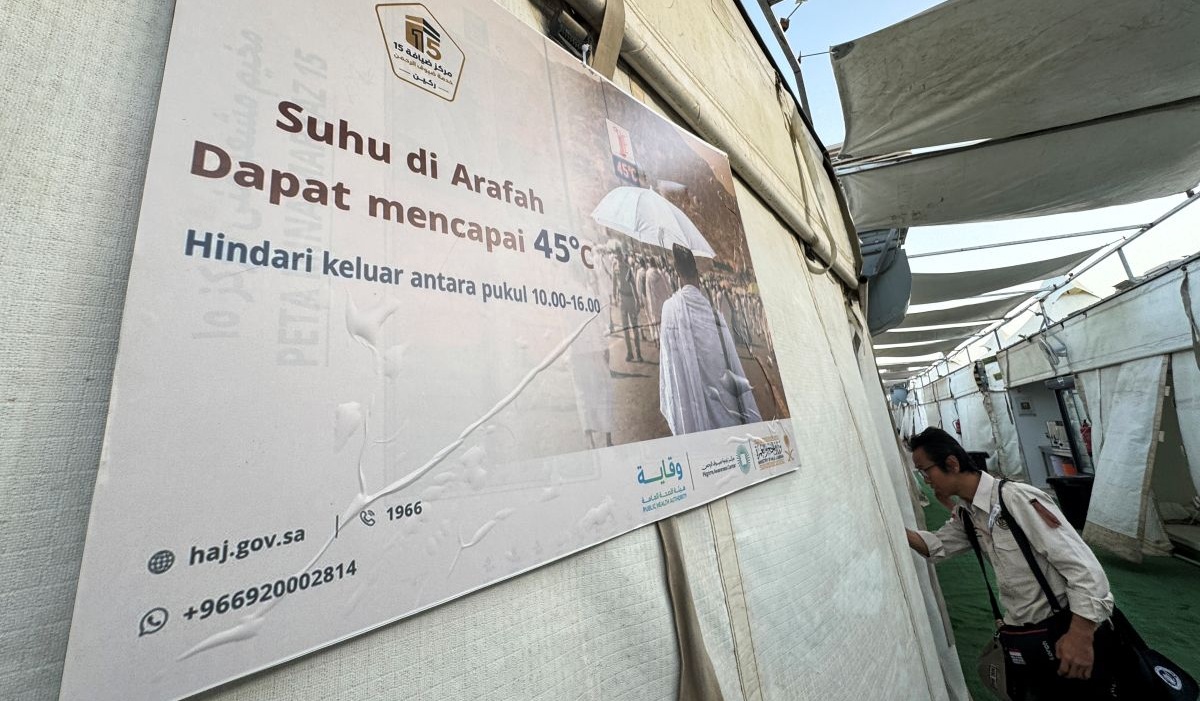
Scorching heat and dehydration threats are real adversaries. Outdoor temperatures are forecast to reach 44-45 degrees Celsius during the Hajj peak. In such conditions, maintaining fitness is not merely a precaution but a prerequisite for safely completing all rites—a priceless reward after the Armuzna trial.