
A bastion of protection for the Morio orangutan in East Kalimantan
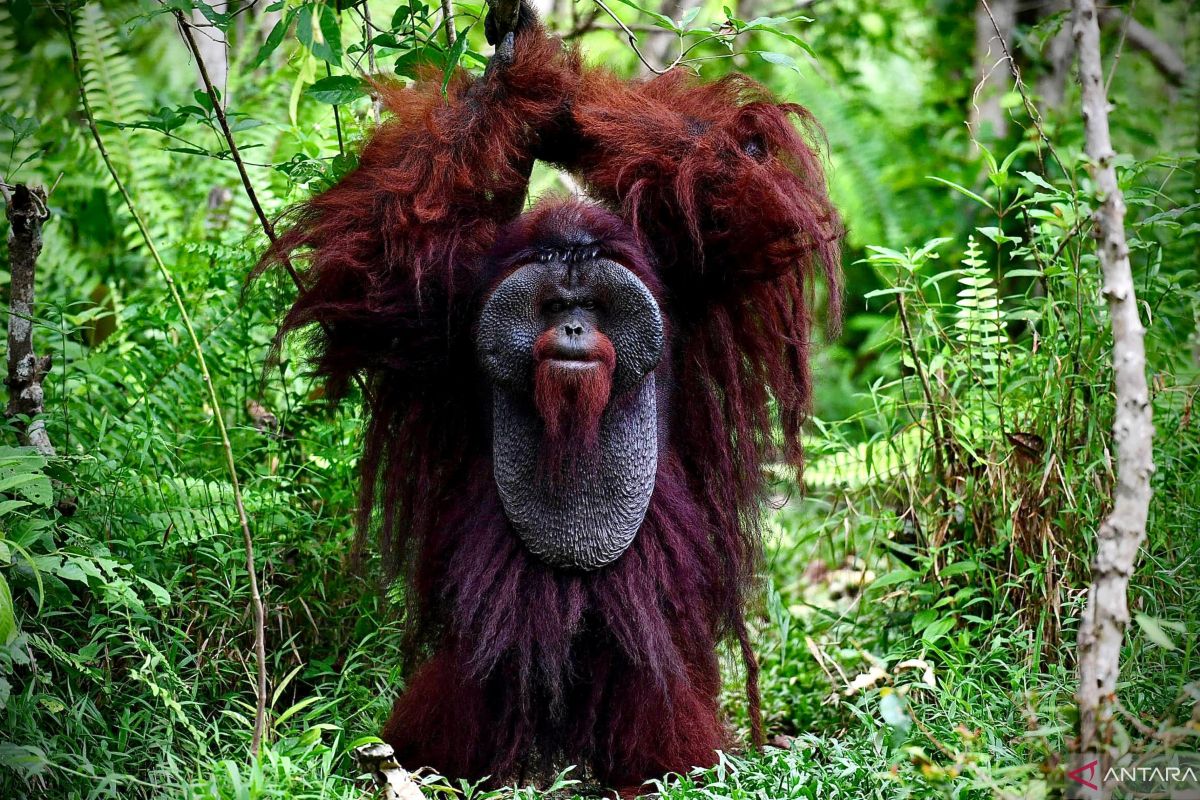
Development must continue, but environmental issues must also be addressed and become a shared responsibility.
Penajam Paser Utara (ANTARA) - The endemic species of Borneo, the Morio orangutan (Pongo pygmaeus morio), is increasingly appearing on mining roads, industrial areas, and in residential settlements amidst rapid development in the mining, plantation, and forestry sectors in East Kalimantan Province.
Data from the East Kalimantan Natural Resources Conservation Agency (BKS and BKSDA) shows that throughout 2024, at least 31 individual orangutans were evacuated from various conflict locations. This figure surged to 37 individuals in the first two months of 2025 alone, indicating growing pressure on animal habitats.
The Conservation Action Network (CAN), which monitors major orangutan conservation issues in Indonesia, notes that most of the habitat for this endemic species lies outside formal conservation areas. According to CAN data, approximately 80 per cent of Indonesia’s important biodiversity is located outside conservation zones. Specifically for orangutans, about 76 per cent of the population resides outside protected areas.
CAN records indicate that Indonesia possesses roughly 14 million hectares of orangutan habitat, but only 24 per cent is within conservation areas, with the remainder spread across production forests, plantations, mining areas, and other usage zones. This condition renders conservation approaches focused solely on protected areas inadequate.
A landscape-based approach represents the future of conservation in Indonesia. The Keraitan landscape preservation area serves as the first example of this concept’s implementation in Indonesia, providing a basis for drafting technical regulations for future protection and preservation.
Preserving Orangutan Sustainability
Challenges in maintaining orangutan sustainability are growing. According to the Head of BKSDA East Kalimantan, Ari Wibawanc, the habitat of the Morio orangutan in the area known as the Kutai Landscape stretches from the Mahakam River to the Kelay River, covering approximately 4.2 million hectares.
This landscape is divided into eight sub-landscapes, one of which is the Keraitan landscape, spanning 560,000 hectares. This area contains various land uses, including coal mining, oil palm plantations, industrial forest plantations, production forests, and settlements. However, it is precisely in these regions where orangutan populations remain high, thereby increasing the potential for conflict. Nearly 70 per cent of orangutan conflicts in East Kalimantan occur within the Keraitan landscape.
Consequently, the Integrated Orangutan Conservation Forum involves all stakeholders and conservation partners to design development that proceeds alongside conservation efforts through collaboration between the government, the business world, academia, and the community.
This step aligns with Presidential Instruction Number 1 of 2023 regarding the Mainstreaming of Biodiversity Conservation, which mandates all ministries, agencies, and stakeholders to incorporate environmental aspects into the development process.
A new approach through the formation of the Integrated Orangutan Conservation Forum, with the proposed Orangutan Habitat Preservation Area as Indonesia’s first model, was discussed during the Public Consultation for the Proposed Indicative Map of the Keraitan Landscape Orangutan Habitat Preservation Area.
A landscape-based approach is essential. One reason orangutans appear on mining roads, industrial zones, and in settlements is population isolation caused by habitat fragmentation, where large natural areas are broken into smaller patches. With preservation areas in place, roaming space and access to food can be maintained, ensuring genetic exchange between populations and reducing the risk of conflict and animal mortality.
Currently, about 76-78 per cent of the orangutan population in the Keraitan landscape lives outside formal protected areas, making ecological corridors vital. The Integrated Orangutan Conservation Forum for the Keraitan Landscape aims to accelerate and integrate various ongoing initiatives, serving as a precursor to the future management of the 4.2 million-hectare Kutai Landscape.
Yaya Rayadin, Chairman of the Integrated Orangutan Conservation Forum for the Keraitan Landscape and an academic at Mulawarman University, noted that a 49-hectare communal conservation area within an oil palm plantation was able to increase the orangutan population from six to eleven individuals during the research period.
This fact proves that wildlife can survive if habitat connectivity is maintained through adequate corridors, including simple engineering such as artificial canopy bridges made from piles and ropes. Furthermore, it is necessary to increase human resource capacity within every company so that conservation understanding is not limited to forum representatives but is understood down to the operational level.
The Ministry of Forestry, BKSDA East Kalimantan, local governments, academics, conservation organisations, and concession holders in East Kutai Regency are working together to protect the Morio orangutan habitat.
A Shared Commitment
The Integrated Orangutan Conservation Forum involves the Ministry of Forestry, BKSDA East Kalimantan, the Regional Technical Implementation Unit (UPTD) for the Bengalon Production Forest Management Unit (KPHP), conservation organisations CAN and Ecositrop, and various academics.
The preservation area covers approximately 101,000 hectares, connecting various orangutan habitat pockets around the Keraitan Protected Forest, featuring approximately 94 per cent vegetation cover in very good condition.
On the private sector side, the forum includes mining companies such as PT Kaltim Prima Coal (KPC), PT Ganda Alam Makmur, PT Indexim Coalindo, and PT Berkah Usaha Muamalah Nusantara, as well as forestry sector companies including PT Kelawit Wanalestari and PT Kiani Lestari.
Source: jawawa.id (https://jawawa.id/newsitem/a-bastion-of-protection-for-the-morio-orangutan-in-east-kalimantan-1782093220)
Originally published by Antara (Indonesian) (https://www.antaranews.com/berita/5617275/benteng-perlindungan-bagi-orangutan-morio-di-kalimantan-timur), translated from Indonesian