
98 Resolution Network Highlights 'Dark Indonesia' Narrative, Here's What It Says
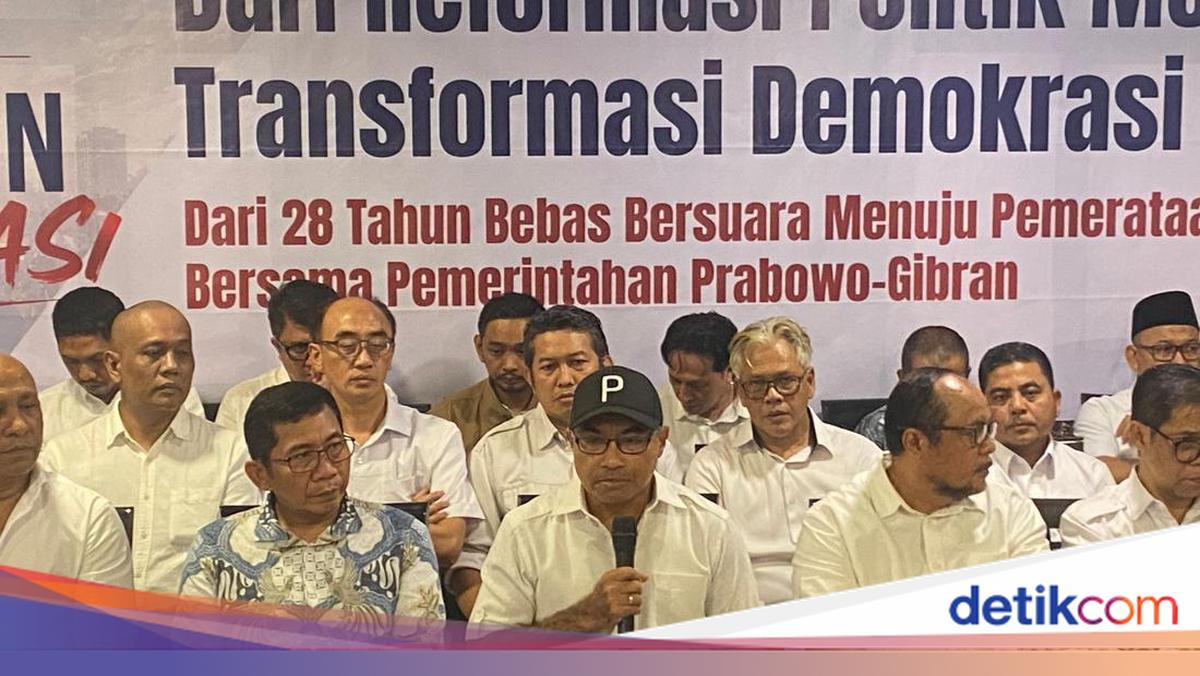
The initiator of the 98 Resolution Network, Haris Rusly Moti, has highlighted a social movement that is amplifying narratives of ‘Dark Indonesia’, ‘Flee Indonesia’, and ‘Dump the Rupiah’. He considers such narratives to be an anomaly in the tradition of social movements. “If we observe the narratives of ‘Indonesia Bankrupt’, ‘Sale Indonesia’, ‘Dark Indonesia’, ‘Flee Indonesia’, ‘Dump the Rupiah’ — this kind of anti-Indonesian self-reliance rubbish narrative is highly anomalous and has never been known in the tradition of social movements,” said Haris Rusly Moti in a statement on Sunday (14/6/2026).
Haris touched on the era of the independence revolution, which amplified the narrative of a Free Indonesia. He stressed that at that time, Bung Karno and Bung Hatta emphasised a sovereign and independent Indonesia in their movement. “We are concerned that 80 years after Indonesia’s independence, rubbish narratives that are anti-Indonesian self-reliance, such as ‘Indonesia Bankrupt’ and ‘Sale Indonesia’, have emerged,” he said.
He believes President Prabowo has the goal of making Indonesia sovereign and self-reliant through the programmes he champions. Haris said that Indonesia’s wealth and natural resources have so far only circulated on the fringes of social movements. “When critics demand the eradication of corruption, President Prabowo has instead taken a more fundamental step first, namely eradicating leaks in state revenue, under-invoicing and transfer pricing. Previously, the KPK only touched on state expenditure corruption, which involved small amounts,” said Haris.
Haris brought up the tradition of social movements that offer alternative views as an antithesis to situations deemed deviant. He gave the example of previous social movements that built the narrative of ‘Clean Indonesia’ as an antithesis to a state situation considered dirty and controlled by corruptors and greedy oligarchs. “Let us observe the social-political movements of the New Order era that built the narrative of political democracy as an antithesis to the authoritarian state led by President Soeharto. In the reform era, social movements launched an anti-neoliberal policy movement that privatised state-owned enterprises and removed subsidies for the people’s interests,” said Haris.
“And in our view, a social movement that is against the allocation of the state budget for the people, rejects MBG, fishermen’s villages, people’s schools, and so on, is the most extreme anomaly in the tradition of social movements. I am confident that a movement like this will never gain widespread sympathy and support from the people,” he continued.
He considers the Free Nutritious Meal (MBG) programme to be Indonesia’s first experience targeting nutritional improvement for students and children. He believes the programme needs time to develop in order to achieve maximum results. “Even a number of government social assistance programmes that have been running for a long time are still being corrupted. Let alone the MBG programme, which has just been pioneered and is our country’s first experience in managing free nutritious meals for schoolchildren,” he said.