
98 Percent of Students Find Lessons Easier to Understand Thanks to Digital Interactive Whiteboards
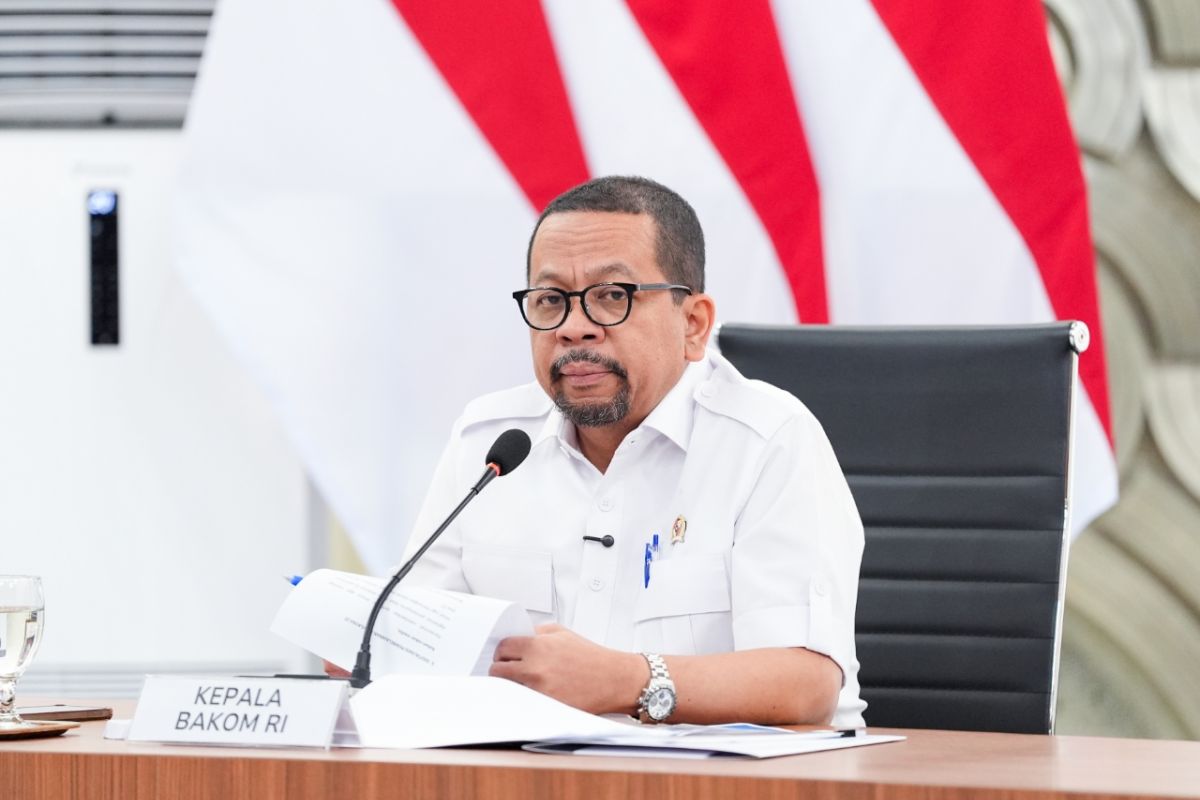
Jakarta (ANTARA) - The Head of the Government Communication Body (Bakom) stated that an evaluation by the Ministry of Primary and Secondary Education (Kemendikdasmen) shows 98 percent of students claim to understand learning materials better thanks to the use of Digital Interactive Whiteboards (PID).
“In terms of material comprehension, 98 percent of students admitted to understanding the lessons better,” Qodari said during a press conference on the Best Quick Results Programme (PHTC) in Jakarta on Thursday.
Qodari cited the ministry’s evaluation of the use of digital learning devices, which was conducted from February to March 2026. The evaluation also found that 99.5 percent of students stated that learning using the PID was far more interesting. From the comprehension perspective, Qodari explained that 55.4 percent of students felt they understood the material, while another 42.6 percent felt they understood it very well.
“From the teachers’ side, the majority have started shifting to more interactive and varied teaching methods, and they report that students have become more active and enthusiastic in class,” Qodari added.
The Learning Digitalisation Programme has continued to progress, moving from the stage of providing devices to the actual utilisation of technology in the learning process. The programme has reached hundreds of thousands of educational units across Indonesia, including those in disadvantaged, frontier, and outermost (3T) regions.
“Going forward, the government will continue to strengthen supporting infrastructure, teacher training, and digital content development to ensure every Indonesian child has access to quality and equitable education,” Qodari stated.
According to data from the Ministry of Primary and Secondary Education, in 2025, 288,865 educational units received Digital Interactive Whiteboards along with supporting devices such as laptops and external hard drives. Additionally, 8,265 educational units gained internet access, 2,389 educational units received electricity support, and 33,156 teachers and education personnel participated in training on the use of digital learning.
In the 3T regions, the programme has reached 13,838 schools across various levels. The government also provided electricity support for 49 schools, internet services for 4,316 schools, and 30,285 units of laptops and hard disks to support the learning process.
Qodari stated that in 2026, the government will continue procuring PIDs, strengthening school mentoring, and developing digital learning content so that the distributed devices can be utilised optimally. He acknowledged that the government still faces several challenges, including limited electricity supply, internet connectivity, geographical access, and human resource readiness, particularly in the 3T regions.
“Therefore, the direction of learning digitalisation in 2026 will not only focus on adding devices but also on strengthening electricity and internet infrastructure,” he said.