
96 Percent of Landfills Still Open Dumping, WRI Highlights Methane Emission Data Accuracy
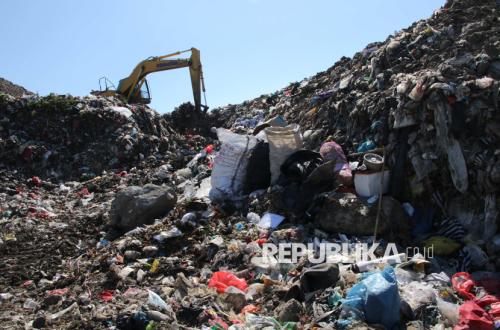
As many as 96 percent of around 511 final processing sites (TPA) in Indonesia still use the open dumping system. This condition not only leaves waste problems, but also opens the potential for releasing large amounts of methane emissions when organic waste decomposes without oxygen.
The finding has drawn the attention of World Resources Institute (WRI) Indonesia in its study of methane emissions in the waste sector through the SMART Waste Indonesia initiative. WRI Indonesia handed over the study results to the Ministry of Environment/Environmental Control Agency (KLH/BPLH) on Wednesday (19/8/2026).
The study, conducted since 2024 with support from the Global Methane Hub, highlights the need to improve waste data quality, emission inventory methods, and methane emission monitoring and measurement systems to strengthen climate change mitigation efforts. Data from the National Waste Management Information System (SIPSN) of KLH/BPLH records that Indonesia produced around 144 thousand tonnes of waste per day in 2025. However, only around 25 percent was recorded as managed.
This condition leaves significant potential for methane emission formation, especially because organic waste still dominates piles at landfills. A WRI Indonesia survey at five landfills in Solok, Surabaya, Balikpapan, Mataram, and Gorontalo in 2025 found that 52.02 percent of waste piles at these locations were organic waste. Another 12.83 percent was paper.
Organic waste and paper that decompose in low-oxygen conditions will produce methane. This greenhouse gas contributes significantly to global warming and, at certain concentrations, can also increase the risk of fires at landfills.
WRI Indonesia assesses that this problem needs to be followed by improvements to the emission measurement system. So far, emission inventories in the waste sector still face limitations, among others because they rely on estimation methodologies and direct field monitoring is not yet optimal.
Through SMART Waste Indonesia, WRI proposes the use of the Tier 2 method from the Intergovernmental Panel on Climate Change (IPCC) to calculate methane emissions in the waste sector. This approach combines local activity data, such as waste characteristics and composition, with emission factors that are more specific to Indonesia or country-specific emission factors.
Thus, emission calculations are expected to better reflect waste conditions in Indonesia. To strengthen this database, the WRI study includes waste composition surveys and direct methane emission monitoring. Monitoring was carried out using drones and methane sensors at Benowo Landfill in Surabaya and Galuga Landfill in Bogor.
WRI also developed the Methane Emission Toolbox (MET), a platform intended to support strengthening the quality of national waste data in SIPSN. Director of Climate Change Mitigation at KLH/BPLH Haruki Agustina said waste management has an important role in the low-emission development agenda and climate change handling in Indonesia.
According to her, the government continues to encourage the waste sector to contribute to the national greenhouse gas emission reduction target, one of which is through the preparation of a waste sector roadmap. In that context, Haruki said strengthening measurement methods as well as the measurement, reporting, and verification (MRV) system for methane emissions is needed to provide more accurate data as a basis for policy formulation and mitigation actions.
Source: jawawa.id (https://jawawa.id/newsitem/96-percent-of-landfills-still-open-dumping-wri-highlights-methane-emission-data-accuracy-1787144004)
Originally published by Republika (https://esgnow.republika.co.id/berita/tk0ncy423/96-persen-tpa-masih-open-dumping-wri-soroti-akurasi-data-emisi-metana), translated from Indonesian