
93 People's Schools Nearly Complete, Minister Says Local Governments Key to Transition and Operations
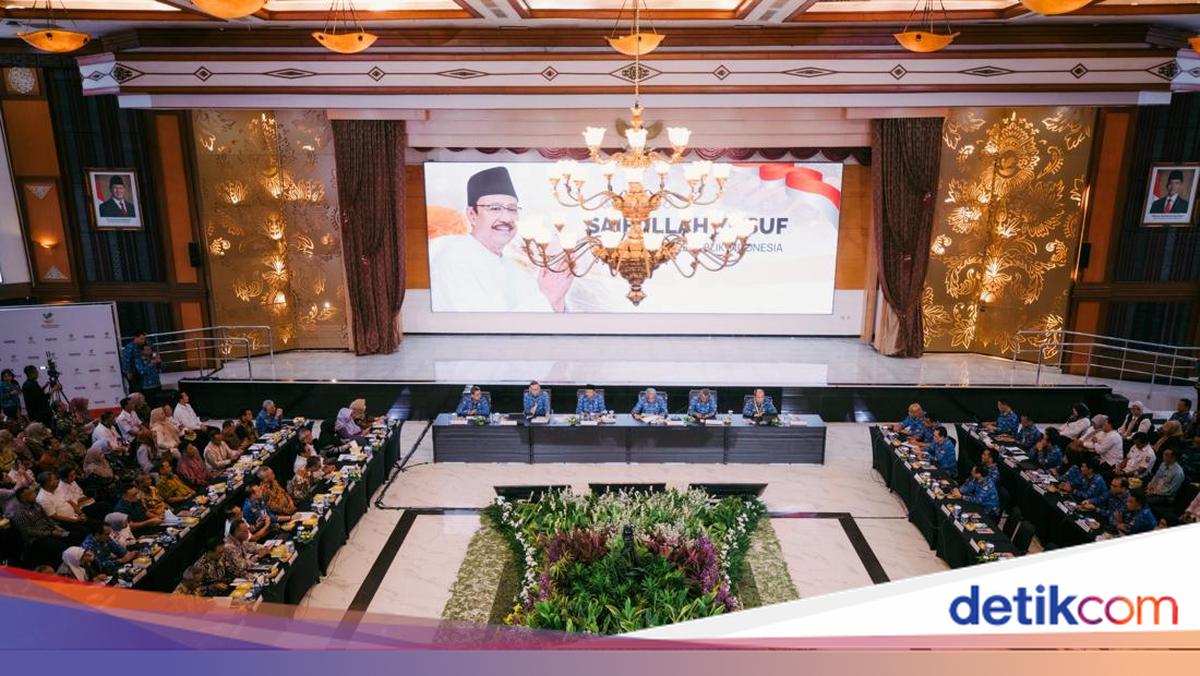
The construction of 93 People’s Schools (Sekolah Rakyat) is nearly complete, with the schools targeted to begin operations in the new academic year starting July 2026. Minister of Social Affairs Saifullah Yusuf, known as Gus Ipul, stated that collaboration with local governments is the key to the success of the transition and operation of this presidential priority programme. He stressed that this crucial phase requires cross-sectoral attention.
“Some are still in pioneer schools, while others will use permanent buildings. Therefore, good collaboration and coordination are needed so that we can navigate this transition period well,” Gus Ipul said in a statement on Thursday (18/6/2026).
He made these remarks during a Coordination Meeting on Optimising the Development of Permanent People’s Schools with 126 local government representatives from 93 districts/cities that own permanent People’s Schools, held at the Aneka Bhakti Building of the Ministry of Social Affairs on Wednesday (17/6/2026).
Gus Ipul revealed that the programme has reached 48,975 prospective students, exceeding the initial quota of 32,640 students, while the construction progress of the 93 permanent schools has reached 78.75 percent. Nationally, 178 People’s Schools will operate in the 2026/2027 academic year, consisting of 93 permanent schools, 77 pioneer schools from 2025, and 8 new pioneer schools from 2026. In terms of physical readiness, 69 locations have been completed and 24 others are already functional.
Gus Ipul stressed that challenges do not end with the completion of construction. “A finished building does not mean the school is ready. How we move students, accept new students, and ensure support in the early stages is what will determine success,” he asserted.
He noted that the high level of public enthusiasm is both an indicator and a challenge. Of the 48,705 children registered, the majority come from the most vulnerable groups: 85.8 percent are recipients of the Family Hope Programme (PKH) and 77.6 percent are from the lowest two deciles of the National Socioeconomic Data (DTSEN), with some having never previously attended school.
“We are not only looking at academic achievement, but also the change in these children. They are now much healthier, more disciplined, more confident, and have hope for the future,” Gus Ipul explained.
Entering the transition period towards full operation, Gus Ipul emphasised that the role of local governments is decisive, particularly in student placement, forming transition teams, and providing teaching staff and community outreach. “We may still lack teaching staff at new locations. Therefore, we need assistance from the regions, temporary teachers for this initial phase,” he explained.
Gus Ipul added that the government has set seven acceleration steps leading up to 14 July, ranging from student placement and community outreach to teacher and student mobilisation. With time increasingly limited, the speed of regional response is a key factor. “These seven steps are already locked into the schedule. What we can control is the speed of the local government’s response at each stage,” he said.
Beyond technical readiness, the government is emphasising the importance of a safety net for students, covering health services, psychological support, social assistance, and school environmental security.
Meanwhile, a representative from Boalemo Regency, Syafrudin Kadir Lamusu, expressed readiness to accelerate follow-up actions on the ground. “We will follow up on accelerating the construction of physical buildings and encourage outreach and the enrolment of students who meet the criteria,” he stated.
Similarly, a representative from South Sulawesi Province confirmed concrete steps regarding institutional transition. “We will follow up on the transition process from pioneer schools to permanent schools through the issuance of a transition decree,” he concluded.
The coordination meeting was symbolically closed with the signing of a memorandum of understanding by representatives from West Sulawesi Province and Palangkaraya City, followed by all other regional representatives. Going forward, the Ministry of Social Affairs will also provide public access through People’s School open house activities as a form of transparency and to strengthen public support.
Source: jawawa.id (https://jawawa.id/newsitem/93-peoples-schools-nearly-complete-minister-says-local-governments-key-to-transition-and-operations-1781765618)
Originally published by detikcom (https://news.detik.com/berita/d-8536858/93-sekolah-rakyat-hampir-rampung-mensos-pemda-kunci-transisi-operasional), translated from Indonesian