
91% of Indonesia's 2027 Investment Needs Must Be Met by Private Sector, Says Deputy Finance Minister
The government estimates that Indonesia’s investment needs in 2027 will reach Rp 8,705 trillion. Of this amount, approximately 91% is projected to be met by the private sector due to the limited capacity of the State Budget (APBN) and state-owned enterprises.
Deputy Finance Minister Juda Agung stated that the APBN is only expected to finance around Rp 459 trillion of the total investment requirement. Meanwhile, state-owned enterprises, including Danantara, are projected to contribute approximately Rp 330 trillion. The private sector financing requirement thus reaches Rp 7,973 trillion, or about 91% of the total national investment needs for 2027.
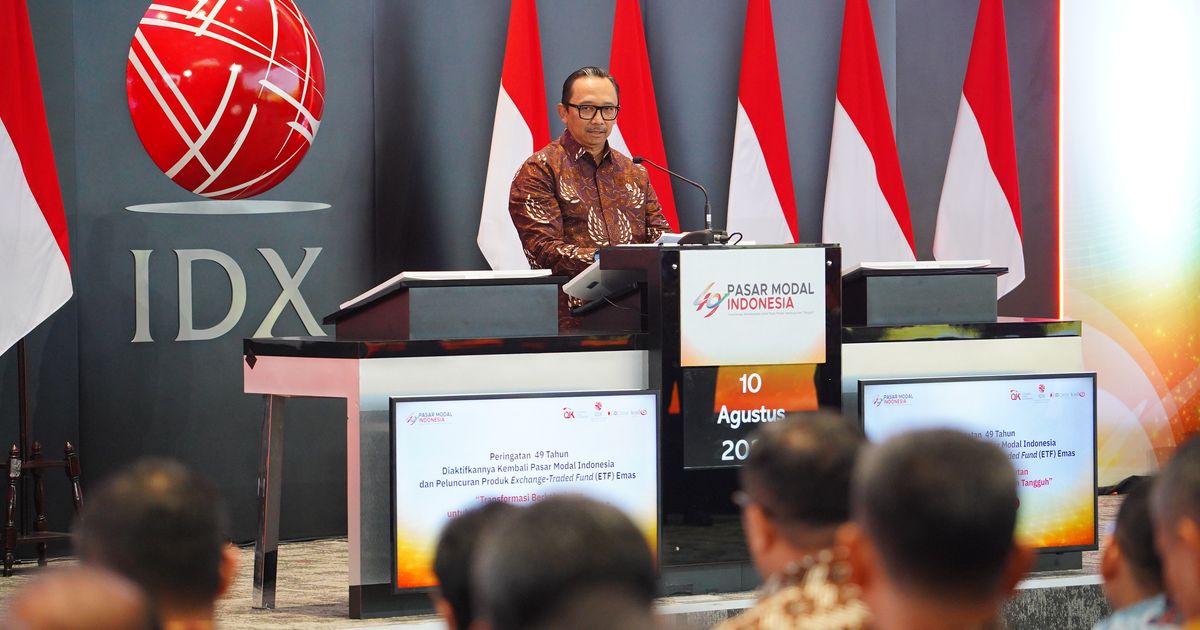
“The state budget alone is never sufficient to finance all of our development needs,” Juda said during the 49th anniversary of the Indonesian Capital Market and the launch of the Gold ETF at the Indonesia Stock Exchange in Jakarta.
According to Juda, the enormous investment requirement is in line with the increasingly broad national development agenda. The government requires substantial financing for infrastructure development, energy, education, improving human resources quality, and downstream industrial programmes. Given that the fiscal capacity of the government is limited, the private sector must play a major role in financing Indonesia’s economic expansion.
Private sector financing sources can originate from banking, non-bank financial institutions, and the capital market. In this context, Juda assessed that the capital market has a strategic role because it can connect corporate financing needs with public funds. “This is where the capital market plays a strategic role as a source of private financing. It is a bridge that connects corporate financing needs with public funds,” he said.
Juda noted that the capital market can provide a broader, more efficient, and transparent source of financing for the business world. Its role will become increasingly important if Indonesia aims to increase investment and accelerate economic growth in the coming years. The capital market should no longer be seen merely as a place to trade shares or investment instruments; it must become a primary engine for channelling public savings into productive financing for companies, infrastructure development, industrialisation, and job creation.
Therefore, the government supports various reform agendas carried out by authorities and market participants to deepen Indonesia’s capital market. These reforms include digitalisation, transparency, strengthening governance, enhancing investor protection, and developing new financial instruments. A deeper capital market will provide greater capacity to offer alternative funding sources beyond banking and the state budget.
This condition is critical because the national investment requirement for 2027 reaches Rp 8,705 trillion, while the government’s fiscal capacity can only cover a small portion. With the private sector’s financing share at around 91%, the success of the national development agenda will heavily depend on Indonesia’s ability to create a healthy investment climate, increase investor confidence, and expand the financial sector’s capacity to collect and channel funds.
Despite the rising development needs, Juda affirmed that the government remains committed to maintaining a healthy state budget. “Alhamdulillah, our fiscal condition is currently on track amidst the global economic uncertainty we are facing,” he said. He added that state revenues continue to grow, and government spending played an important role as a driver of economic growth in the first and second quarters of 2026.
The government continues to use the state budget as the main instrument to drive economic growth and improve public welfare, but it must be managed carefully to maintain fiscal sustainability. The Ministry of Finance is committed to keeping the fiscal deficit within a safe limit of below 3% of gross domestic product. This choice indicates that the government does not intend to finance all development needs through fiscal expansion. Instead, the greater the national investment requirement, the more important the mobilisation of private sector funds becomes.
The 49th anniversary of the Indonesian Capital Market was also marked by the launch of a Gold ETF. Juda described this instrument as a new milestone in the development of the national financial ecosystem. The presence of the Gold ETF is expected to expand public investment options while deepening the financial market. The instrument also opens opportunities to connect the capital market ecosystem with the development of the national bullion industry. For the government, the more diverse the available investment instruments, the greater the financial system’s ability to collect public funds and channel them into productive economic activities. This will become increasingly important as the majority of development investment needs can no longer rely on the state budget.
Source: jawawa.id (https://jawawa.id/newsitem/91-of-indonesias-2027-investment-needs-must-be-met-by-private-sector-says-deputy-finance-minister-1786398679)
Originally published by investortrust.id (https://investortrust.id/market/112380/wamenkeu-juda-agung-91-kebutuhan-investasi-2027-harus-ditopang-swasta), translated from Indonesian