
90% of Marine Plastic Waste Originates from Land, Ministry of Marine Affairs and Fisheries Calls for Integrated Management
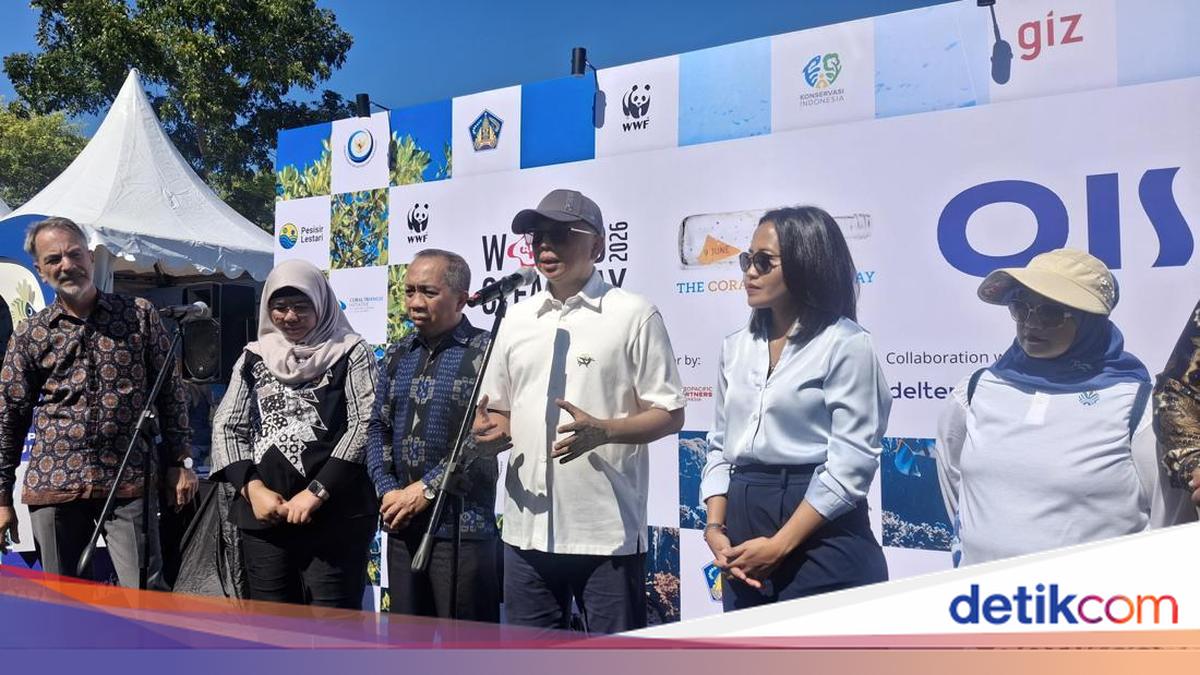
The World Ocean Day and Coral Triangle Day 2026 commemorations held at Peninsula Island, Nusa Dua, Badung, on Sunday (7/6/2026), served as a critical reminder of the importance of waste management in preserving marine health and coral reefs. This follows findings that most waste polluting the oceans originates from human activities on land.
Meizani Irmadhiany, Senior Vice President and Executive Chair of Konservable Indonesia, stated that Indonesia plays a vital role in maintaining the global marine ecosystem due to its vast coral reef areas and high marine biodiversity. However, she noted that these conditions can only be sustained if land-based environmental management is executed effectively.
“We possess the largest coral reefs in the world and the highest biodiversity, with 70% of species found in Indonesia. However, the current state of our coral reefs and marine conditions is heavily influenced by activities on land,” she said on Sunday.
Meizani added that approximately 90 per cent of plastic waste found in the ocean originates from land. Consequently, efforts to maintain marine health cannot be limited to maritime regions but must begin with environmental and waste management on land.
A. Koswara, Director General of Marine Management at the Ministry of Marine Affairs and Fisheries (KKP), remarked that the ocean often becomes the final destination for waste that is poorly managed on land.
“The ocean acts as a landfill; it is the end of the line. The journey of waste, from its source to its terminus, ends in the sea. This means waste management cannot be performed only at the end point; it must be integrated from the source to the downstream processes,” he explained.
He further explained that the government is currently implementing several priority programmes, including marine waste management, the protection of marine ecosystems, and the strengthening of small island governance integrated with surrounding waters.
Koswara emphasised that marine management requires collaboration from various parties, as the government cannot manage Indonesia’s vast maritime territory alone. “The government cannot act alone in managing such an expansive sea. The involvement of all stakeholders is necessary, and I would like to thank all partners for making this momentum possible during the World Ocean Day and Coral Triangle Day commemorations as part of the Road to Ocean Impact Summit.”
Meanwhile, Dewi Lestari Yani Rizki, Director of Conservation at the World Wide Fund for Nature (WWF) Indonesia, stated that the organisation supports efforts to reduce waste leakage from land to sea, particularly plastic waste. “Regarding marine waste management, WWF is already working to reduce leakage from land to sea in collaboration with local governments in WWF’s operational areas, specifically targeting plastic waste,” she added.