
9 Ways to Maintain Your Air Conditioner so It Lasts Longer, Uses Less Electricity and Keeps You Cool
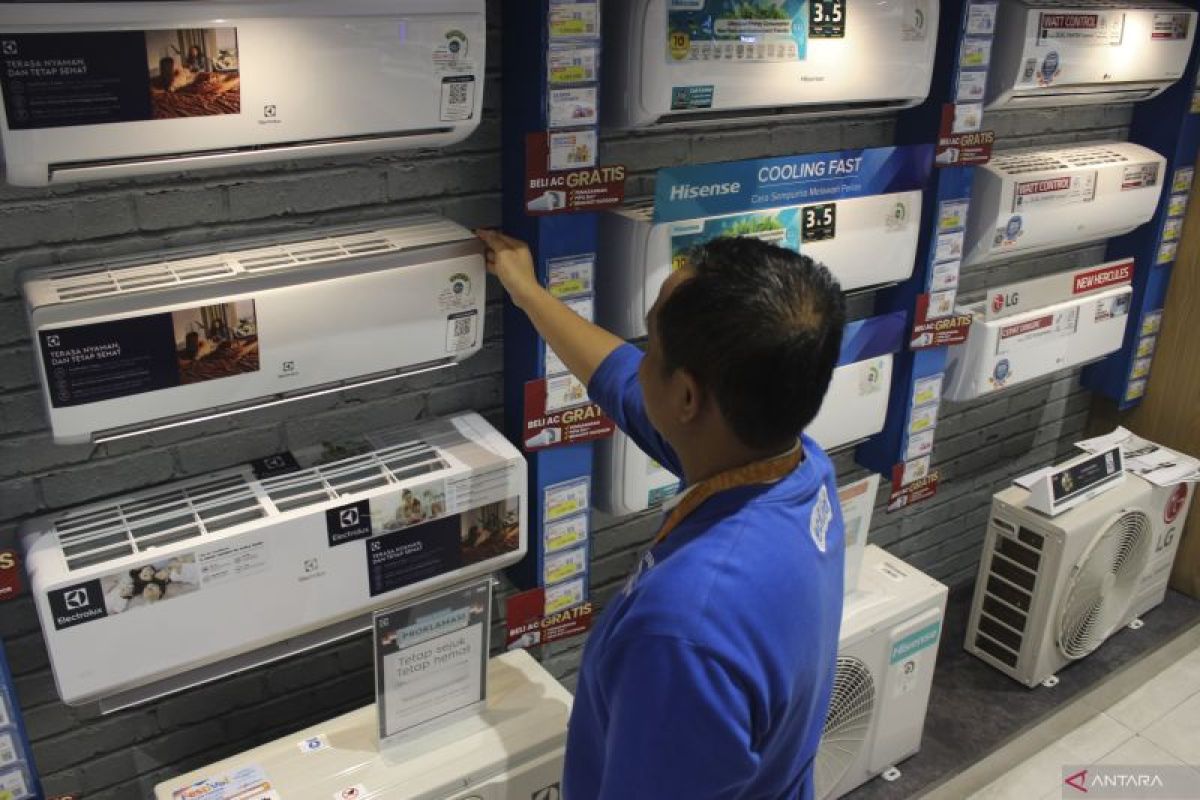
Jakarta (ANTARA) – Air conditioners (ACs) are widely used in homes to ensure comfort during hot weather. However, daily use without proper maintenance can reduce their performance, weaken airflow and increase electricity consumption.
One simple step is to clean the air filter regularly. Daikin’s maintenance guidance recommends cleaning the filter approximately every two weeks. A filter clogged with dust can restrict airflow, forcing the AC to work harder to cool the room.
Alongside filter cleaning, AC usage habits also affect energy efficiency and the unit’s service life. Appropriate maintenance helps preserve performance while reducing the risk of preventable damage.
So, how can you maintain an AC so that it lasts longer, uses less electricity and keeps you cool? Here are nine steps to follow at home.
- Clean the AC filter regularly
The air filter traps dust and particles, preventing them from easily entering the inside of the AC. If it is dirty, airflow may be restricted and cooling may become less effective.
For an AC that is used frequently, check and clean the filter approximately every two weeks, or follow the instructions in the unit’s manual. If your home is in a dusty area or the AC runs almost all day, the filter may need cleaning more often.
Before cleaning, switch off the AC and disconnect the power supply as directed by the manufacturer. Carefully remove the filter, wash it with water if permitted, and allow it to dry completely in a shaded place before reinstalling it.
The inside and outside of the AC should also be kept clean. Dust accumulating on the evaporator and condenser can interfere with heat transfer and reduce the unit’s ability to cool the room.
You can wipe dust from the outside of the unit with a soft cloth. Make sure the outdoor unit is not blocked by leaves, rubbish or other objects that obstruct airflow.
For cleaning the evaporator, condenser and internal components, use a technician if you do not have the appropriate equipment and skills. Avoid spraying water directly onto electrical components.
- Set the AC to a reasonable temperature
Setting the AC to an extremely low temperature does not necessarily cool a room more quickly. Instead, it can make the compressor run for longer to reach the desired temperature.
As a practical guide, a temperature of around 24–26 degrees Celsius can be used as a starting point, then adjusted according to occupants’ comfort, room humidity and weather conditions.
Daikin’s guidance says that each one-degree Celsius reduction below 24 degrees Celsius can increase electricity consumption by around 6–8 per cent. This is an estimate from the manufacturer, not a figure that applies equally to every type of AC and room condition.
- Close doors and windows while the AC is running
Open doors or windows allow cool air to escape and warm air to enter. As a result, the AC has to work for longer to maintain the room temperature.
Therefore, close doors and windows when using the AC. Also check for gaps that allow outside air to enter continuously.
If the room is exposed to direct sunlight, use curtains or window coverings to reduce incoming heat. This can help maintain comfort without continually lowering the AC’s temperature setting.
- Use the timer feature
The timer can help control when the AC operates so that it does not remain on when the room is no longer in use.
For example, occupants can set the AC to switch off at a certain time after they have gone to sleep or when they are leaving home. This allows electricity use to be matched to actual needs.
However, using a timer is not the only way to save electricity. Efficiency is also affected by the AC’s capacity, room conditions, the selected temperature and the cleanliness of the unit.
- Make sure the AC capacity suits the room
The AC’s capacity should be matched to the room’s floor area and heat load. A unit that is too small for the room may struggle to reach the desired temperature, while an oversized unit is not necessarily the most efficient choice either.
Factors such as the number of occupants, ceiling height, exposure to sunlight, the number of electronic appliances and ventilation conditions also affect cooling requirements.
If the AC runs continuously but the room still feels hot, do not immediately conclude that the refrigerant has run out. Check the filter’s cleanliness, temperature setting and room conditions, and consider whether there may be a technical fault.
- Do not neglect the drainage pipe
An AC produces condensation when it cools humid air. The water is channelled outside through a drain pipe.
If the pipe is blocked by dirt or algae, water may drip from the indoor unit and wet the walls or floor.
Watch for unusual dripping from the indoor unit. If the AC is leaking, switch it off if circumstances allow and ask a technician to inspect the drain. Do not dismantle internal components if you are unfamiliar with the procedure.
ENERGY STAR’s maintenance guidance also stresses the importance of checking the drain, as blockages can cause moisture problems and water damage.
- Arrange periodic professional servicing
Cleaning the filter yourself does not replace a full inspection of the AC’s components. The evaporator, condenser, fan, electrical connections and cooling system still need to be checked as required.
Servicing schedules can vary depending on the type of unit, frequency of use, environmental conditions and the manufacturer’s instructions. An AC used every day in a dusty environment may need more frequent maintenance than one used only occasionally.
As a guide, Daikin recommends periodic professional inspection and cleaning, with intervals adjusted according to usage. Users should follow the manufacturer’s recommendations or the advice of a technician familiar with the unit’s condition.
- Check the refrigerant if the AC is no longer cooling
Freon, or refrigerant, circulates through the AC’s cooling system to help transfer heat. If the refrigerant level is incorrect because of a leak or another technical problem, cooling performance may decline.
However, refrigerant should not be treated as a fluid that must be topped up routinely every time the AC is serviced. A properly functioning system does not need regular refrigerant refills without a specific reason.
If the AC does not cool despite having a clean filter, or shows other signs of a fault, ask a technician to inspect the cooling system and check for possible leaks. Do not attempt to refill the refrigerant yourself, as the work requires appropriate equipment and handling.
ENERGY STAR explains that both too little and too much refrigerant can reduce efficiency and shorten the equipment’s service life.
In addition to routine maintenance, users should learn to recognise signs that an AC may have a fault. These include:
The air coming out is no longer cold despite an appropriate setting.
Airflow has weakened or feels uneven.
Water is dripping from the indoor unit.
An unpleasant smell appears when the AC is switched on.
The unit makes unusual noise or vibrates abnormally.
The AC often switches itself off or displays a fault indicator.
Electricity consumption rises without any clear change in usage patterns.
These symptoms do not always indicate compressor damage or a refrigerant shortage. An inspection is needed to identify the source of the problem and determine the appropriate solution.
Maintaining an AC so that it lasts longer, uses less electricity and keeps you cool can start with simple habits: cleaning the filter regularly, keeping the indoor and outdoor units clean, setting a reasonable temperature, and closing doors and windows while the AC is running.
DIY maintenance should be supplemented with periodic servicing by a technician. If cooling performance declines or signs of a fault appear, an early inspection can help prevent the problem from developing into more serious damage.
Source: jawawa.id (https://jawawa.id/newsitem/9-ways-to-maintain-your-air-conditioner-so-it-lasts-longer-uses-less-electricity-and-keeps-you-cool-1794617488)
Originally published by Antara (Indonesian) (https://www.antaranews.com/berita/5853255/9-cara-merawat-ac-agar-awet-hemat-listrik-dan-tetap-dingin), translated from Indonesian