
9 Updates on Iran's Attack on Israel: Trump Responds as Netanyahu Bombs Tehran
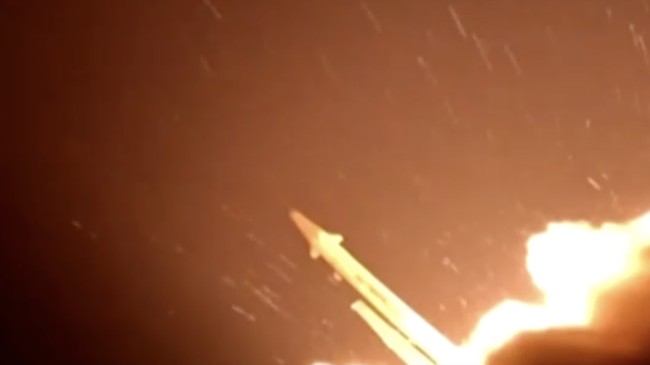
The Middle East war has reignited. In the latest updates from Sunday to Monday (8/6/2026), Iran reportedly launched missiles at Israel, which was met by Israel striking three cities in Iran.
Here are nine summaries of the situation:
- Iran Missiles at Israel
Israeli forces stated they detected incoming missiles from Iran on Sunday. This marks the first attack since the fragile ceasefire implemented in the Middle East war in April. “A short while ago, sirens were sounded in several areas across the country following the identification of missiles launched from Iran towards the State of Israel,” the military said in a statement reported by AFP. The attack was not a single event, as several waves of missiles were reported by Tehran towards Israel. “Additional missile attacks were launched towards the State of Israel… Air defence systems are currently identifying and intercepting threats,” the Israeli military added. Due to these attacks, the Israeli Home Front Command announced that schools nationwide would be closed on Monday, with all educational activities suspended.
- Iran Confirms Attack on Israel
The Iranian military confirmed the recent attack on Israel, justifying it by stating that Israel’s recent strikes on the southern outskirts of Beirut had crossed all boundaries, while demanding an end to attacks on Lebanon. “The Israeli army must stop its attacks in southern Lebanon and the suburbs; if they expand their attacks to that region or respond to Iran’s actions, they will face a much more devastating and regrettable blow,” said the Head of the Khatam al-Anbiya Command, General Ali Abdollahi, without directly mentioning the missile salvo that Israel claims to have intercepted. The Iranian Revolutionary Guard Corps (IRGC) also confirmed the operation, stating that Sunday night’s missile attack was a “warning” following Israel’s attacks on Beirut earlier that day, threatening broader attacks if new aggression occurs. “Tonight’s operation is a warning. If such aggression is repeated, the response will be broader and will include all US-Zionist targets in the region.”
- Arab Nations Close Airspace
Iran closed its western airspace on Sunday following the launch of missile barrages towards Israel in response to Israeli strikes on Lebanon. “Due to safety and security assessments… the western part of the country’s airspace is declared closed until further notice,” said Majid Akhavan, spokesperson for the National Civil Aviation Organisation, in a statement via IRNA. Beyond Iran, other Arab nations also implemented closures. Iraq and Syria closed their airspace as a security precaution. The Iraqi Civil Aviation Authority reported a 72-hour airspace closure, while Syria closed its southern air corridor for 12 hours, according to AFP.
- Israel Vows to Continue Lebanon Campaign
Israel has pledged to continue its military campaign in Lebanon, stating it will intensify operations against Hezbollah. “The (Iranian) regime is attempting to create a new parity through direct attacks on Israeli territory in response to IDF operations in Dahiyeh,” said military spokesperson Brigadier General Effie Defrin. “We attacked Dahiyeh in response to Hezbollah’s relentless attacks on Israel’s northern communities. The IDF will continue to operate throughout Lebanon and will intensify its actions against the Hezbollah terrorist organisation.”
- Iranian Foreign Minister Contacts Europe and Arab Nations
Iranian Foreign Minister Abbas Araghchi discussed Middle East issues with the UK, France, and Turkey, as well as with the leaders of Qatar and mediators from Pakistan. These separate conversations focused on Iran’s response to Israel’s “repeated violations of the ceasefire in Lebanon.” The calls, reported by IRNA, occurred as Iran launched its missile barrages. Araghchi spoke with Qatari PM Mohammed bin Abdulrahman Al Thani, and foreign ministers from France, the UK, and Turkey, alongside the Pakistani mediation team working towards a deal between Tehran and Washington to end the Middle East war.
- Trump Responds to Iran’s Attack on Israel
US President Donald Trump stated he would call Israeli PM Benjamin Netanyahu to urge him not to retaliate against Iran’s missile attack. This was reported by Axios. “I will call Bibi now and tell him not to retaliate,” Trump said, as quoted by Axios journalist Barak Ravid. “Each of them is having fun. Israel did its attack and Iran did its attack. We do not need another attack,” Trump said. Sunday’s missile attack was the first from Iran since the April ceasefire. Trump expressed concern that the escalation could hinder negotiations. “Iran’s attack did not hurt anyone. Hopefully, Israel will not retaliate. If Bibi strikes back, then this will continue like the last 47 years, or the last 3,000 years,” he remarked, adding that the US is “very close to a final deal with Iran.”