
81st Indonesian Independence Day: The Most Outstanding Issuers in Every Capital Market Era
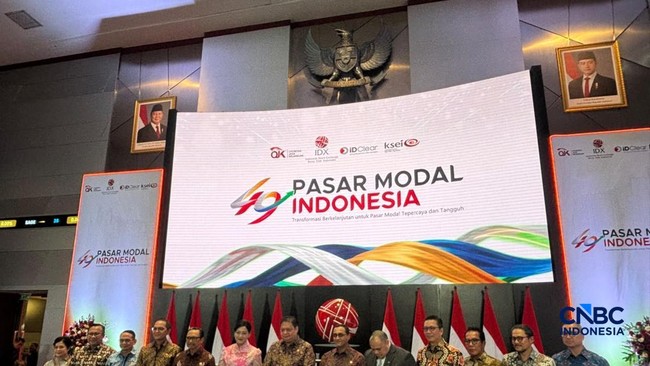
The celebration of 81 years of Indonesian independence today (17/8/2026) coincides with the 49th anniversary of the reactivation of the Indonesian capital market. These two journeys reflect the growth of the national economy as well as the transformation of the Indonesia Stock Exchange over time.
Since being reactivated on 10 August 1977, the Indonesian capital market has passed through various periods of glory. Each era has presented a different leading sector, following economic developments, commodity price movements, technological advances, public purchasing power, and the direction of government policy.
Basic industry and manufacturing were the main face of the exchange in the early period. Entering the 2000s, economic growth and the surge in commodity prices lifted major names such as Astra International (ASII), Bumi Resources (BUMI), Telkom Indonesia (TLKM), and United Tractors (UNTR).
Market leadership then changed hands repeatedly, from the consumer sector, major banks, digital banks, technology, coal, renewable energy, minerals, to digital infrastructure. In the spirit of 81 years of Indonesian independence and 49 years of the capital market’s revival, here is a series of the best periods that have coloured the journey of the Indonesia Stock Exchange.
From Pioneer Issuers to the Birth of Blue Chips
PT Semen Cibinong, now named PT Solusi Bangun Indonesia Tbk (SMCB), became the first issuer when the capital market was reactivated in 1977. After that, textile, manufacturing, pharmaceutical, food and beverage, and consumer companies emerged, such as CNTX, TFCO, GDYR, MERK, MLBI, UNVR, and BATA.
The development of the exchange accelerated after the government launched deregulation in the late 1980s. Easier IPOs and the entry of foreign investors encouraged large companies to list their shares.
HMSP, GGRM, and ASII entered in 1990, followed by INDF in 1994 and TLKM in 1995. These shares later developed into major blue chips because they had strong brands, large business scale, and important positions in the Indonesian economy.
Telkom Thrived Before the Smartphone Era
The early 2000s was a period of growth for the telecommunications industry. Mobile phone penetration was still low, while operator revenue mainly came from voice, SMS, fixed lines, and subscriber additions.
Smartphones, messaging applications, video streaming, and OTT companies had not yet dominated public communication. These conditions made TLKM one of the most popular stocks.
Telkom shares traded in New York through American Depositary Receipts rose around 42.2% in 2001, 58.3% in 2002, and 110.5% in 2003. In 2006, the shares rose again by around 91.8%.
The increase was driven by growth in cellular subscribers and Telkomsel’s position as the main player in the national telecommunications industry.
BUMI and Astra Dominated the 2000s
China’s economic growth drove demand for coal, nickel, copper, and gold. Indonesia, as a commodity exporter, reaped large profits.
BUMI became the main icon of the commodity supercycle. Historical data shows BUMI’s lowest annual price was around Rp20 in 2002, rising to Rp500 in 2003 and around Rp6,000 in 2007.
ANTM, INCO, and PTBA were also sought after because they provided exposure to gold, nickel, and coal. UNTR benefited from heavy equipment sales and mining contractor businesses.
At the same time, ASII became an “all-in-one” stock. Investors gained exposure to automotive, financing, heavy equipment, mining, plantations, and infrastructure through one business group.
Specifically in 2009, Astra shares rose around 228.9%. The increase was driven by a recovery in vehicle sales, growth in financing credit, and the contribution of heavy equipment and commodity businesses.
Consumer Stocks Became Favourites
The growth of the middle class and household consumption made UNVR, HMSP, GGRM, ICBP, INDF, and KLBF favourite stocks in 2009-2013.
UNVR had strength in household and personal care products. HMSP and GGRM were supported by the large domestic cigarette market. ICBP and INDF had widely consumed food products, while KLBF benefited from demand for medicines, nutrition, and health products.
GGRM soared more than 400% in 2009 based on adjusted prices. HMSP rose around 191% in 2010, while UNVR increased around 46% in 2009 and 53% in 2010.
Brand strength, distribution networks, the ability to raise prices, and recurring demand were the main reasons consumer stocks received high valuations.
Major Banks Dominated the Exchange
In 2014-2019, the centre of attention shifted to BBCA, BBRI, BMRI, and BBNI. These four became the main destination for investors because they were able to generate repeated profit growth.
BBCA excelled through low-cost funds, asset quality, and transactions. BBRI had dominance in micro credit, while BMRI and BBNI benefited from corporate credit, consumer credit, and the activities of national companies.
In 2014, BBRI rose around 65%, BBNI 59%, BMRI 41%, and BBCA 38%. Performance was strong again in 2017 when BBNI increased around 85%, BBRI 61%, BBCA 43%, and BMRI 41%.
Sectorally, the financial index posted a cumulative increase of around 150.8% during 2014-2019, far above the JCI which rose around 47.5%.
Digital Bank and Technology Euphoria
The pandemic accelerated the use of digital financial services. Small banks that obtained strategic investors and transformed into digital banks experienced a surge in valuation.
ARTO became a darling after Gojek entered as an investor. BBHI, BANK, BBYB, and AGRO were also sought after because they offered stories of user growth and integration with digital ecosystems.
Throughout 2021, digital bank share increases ranged from 79% to 4,368%. ARTO’s market capitalisation even reached around Rp218.8 trillion.
EMTK also became well-known through its media and digital investment businesses. DCII attracted attention because it provided exposure to data centre growth, while BUKA became the centre of attention through one of the largest IPOs on the IDX.
2025, the Peak of Conglomerate Stocks
2025 was not only the year of technology, but also the peak of conglomerate stocks. Sectorally, IDX Technology became the index with the highest performance, rising around 138.35%. However, in terms of individual stocks and influence on the JCI, market leadership was spread across various conglomerate issuers.
DCII received sentiment from data centre growth and artificial intelligence infrastructure. DSSA was supported by the Sinarmas energy, mining and digital ecosystem. Meanwhile, PTRO, BRPT, CUAN and CDIA extended the dominance of Prajogo Pangestu Group shares.
Thus, technology was the sector with the highest index increase, but conglomeration was the largest market theme at the individual stock level. In fact, DCII and DSSA briefly became two important pillars of the JCI in 2025, as reflected in IDX trading data.
From SMCB in 1977, TLKM before the smartphone era, BUMI during the commodity supercycle, consumer stocks and major banks, to conglomerate stocks in 2025, the history of the exchange shows one pattern: every era has its own champion. What changes is not only the names of the stocks, but also the engine of economic growth that the market believes in.
Source: jawawa.id (https://jawawa.id/newsitem/81st-indonesian-independence-day-the-most-outstanding-issuers-in-every-capital-market-era-1786942269)
Originally published by CNBC Indonesia (https://www.cnbcindonesia.com/research/20260810134330-128-757967/hut-ke-81-ri-ini-emiten-paling-bersinar-di-setiap-era-pasar-modal), translated from Indonesian