
81 Years of Indonesian Independence, Workers Still Haunted by Layoffs and Job Scarcity
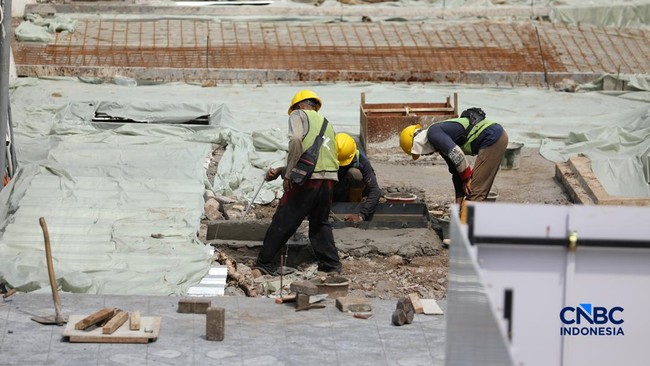
The All-Indonesia Workers’ Association (ASPIRASI) is urging the government to take concrete steps to address labour issues in Indonesia, from creating quality jobs to halting the wave of mass layoffs (PHK). The demand was made by ASPIRASI President Mirah Sumirat to coincide with the 81st anniversary of the Republic of Indonesia’s independence on Monday (17/8/2026).
Mirah stressed that independence for workers cannot be interpreted merely as ceremonial. Independence must also be realised through decent work, fair wages, certainty of employment relationships, social protection, and a more prosperous future. “At the age of 81 of the Republic of Indonesia, let us build an Indonesia that is truly independent: free from corruption, free from poverty, free from job uncertainty, and free from the fear of losing one’s job,” Mirah said in a written statement on Monday (17/8/2026).
ASPIRASI put forward three main demands to the government and the House of Representatives (DPR).
First, ASPIRASI is urging the government and the DPR to immediately finalise and pass the Asset Forfeiture Bill (RUU Perampasan Aset). Mirah said corruption not only robs state funds and the rights of the public, but can also hamper investment and job creation. Corrupt practices are seen as increasing economic costs, creating uncertainty and undermining legal certainty. Such conditions can ultimately reduce the confidence of businesses and investors in Indonesia’s investment climate. According to ASPIRASI, healthy and quality investment is needed to open new jobs. Mirah therefore believes that eradicating corruption should be part of the government’s strategy in building the economy and creating jobs. The state is also considered to need strong legal instruments to pursue and seize assets obtained from crime. “ASPIRASI urges the government and the DPR to immediately finalise and pass the Asset Forfeiture Bill, while upholding the principles of the rule of law, due process of law, and protection of citizens’ rights,” she said. Mirah hopes investment enters Indonesia not because of transactional practices or corruption, but because of legal certainty, clean governance, a healthy business climate, and a productive and protected workforce.
Second, the creation of as many decent and quality jobs as possible. ASPIRASI believes economic growth is not enough if it is not accompanied by an increase in employment opportunities for the public. “Independence will lose its meaning if the people still struggle to find work,” Mirah said. She stressed that the government cannot simply chase economic growth figures. That growth must be able to produce formal jobs that are decent, productive, sustainable, and provide certainty for workers’ futures. ASPIRASI is asking the government to strengthen national industry, encourage quality investment, and provide protection for labour-intensive sectors. Every economic policy, Mirah continued, also needs to be measured by its impact on job creation. “Investment must produce jobs, not just economic growth figures,” she asserted.
Third, stop mass layoffs. ASPIRASI also highlighted the wave of layoffs still occurring in a number of sectors. Mirah believes workers should not continue to be the first party sacrificed when companies face economic pressure or industrial change. “We are concerned about the continuing wave of layoffs in various sectors. Amid economic pressure and industrial change, workers should not always be the first to be sacrificed,” she said. ASPIRASI is asking the government to strengthen labour supervision and encourage dialogue between the government, employers, and trade unions. In addition, every company policy that affects the workforce must be carried out transparently and in accordance with statutory regulations.
Mirah stressed that the meaning of independence should be felt by all levels of society, including workers. “Independence should not only be felt by those with capital and power. Independence must be felt down to the factories, offices, markets, villages, and homes of Indonesian workers,” she concluded.