
81 Years of Indonesian Independence, Smiles in Remote Areas Remain a Luxury
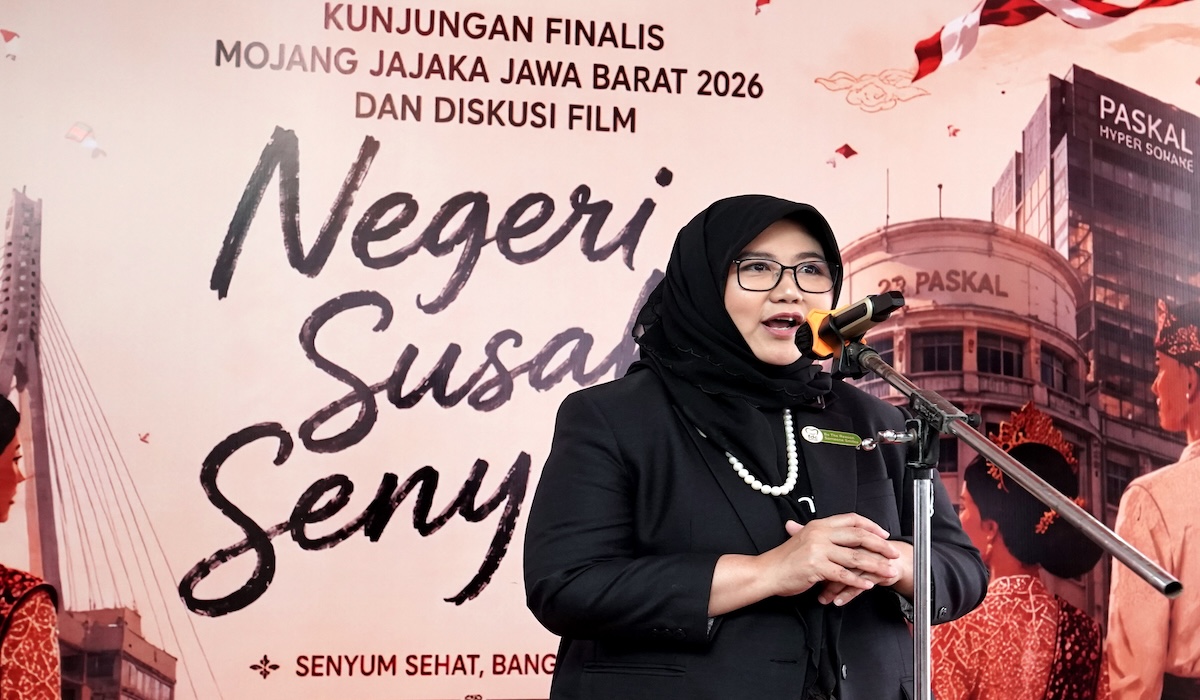
Eighty-one years after Indonesia’s independence, access to dental and oral healthcare remains a luxury for some communities in remote parts of the country. Long distances from health facilities, a shortage of medical personnel, and a strong stigma against dentists mean dental health issues are not merely medical problems. In several regions, limited access has even fuelled myths and alternative treatment practices that are not necessarily safe.
This reality is depicted in the documentary film ‘Negeri Susah Senyum’ (A Nation That Finds It Hard to Smile), which records the journey of dentists conducting research and basic health services in Kasepuhan Ciptagelar, Sukabumi Regency, West Java. The film not only shows the dental health conditions of the indigenous community but also illustrates lifestyle changes that are beginning to affect the health of the younger generation.
Drg. Ahmad Syahrul Mubarok from FDC Dental Clinic, one of the dentists involved in the activity, found an interesting paradox. The older generation in Kasepuhan Ciptagelar actually has relatively much better dental health than the children. ‘The older generation in Ciptagelar has much stronger teeth because of their natural, low-sugar diet. Their main complaint is generally just attrition or tooth wear due to consuming hard-textured food,’ he said at the launch of the film at FDC Dental Clinic in Bandung on Monday (17/8).
However, Ahmad continued, different conditions were found among children in Kasepuhan Ciptagelar, who face quite concerning caries problems. By around age seven, some children’s milk teeth have already suffered severe damage from rampant caries. Changes in consumption patterns are one of the triggers. Modern foods with high sugar content and processed foods have begun to enter the kasepuhan environment, slowly replacing the community’s previous consumption patterns that relied more on natural food sources.
‘Amid these changes, the problem is further complicated by limited access to dental health services. The absence of dentists and minimal health facilities means the community has few options when experiencing toothache,’ he said. Ahmad even found that local health workers had to take actions beyond their ideal authority due to the lack of more complete medical personnel. To obtain more adequate health services, residents must travel to health facilities in the Pelabuhanratu area, a land journey that can take around four hours on roads that are not easy to traverse. The distance is not merely a geographical issue.
‘For people suffering from toothache, travelling for hours to get treatment can be a major obstacle. This condition then opens space for the development of myths and alternative treatments that are not always carried out hygienically,’ he stressed. Ahmad added that the stigma that going to the dentist is frightening, time-consuming and expensive remains deeply embedded. Therefore, the approach taken is highly personal, providing basic education and emergency treatment such as fillings and tooth extractions.
‘It should be noted that dental caries remains one of the most dominant dental health problems in Indonesia. Around 80 percent of the population experiences dental caries, while the government is targeting Indonesia to be caries-free by 2035,’ he said.
The message about inequality in dental health access was not only conveyed to the general public. The premiere screening of Negeri Susah Senyum also invited the finalists of Mojang Jajaka Jabar 2026 to watch the documentary directly. The finalists were not merely spectators; they were also invited to discuss and examine various issues raised in the film with the sources involved in the production process and field activities. The presence of the Mojang Jajaka Jabar 2026 finalists is expected to open new perspectives on dental health problems still faced by communities in various remote areas of West Java.
One finalist from Sukabumi Regency, Djemima Shireen Ferdinand, admitted that what was depicted in the film was not unfamiliar to her. As a daughter of the region, Djemima grew up in the coastal area of Sukabumi. Although her place of residence is quite far from the filming location in Kasepuhan Ciptagelar, the reality of limited access and health education depicted in the film feels close to the lives of people in her area. ‘The film shows conditions that actually occur in the field and are not merely stories constructed for the film’s sake. For me, this experience is both a challenge and a responsibility as a daughter of the region to help voice the importance of dental and oral health to the community, especially the younger generation,’ she said.
Founder of FDC Dental Clinic, drg. Ita Lestari, explained that the film Negeri Susah Senyum was deliberately made to open the public’s eyes to the fact that access to dental health in Indonesia is still uneven. The problem is not only the availability of doctors and health facilities, but also the stigma that has become attached within society. ‘The screening of the documentary film Negeri Susah Senyum is being held for the first time. We will intensify screenings of this film because there is a social mission, namely spreading smiles to everyone,’ she said.
The film, produced by Anatman Pictures, ultimately tells not only about aching teeth or distant health facilities. It also tells of the distance between remote communities and dentists, between medical knowledge and myth, and between traditional lifestyles and changing consumption patterns.
Source: jawawa.id (https://jawawa.id/newsitem/81-years-of-indonesian-independence-smiles-in-remote-areas-remain-a-luxury-1787039469)
Originally published by Media Indonesia (https://mediaindonesia.com/nusantara/923040/81-tahun-indonesia-merdeka-senyum-di-pelosok-masih-menjadi-kemewahan), translated from Indonesian