
81 Years of Independence: These Commodities Make Indonesia King of the World
Eighty-one years after the Proclamation of Independence, Indonesia still holds a strategic position in global commodity trade. From palm oil, coal, and nickel to various plantation commodities, Indonesia is a major supplier that determines the balance of the global market. This dominance means that changes in domestic policy, weather, or production directly affect international prices and supply.
President Prabowo Subianto has even placed the management of strategic commodities as one of the government’s focuses through the establishment of a special state-owned export company. This step shows that commodities remain one of Indonesia’s main assets in strengthening foreign exchange, industrialisation, and bargaining position in global trade.
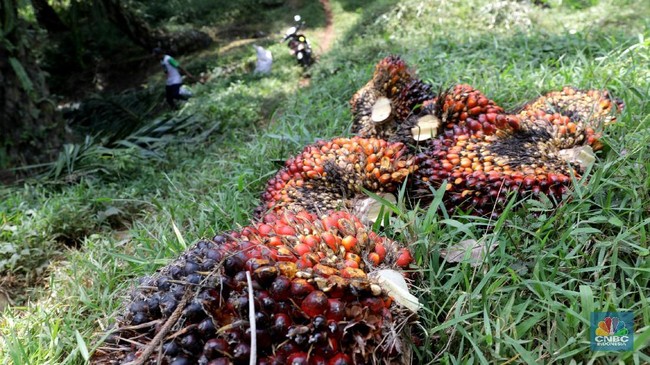
Indonesia remains the world’s largest producer of palm oil. Based on USDA data, Indonesia’s palm oil production in the 2025/2026 season is estimated to reach 46.7 million metric tonnes, or around 57% of total global production projected at 81.27 million tonnes. Indonesia’s oil palm plantation area also reaches around 14 million hectares, the largest in the world and far surpassing Malaysia.
The large share of production makes Indonesia the main determinant of the balance of the global vegetable oil market. When harvests decline due to extreme weather or domestic policies change, international vegetable oil prices usually move because global supply immediately decreases.
Domestically, the structure of the palm oil industry is also changing along with increasing biodiesel consumption. GAPKI data shows national CPO and PKO production throughout 2025 is estimated to reach 56.55 million tonnes, while domestic consumption rises to 24.77 million tonnes. The mandatory biodiesel programme means part of the additional production is absorbed in the domestic market, making export supply more limited.
This change in consumption patterns shows Indonesia’s palm oil industry is beginning to shift from merely an exporter of raw materials to a provider of national energy. The effect is visible in the resilience of global CPO prices which remain relatively high despite increased production. In the long term, the success of increasing smallholder plantation productivity will be the main factor in maintaining Indonesia’s position as the world’s largest producer without opening new land.
Indonesia still maintains its position as the world’s largest coal exporter. The International Energy Agency (IEA) Coal 2025: Analysis and Forecast to 2030 report states Indonesia remains the main supplier of thermal coal to various countries in Asia.
However, the market is beginning to change. China’s coal production is increasing, so the country’s imports are starting to decline. The impact is directly felt on Indonesia’s exports, which according to the IEA fell by almost 50 million tonnes throughout 2025. In the same period, Asian thermal coal prices also weakened compared to the previous year.
But the prospects for Indonesian coal have not completely faded. Electricity demand in Southeast Asia is still growing, especially from the industrial sector and power plants in Vietnam and Indonesia itself. This region is expected to remain a source of growth in coal consumption until the end of the decade.
Indonesia’s position as the largest exporter provides strategic room in regional energy trade. On the other hand, global energy transition pressures demand Indonesia accelerate the diversification of coal use through downstream processing, such as gasification and the development of derivative industries, so that dependence on raw coal exports can be gradually reduced.
Indonesia has become the centre of the world nickel industry after the ban on raw ore exports encouraged massive investment in the processing sector. This change is reflected in BPS data, which shows the export value of nickel products from January to June 2026 reached US$6.54 billion, up 69.3% year-on-year even though volume fell 12.14% to 1.06 million tonnes.
China remains the main destination with a share of around 92.64% of total Indonesian nickel product exports. The dominant product is nickel pig iron (NPI), while ferronickel and other downstream products continue to develop along with increasing smelter capacity.
The increase in export value while volume falls shows Indonesia is beginning to benefit from added value. Processed products have a higher selling price than raw ore, so the foreign exchange earned is greater.
Going forward, the biggest challenge is expanding the downstream chain to produce battery materials and high-value manufactured products. This step will strengthen Indonesia’s position in the global electric vehicle industry, whose demand continues to increase.
Indonesia remains the world’s largest clove producer with a contribution of around 70% of global production. BPS data shows national production is in the range of 134-136 thousand tonnes per year, making Indonesia the main determinant of supply for the spice and kretek cigarette industries.
This dominance makes product quality a major concern. Food safety issues and international quality standards can affect export market access if not handled quickly.
Therefore, the competitiveness of Indonesian cloves in the future is not only determined by the size of production, but also the ability to maintain quality, product traceability, and compliance with destination country export standards. These aspects are becoming increasingly important as the global market becomes stricter on food safety issues.
Indonesia is the world’s largest cinnamon producer with production of around 35,000-40,000 metric tonnes per year, or around 40% of global supply. Most comes from Sumatra and Java, then is exported to the United States and Europe for the food, pharmaceutical, and cosmetics industries.
Indonesia’s advantage comes from tropical agro-climatic conditions that allow production throughout the year.
Source: jawawa.id (https://jawawa.id/newsitem/81-years-of-independence-these-commodities-make-indonesia-king-of-the-world-1786978364)
Originally published by CNBC Indonesia (https://www.cnbcindonesia.com/research/20260817122558-128-759999/81-tahun-merdeka-deretan-komoditas-ini-menjadikan-ri-raja-dunia), translated from Indonesian