
81-Year Journey of Population Identity: From Manual to Digital
Over 81 years of Indonesian independence, population identity has undergone a transformation. This change did not happen overnight. Population administration passed through several stages, from manual systems, Simduk, SIAK, Distributed SIAK, Centralised SIAK, electronic KTP, to Digital Population Identity (IKD).
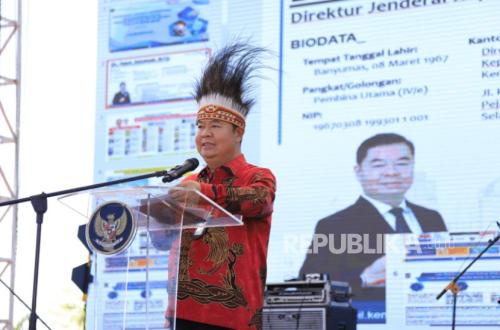
Director General of Population and Civil Registration at the Ministry of Home Affairs, Teguh Setyabudi, recalled that recording the population in the early days of the Republic was not a simple task. From 1945 to 1995, the entire process still relied on human hands, starting from register books, forms filled in with pens, and archives stacked on shelves in sub-district offices.
“Imagine, at that time one person could have several different identities in different places. No one could really ensure that one person had one identity,” Teguh explained in Jakarta on Monday (17/8/2026), recalling the era when population recording was still heavily dependent on officers’ memories and the completeness of physical archives.
In a press release in Jakarta on Sunday (23/8/2026), it was this problem that gradually encouraged the birth of the idea of a more centralised system. The Population Management Information System (Simduk) began to be introduced in 1995, although it was still far from perfect. It was only in 2004 that the Population Administration Information System (SIAK) arrived and changed many things.
Initially, SIAK was developed in the form of Distributed SIAK, a system that ran locally in each region. Each district/city managed its own population data, so national integration was still limited and often caused differences in data quality between regions.
Along with the need for more accurate, consistent, and real-time data, Centralised SIAK was born. This system places all population data in a single national database managed by the Directorate General of Population and Civil Registration of the Ministry of Home Affairs. With the centralised model, every data change in the regions is directly integrated to the centre, making population document services faster, safer, and uniform throughout Indonesia.
According to Teguh, that point became a kind of distinction between the era of scattered recording and the era where data began to be able to “speak” to one another. “After SIAK, we have a neater basis. Population data began to be verifiable and validated systematically, no longer relying on memory or paper documents that could be damaged,” said Teguh.