
81,000 Vulnerable Workers in Makassar Now Have a Safety Net
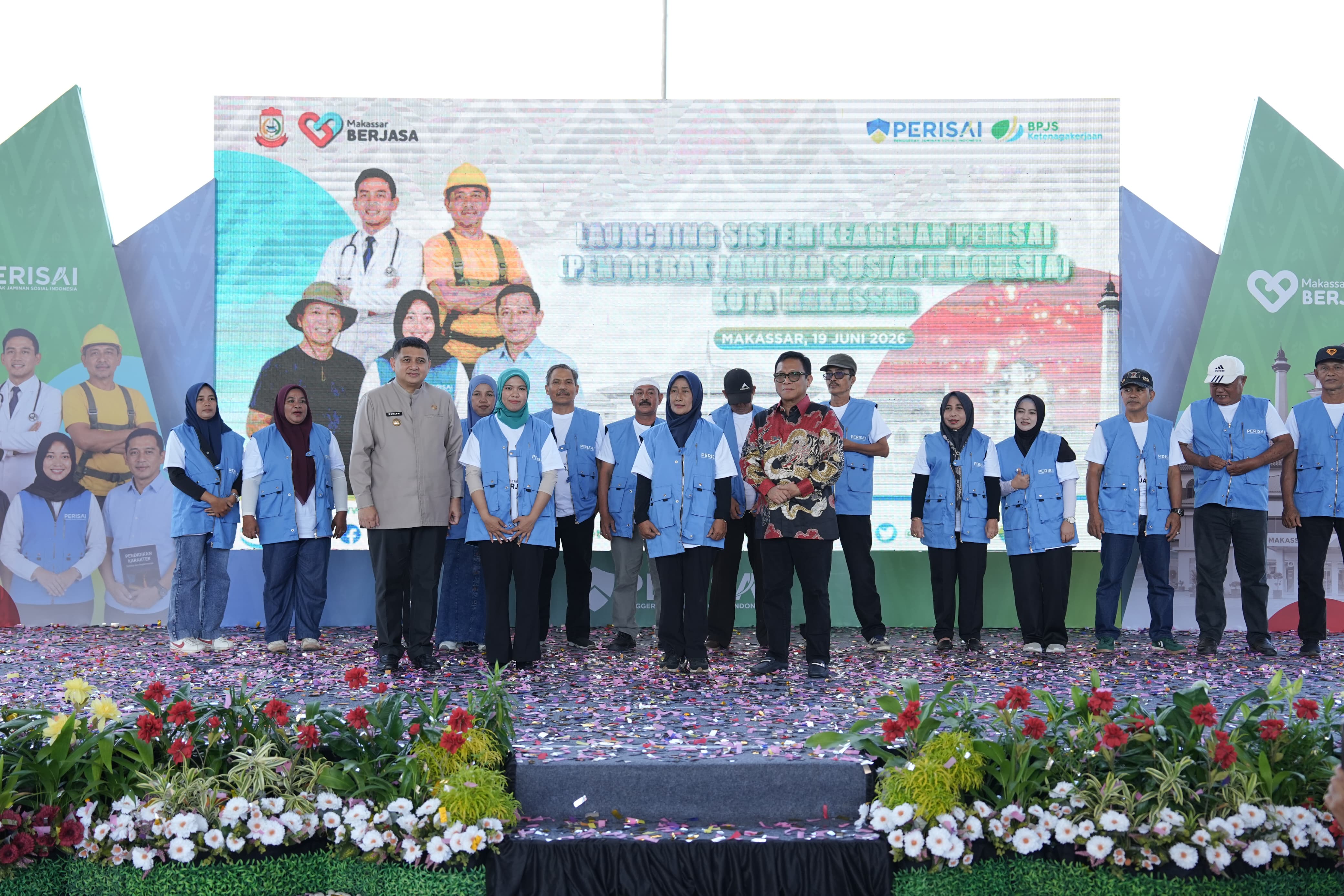
Amidst the bustle of Karebosi Field, a significant social breakthrough has occurred. As the city strives for economic growth, the Makassar City Government has chosen to focus on its most vulnerable citizens, including street vendors, fishermen, and parking attendants.
Through the 2026 regional budget (APBD), Mayor Munafri Arifuddin has allocated a substantial Rp27.2 billion. Rather than funding physical infrastructure, this budget is dedicated to providing security for 81,466 vulnerable workers. These individuals are now protected against the risks of work-related accidents and death. Furthermore, more than half—specifically 45,000 people—will receive old-age benefits (JHT), a prospect that was previously unattainable for many informal workers.
“This is not merely a figure on paper,” stated Munafri following the launch of the programme, named ‘Makassar Berjasa’ (Sharing Social Security). “This is an acknowledgement that the state is present. When a head of a household falls ill or passes away, their family must not be left to collapse.”
This initiative is the first in Indonesia to specifically target Old-Age Security (JHT) for vulnerable workers through full funding from a regional budget. Groups such as religious leaders, artists, and persons with disabilities, who often fall outside the scope of social protection, are now a priority. The Mayor explained that the logic behind the programme is to prevent new cycles of poverty by ensuring that a family’s livelihood is not destroyed by sudden misfortune.
To support this, the City Government has deployed 1,005 ‘Agen Perisai’ (Shield Agents) down to the neighbourhood (RW) level. These trained citizens serve as the frontline for education and registration for BPJS Ketenagakerjaan. In essence, the government is not only injecting funds but also creating an ecosystem of collective awareness.
The launch also highlighted cross-sector collaboration. Perumda Pasar Makassar Raya signed an agreement with BPJS Ketenagakerjaan to protect thousands of market traders. The Mayor also encouraged private companies to utilise their Corporate Social Responsibility (CSR) funds for similar purposes, stating that a circular will be issued to encourage companies operating in Makassar to protect the communities surrounding them.
Deputy Mayor Aliyah Mustika Ilham added that the presence of the Shield Agents is key to accelerating universal coverage, as these agents will actively reach out to those who are eligible but unaware of how to register. Munafri concluded by describing the programme as a “social investment,” positioning Makassar as a national model for how local governments and BPJS Ketenagakerjaan can collaborate to create inclusive protection.