
80th Customs Anniversary: Balancing Supervision and Service
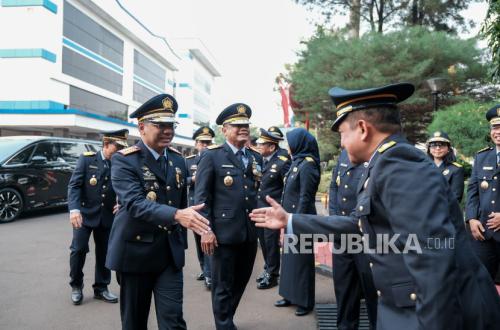
Entering its 80th year, Customs continues to play its role in protecting the public while supporting national economic activities. This spirit is reflected in the theme for the 80th Customs and Excise Day (HBC), “Firm in Protecting, Growing to Strengthen the Nation,” announced on Tuesday (6/10/2026).
As a community protector, Customs conducts supervision and law enforcement to prevent the circulation of illegal and dangerous goods. This oversight pertains not only to state revenue but also to the protection of the public, domestic industries, farmers, and national economic interests.
Finance Minister Suahasil Nazara stated that action against illegal goods is part of the effort to protect the national economy. “Supervision is not measured solely by the number of enforcement actions, but by how much benefit it provides to the Indonesian economy, protecting farmers, domestic industries, the public, and state interests,” Suahil said during his address at the 2026 Customs and Excise Day Commemoration Ceremony in Jakarta.
This demonstrates that Customs supervision has a broader impact than merely thwarting violations. For instance, action against illegal imports can prevent goods that do not meet regulations from entering and disrupting the continuity of domestic businesses. In his address, Suahasil cited the circulation of illegal second-hand clothing, which can impact tailors and the domestic textile industry, as well as illegal rice, which can threaten food security and harm both farmers and consumers.
On the other hand, this protection must go hand in hand with services that provide ease and certainty for legal economic activities. The Head of the Customs Public Relations and Extension Sub-directorate, Netty Hartawati, stated that Customs performs its functions as a trade facilitator and industrial assistant through various customs and excise facilities and services to support trade, investment, and industrial development.
“Customs continues to strive to provide services that are increasingly easy, fast, transparent, and certain,” said Netty. “Feedback from the community and business actors is an important part of identifying what is working well and what still needs improvement.”
Consequently, the public also has the space to participate in maintaining the effectiveness of supervision while encouraging service improvements. The public can comply with customs and excise regulations, avoid illegal goods, and report suspected violations. Meanwhile, business actors can utilise available facilities and provide input on the services provided, she added.
Digital transformation, the use of data and intelligence, risk management, and synergy with ministries, agencies, the business world, and the community are all part of Customs’ efforts to balance supervision with service. The goal is more precise supervision of illegal activities, alongside a process that is increasingly easy and certain for economic activities that comply with regulations.
The spirit of “Firm in Protecting, Growing to Strengthen the Nation” is expected to reflect the need to maintain a balance between protecting the interests of the public and the state and supporting legal economic activities. Through firm supervision, continuous service improvements, and public participation, the role of Customs can provide broader benefits to the economy and public life.