
8 Largest Forest Fires in World History, Is Indonesia Among Them?
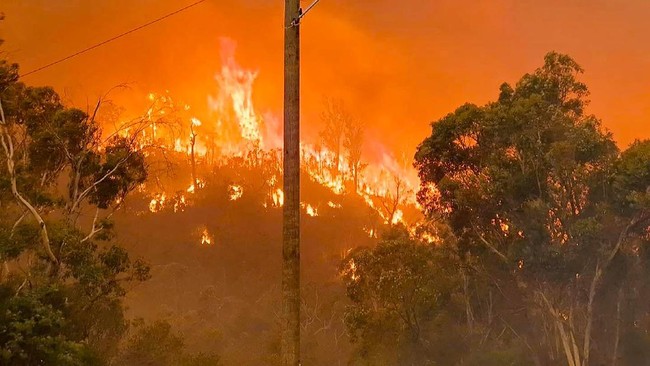
Large-scale forest and land fires have repeatedly scorched millions of hectares across various parts of the world. In the most extreme cases, the burned area has reached tens to more than 100 million hectares in a single fire season.
This risk has again drawn attention in Indonesia, where forest and land fires are still occurring in several regions in August 2026. The Meteorology, Climatology, and Geophysics Agency (BMKG) on 19 August recorded significant hotspots in four priority provinces: West Kalimantan, Central Kalimantan, South Papua, and East Kalimantan. Meanwhile, the National Disaster Management Agency (BNPB) noted that forest and land fires remain one of the dominant disaster events in recent days.
This is not the first time Indonesia has faced large-scale forest and land fires. In the 1997-1998 period, fires swept across nearly 10 million hectares, while more than 2.6 million hectares of forest and land burned again in 2015.
Not only in Indonesia, many other countries have also experienced very severe fires. Determining the largest fires in history is not straightforward because recording methods and definitions differ between countries and periods. In this list, CNBC Indonesia Research uses the coverage of wildland fires, namely fires on natural vegetation such as forests, shrubs, grasslands, savanna, and peat. The burned area figures may refer to a single fire season, a series of fires, or a mega-complex, rather than merely a single ignition point.
- Australia 1974-1975 (116.95 million hectares)
The 1974-1975 Australian fire season was one of the largest wildland fire events ever documented. The Australian Bureau of Statistics recorded more than 116 million hectares, or about 15% of Australia’s landmass, burned, especially in the interior. The fires spread after high rainfall in previous years triggered vegetation growth that later dried out and became fuel for the flames.
- Siberia, Russia 2020 (25.5 million hectares)
Siberia experienced an extreme fire season in 2020 with nearly 15,000 fire incidents from March to September. The International Association of Wildland Fire (IAWF) recorded that the fires affected various landscapes, from forest and grassland areas to the Arctic region. The conditions were triggered by very high spring temperatures, earlier snowmelt, and prolonged drought that made vegetation more flammable.
- Russia 2003 (22.3 million hectares)
Siberia and eastern Russia also experienced one of the largest fire seasons in 2003. NASA recorded more than 55 million acres, equivalent to about 22.3 million hectares, had burned even by early August of that year. NASA described the spring and summer of 2003 as the most extensive fire period ever recorded in Eastern Siberia in more than a century, with hot and dry conditions increasing the risk of fire spread.
- Black Summer Australia 2019-2020 (>17 million hectares)
The Black Summer of 2019-2020 was one of the worst fire seasons in Australia’s history. The Australian Public Service Commission recorded more than 17 million hectares of land burned, killing 33 people and destroying more than 3,000 homes. The fires also blanketed many cities with thick smoke and suppressed economic activity in various affected regions.
- Siberia-China 1987 (16-18 million hectares)
A series of major fires struck Siberia and northern China in 1987. Guinness World Records estimated that around 13-15 million hectares of Siberian territory were affected, while the Daxing’anling fire in China brought the total burned area in the region to about 16-18 million hectares. The event is categorised as a mega-complex because it consisted of several fires occurring almost simultaneously over a vast area.
- Canada 2023 (>15 million hectares)
Canada experienced its most extreme fire season ever recorded in 2023. Natural Resources Canada (NRC) recorded about 15 million hectares burned due to more than 6,800 fire incidents spread widely from the west to the Atlantic and northern regions. The period from May to July was the hottest in more than 80 years. NRC also found that climate change made the extreme intensity of that fire season at least twice as likely compared to pre-industrial conditions, while the persistence of hot and dry conditions became at least seven times more likely.
- Bolivia 2024 (15-16 million hectares)
Bolivia experienced an extremely severe surge in fires in 2024. NASA recorded nearly 16 million hectares burned, with a record 89,725 fire points detected by early December. The fires were triggered by a combination of land clearing and grassland burning, and were exacerbated by extraordinary drought affecting various regions, including Pando, La Paz, and Santa Cruz.
- Indonesia 1997-1998 (9.75 million hectares)
Indonesia experienced one of the largest forest and land fire episodes in history in 1997-1998. A Bappenas study estimated that around 9.75 million hectares burned, with Kalimantan being the most affected region. The fires occurred amid a strong El Niño that triggered prolonged drought, while human activity and land clearing further increased the spread of the flames.
The world’s largest fires show a similar pattern: extreme heat, drought, and dry vegetation can accelerate the spread of fire, while human activity often magnifies the risk. For Indonesia, prevention requires the involvement of many parties, from central and regional governments, the National Disaster Management Agency (BNPB)/Regional Disaster Management Agency (BPBD), BMKG, the Ministry of Forestry, the military and police, concession-holding companies, to communities living around forests.