
760,000 Foreign Nationals Use KAI Group Services up to August 2026, Intercity Tourism Continues to Grow
Indonesia’s tourism growth continues into August 2026. Data from the Central Bureau of Statistics (BPS) recorded 10,578,286 international tourist arrivals between January and August 2026, an increase of approximately 5.38 per cent compared to the 10,037,876 visits during the same period in 2025. Specifically in August 2026, international arrivals reached 1.60 million.
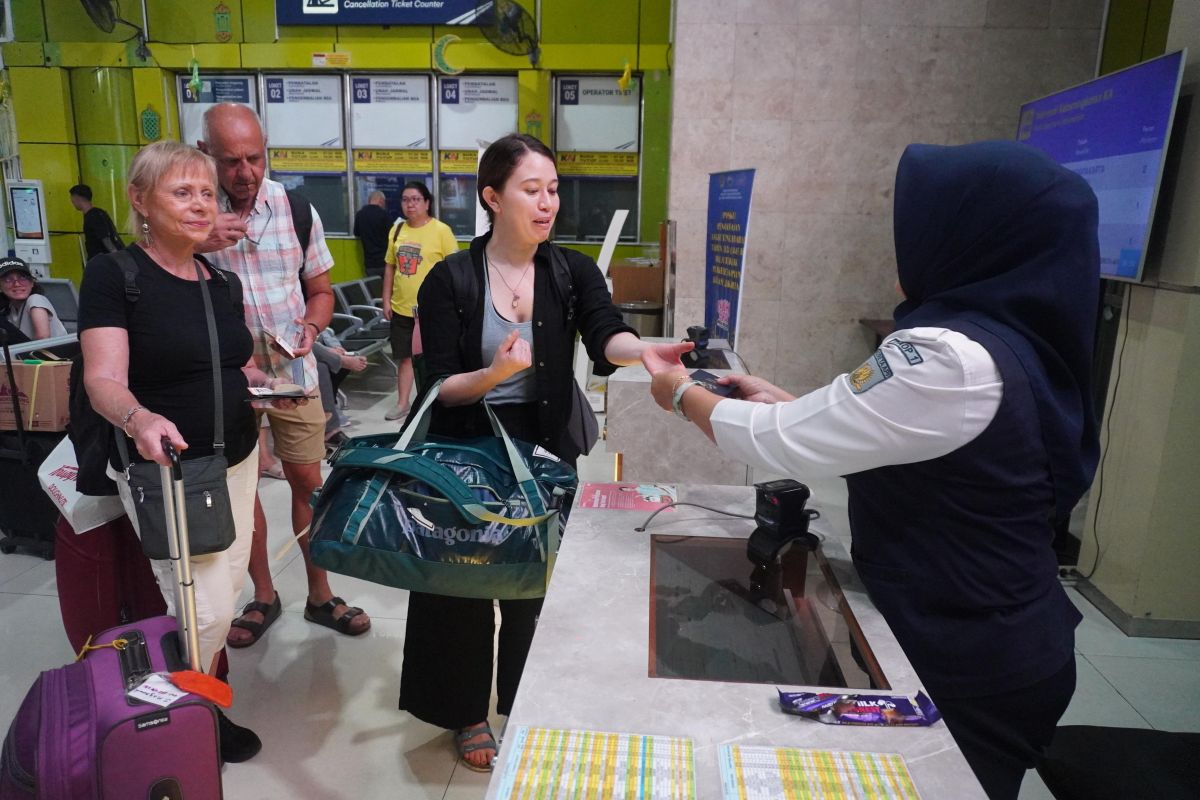
Upon arriving in Indonesia, many tourists continue their journeys to various cities using rail-based transport. Between January and August 2026, 760,601 foreign nationals were recorded using KAI Group services, consisting of 498,232 passengers on long-distance and local trains managed by KAI, and 262,369 Whoosh high-speed rail passengers.
KAI Corporate Communication Vice President, Anne Purba, stated that the growth in national tourism is opening up more intercity travel patterns for foreign tourists.
“More than 760,000 foreign nationals used KAI Group services up to August 2026. This figure shows that after arriving in Indonesia, tourists continue their journeys to various cities via trains and Whoosh. This mobility is a vital part of their travels exploring destinations in Indonesia,” said Anne.
For KAI’s long-distance and local train services, the number of foreign passengers reached 498,232 between January and August 2026, an increase of 3.83 per cent compared to 479,861 passengers during the same period in 2025. This achievement is the highest for the January–August period in the last five years. In the same period, KAI served 170,094 foreign passengers in 2022, which then increased to 383,732 in 2023, 447,655 in 2024, 4t79,861 in 2025, and reached 498,232 in 2026.
Compared to January–August 2022, the number of foreign passengers in 2026 has increased by 328,138, or 192.92 per cent. Consequently, the volume has nearly tripled in four years.
“The growth is clearly visible over several years. From around 170,000 foreign passengers in the first eight months of 2022, the number is now approaching half a million. This indicates that railways are increasingly becoming a preferred travel choice for foreign tourists moving from one city to another,” said Anne.
In annual records, KAI served 300,708 foreign passengers in 2022, 580,995 in 2023, 669,226 in 2024, and 694,123 in 2025. The year 2025 marked the highest annual volume in that period.
Yogyakarta Emerges as City with Highest Foreign National Activity
KAI data also reveals the primary destinations for foreign passengers. Between January and August 2026, Yogyakarta Station recorded the highest foreign passenger activity with 93,189 passengers, followed by Gambir with 84,011, Bandung with 45,400, Pasarsenen with 25,080, and Surabaya Gubeng with 24,543.
Other notable stations include Semarang Tawang with 18,032, Malang with 17,391, Probolinggo with 12,148, Surabaya Pasar Turi with 11,491, and Solo Balapan with 10,158.
This distribution shows that foreign passenger journeys traverse cities with diverse tourism characteristics. Jakarta serves as one of the starting points, with high activity also observed in Bandung, Yogyakarta, Solo, Semarang, Surabaya, Malang, and Probolinggo.
These journeys occur amidst increasingly diverse origins of tourists entering Indonesia. In August 2026, BPS noted growth in international arrivals compared to August 2025 from Africa at 14.78 per cent, ASEAN at 10.40 per cent, Oceania at 7.95 per cent, the Americas at 7.31 per cent, Asia (excluding ASEAN) at 6.83 per cent, and the Middle East at 2.86 per cent. Meanwhile, arrivals from Europe decreased by 3.07 per cent.
“National data shows tourists arriving from various regions of the world, while KAI data shows their journeys then spreading to many cities. This pattern illustrates that intercity transport is playing an increasingly relevant role in the itinerary of tourists during their stay in Indonesia,” said Anne.
Growth in foreign passengers on long-distance and local trains was also evident in the first semester. Throughout the first half of 2026, KAI served 308,874 foreign passengers, a 2.54 per cent increase compared to 301,219 in the first half of 2025.
Following the first semester, the volume of foreign passengers reached 96,940 in July 2026, marking the highest monthly figure between January and August this year. In August 2026, the number was recorded at 92,418.
Whoosh Serves 260,000 Foreign Nationals up to August 2026
Foreign tourist mobility is also evident in the Whoosh service. Between January and August 2026, Whoosh served 262,369 foreign passengers.
Since its commencement in 2023 up to August 2026, Whoosh has cumulatively served 944,087 foreign passengers. The breakdown includes 28,906 passengers in 2023, 251,525 in 2024, 401,287 in 2025, and 262,369 between January and August 2026.
As Whoosh began operations in 2023 and its data period differs from long-distance and local trains, Whoosh’s development is presented based on passenger volume since the service began.
Of the total Whoosh foreign passengers from October 2023 to August 2026, Malaysia was the largest country of origin with 403,626 passengers, followed by Singapore with 113,356, China with 81,971, Japan with 45,046, and South Korea with 30,888.
“On the Jakarta–Bandung route, Whoosh provides a travel option with short travel times. Meanwhile, through long-distance and local trains, tourists can continue their journeys to various cities on Java and Sumatra. This combination of travel options provides tourists with more alternatives to organise their itineraries while in Indonesia,” said Anne.
These foreign journeys are part of the high overall mobility of KAI Group. Between January and August 2026, KAI Group served 351,602,397 passengers, an increase of 7.09 per cent compared to 328,311,868 in the same period last year.