
735 Children of Indonesian Migrant Workers in Malaysia to Continue High School in Indonesia
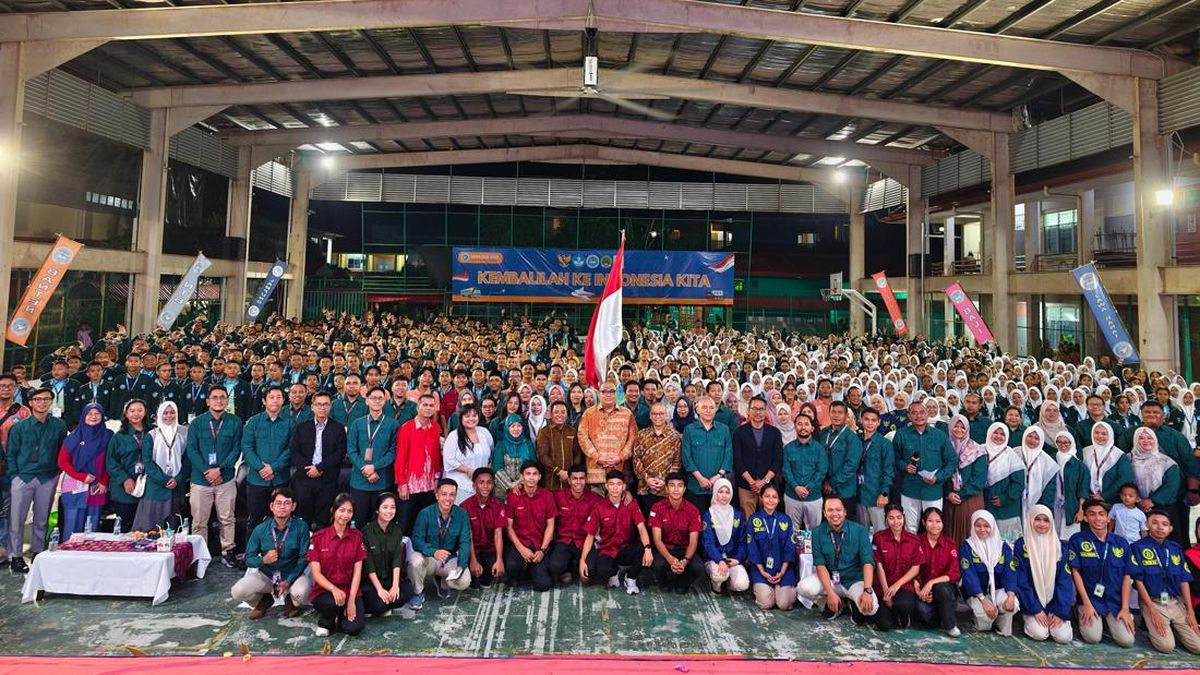
Maria Agreda, 14, grew up at the foot of Mount Kinabalu as the child of an Indonesian migrant worker. For over a decade, her parents have worked rented vegetable plots in the highland village of Kundasang to make a living. Living abroad, Maria’s family does not have official residency permits from the Malaysian government. Despite this, her enthusiasm for learning never waned. She received her primary and lower secondary education at the Kundasang Community Learning Centre (CLC), graduating from junior high school in 2026.
CLC is a formal education service providing primary and lower secondary schooling for the children of Indonesian migrant workers, established under an agreement between the Indonesian and Malaysian governments in 2011. Initially focused on children whose parents worked on oil palm plantations, CLCs have since expanded to other sectors. Maria is one of 22,000 students enrolled in CLCs across the states of Sabah and Sarawak, coordinated by the Indonesian School of Kota Kinabalu (SIKK). Each year, over 1,700 students graduate from CLC junior high schools, but the lack of immigration documents prevents them from continuing to formal senior high schools in Malaysia.
Beyond establishing CLCs, Indonesia’s Ministry of Primary and Secondary Education runs the Secondary Education Affirmation Scholarship (ADEM) and collaborates with several Indonesian educational foundations through the Gema Cita programme. Funded by the ministry’s Education Financing Service Centre, these programmes repatriate selected students to Indonesia to pursue senior high school education. This year, 735 out of 1,700 CLC junior high school graduates in Sabah and Sarawak received the ADEM scholarship. Maria, who aspires to be a scientist, is one of the recipients.
“I will continue my high school in Yogyakarta. I am happy but also sad because I have to leave my parents here,” Maria said, hoping that the opportunity to pursue her dreams will be more open in Indonesia. Her mother, originally from Larantuka, Flores, East Nusa Tenggara, added, “Since she was born here, we have never been apart. It is hard to let her go, but this is for her future and her dreams. This scholarship also helps us, as underprivileged parents overseas, to send our children back to Indonesia.”
The 2026 cohort of ADEM repatriation scholarship recipients, along with students supported by other Indonesian educational foundations, will be distributed across 134 high schools in 12 provinces. Indonesian Consul General in Kota Kinabalu, Noorman Effendi, stated on 1 July that the students are travelling using a travel document similar to a passport. “It is a one-way ticket. They are provided with a letter for their journey back to Indonesia because they arrived here without documents, without ID cards, and many of them previously did not even have birth certificates. So we provide them with a Birth Certificate Proof Letter (SBPK), a kind of temporary birth certificate that will at least give them a single identity number that will be useful for them later when they attend school,” Noorman said.
Meanwhile, the Education Attaché at the Indonesian Embassy in Kuala Lumpur, Ahmad Romadhoni Surya Putra, stated that the presence of CLCs in Sabah and Sarawak is proof of the state’s commitment to providing access to education for the children of migrant workers. On 2 July, 124 students from Sabah, Sarawak, and other areas in Malaysia landed at Juanda Airport in Surabaya, where they were warmly welcomed by East Java Governor Khofifah Indar Parawansa. The arrival of PMI children from Malaysia is not new for East Java, as the province has been a destination for the repatriation scholarship programme since it began in 2013. The governor noted that 50 children from the programme have been accepted into universities through achievement and test-based pathways. “In the recently concluded university admissions process, these ADEM children showed very good achievements. This means they have the same opportunities to obtain equal education,” Khofifah said, expressing hope that the new arrivals will continue the positive trend of progressing to higher education. East Java has provided 29 schools across 13 regencies and cities, consisting of 18 senior high schools and 11 vocational high schools, selected according to the students’ competencies and the ADEM programme selection results.
Source: jawawa.id (https://jawawa.id/newsitem/735-children-of-indonesian-migrant-workers-in-malaysia-to-continue-high-school-in-indonesia-1783410933)
Originally published by CNN Indonesia (https://www.cnnindonesia.com/nasional/20260707134818-20-1377856/735-anak-pekerja-migran-indonesia-di-malaysia-lanjutkan-sma-di-ri), translated from Indonesian