
71 Years of Traffic Police: Overseeing Transformation, Saving Lives
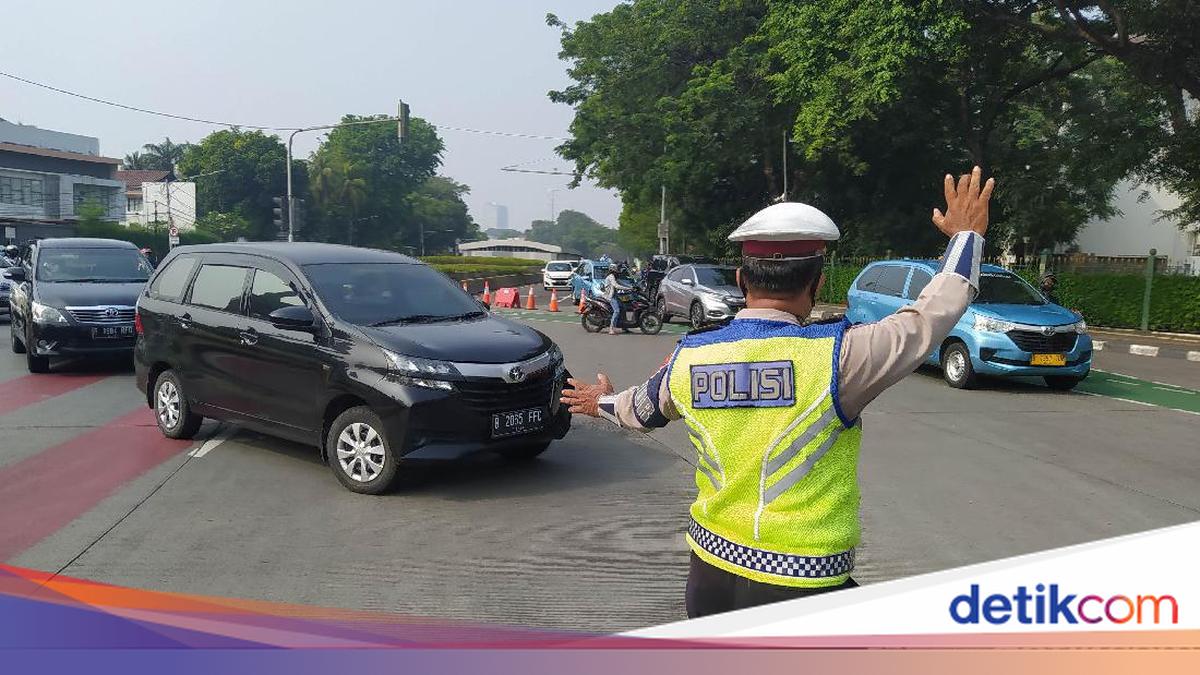
Seventy-one years is not a short journey. For the Indonesian National Police Traffic Corps (Korlantas Polri), this long history is a series of changes, challenges, fluctuations, and transformations in response to societal needs.
Every 22nd of September, Bhayangkara Traffic Day is commemorated as a moment to remember the official birth of the Road Traffic Section on 22 September 1955, through Order No. 20/XVI/1955 issued by the Head of the National Police Department.
However, the history of traffic in Indonesia actually began much earlier. During the Dutch East Indies era, traffic functions were first recognised on 15 May 1915 through ‘Voer Wesen’, which later evolved into ‘Verkeerspolitie’ or Traffic Police. During the Japanese occupation, this role diminished due to police restructuring under Japanese military control.
The resurgence in 1955 became a pivotal point in the journey of the Traffic Police. Since then, the institution has continued to evolve alongside changes in society and the era. From managing vehicle flow conventionally, the Traffic Police now face much more complex traffic issues: vehicle growth, mobility density, road user behaviour, and digital technological developments.
Therefore, entering its 71st year, Korlantas Polri does not merely view history as the past, but uses it as a foundation for transformation. The direction being built is to realise ‘Modern and Safe Traffic’—a concept that integrates technology, public service, law enforcement, and human safety into a single unity.
This spirit of transformation has gained new energy through the leadership of Inspector General Wibowo, S.I.K., M.Hum., who officially assumed the mandate as Head of Korlantas Polri, replacing Inspector General Agus Suryonugroho.
As an alumnus of the Police Academy (Akpol) Class of 1996 and the youngest Head of Korlantas, Inspector General Wibowo brings the spirit to strengthen a modern, inclusive, responsive, and humanistic face for the Traffic Police. One of his focuses is to optimise service digitalisation through ‘Digital Korlantas’, allowing the public to access vehicle registration and identification services more easily, quickly, and transparently.
Transformation is also being implemented in law enforcement through the strengthening of Electronic Traffic Law Enforcement (ETLE). The use of this technology is part of the effort to provide more objective and accountable law enforcement, while reducing the space for irregularities in the enforcement process.
However, behind all these technological advancements, one thing must remain unchanged: human safety is the top priority.
The principle of ‘Every Single Life is Precious’ serves as the foundation for Korlantas’ efforts to reduce fatal traffic accidents. Enforcement is not merely directed at as many violations as possible, but specifically towards violations that have a high potential to cause accidents and loss of life.
Law enforcement must also go hand-in-hand with education. Public awareness must be continuously built, recognising that road safety is not just a matter of obeying rules, but involves a responsibility towards one’s own life and the lives of others.
Because, ultimately, a good journey is not the fastest journey, but the journey that arrives safely.
This spirit of safety is further strengthened through the ‘Polantas KARIB’ approach—Partnership, Active, Responsive, Intuitive, and Integrity. This concept encourages the Traffic Police to act not only as law enforcers but also as community partners capable of listening, understanding, and providing solutions.
Partnerships with road user communities are a vital part of this approach. For instance, online motorcycle taxi drivers play a strategic role as they interact directly with road dynamics every day. They are not just road users, but can serve as pioneers of safety and part of a collective movement to build a culture of orderly traffic.
This is the face of the Traffic Police that aims to be built: firm when rules are broken, humanistic when serving, adaptive to technology, and consistent in placing safety as the primary goal.
The 71-year journey shows that the Traffic Police are capable of navigating various eras. From the colonial era and the occupation period to the milestone of formation in 1955 and the current digital era, one common thread remains: how the state is present to maintain security, order, smoothness, and the safety of the public on the roads.
The 71st Bhayangkara Traffic Day is therefore not merely an anniversary commemoration. It is a momentum to look towards the future with new spirit. A future where technology is more integrated, services are easier, law enforcement is more transparent, public safety awareness is higher, and the Traffic Police are closer to the people.
From history, we learn to adapt. From technology, we build services. From partnership, we strengthen trust. And from safety, we protect life.
71 Years of Bhayangkara Traffic Day.
Overseeing transformation, building safety, and presenting a Traffic Police force that is modern, humanistic, and trusted by the community.
Source: jawawa.id (https://jawawa.id/newsitem/71-years-of-traffic-police-overseeing-transformation-saving-lives-1788494412)
Originally published by detikcom (https://news.detik.com/kolom/d-8647925/71-tahun-polantas-mengawal-transformasi-menyelamatkan-nyawa), translated from Indonesian