
700 Delegates from 25 Countries Discuss Climate Crisis and Peace in Bali
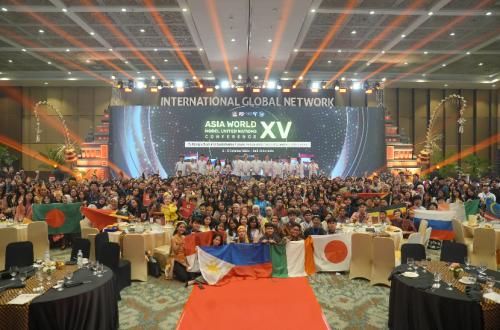
BALI — Around 700 young delegates from 25 countries gathered in Bali to discuss global challenges ranging from climate change and water crises to peace and social inclusion. At the 15th Asia World Model United Nations (AWMUN XV), participants practised formulating shared solutions using United Nations (UN) diplomatic procedures.
The forum, held from 2 to 5 October 2026, drew participants from countries including Australia, Bangladesh, Hungary, India, Indonesia, Ireland, Japan, Malaysia, the Philippines, South Africa, Singapore, Thailand and Uganda. Delegates took part in simulated UN sessions to develop their diplomacy, negotiation and international cooperation skills.
Environment Minister Mohammad Jumhur Hidayat, who opened the event, highlighted the impact of climate change on people’s lives. He said environmental issues have different consequences for different communities, particularly those directly dependent on natural resources.
For farmers, water availability determines the success of harvests, while environmental conditions affect the livelihoods of coastal communities. In urban areas, water management is also linked to access to clean water and the risk of flooding.
“The effects of climate change are not felt equally, so solutions are needed that take account of the circumstances of vulnerable communities and ecosystems,” Jumhur said in a statement on Wednesday (14 October 2026).
As well as climate change, the forum examined the links between peace, water security, environmental sustainability and social inclusion. These issues were seen as interconnected and therefore requiring cooperation across borders.
International Global Network (IGN) President Muhammad Fahrizal said young people needed the ability to engage in dialogue and work together despite differences of opinion. He said global challenges could not be resolved by treating each issue in isolation.
“Without justice, peace will not endure. Without clean and safe water, communities cannot thrive. And without social inclusion, progress will always leave someone behind,” Fahrizal said.
During the conference, participants represented countries in simulated sessions adopting UN diplomatic procedures. They conducted research, presented their countries’ positions, negotiated, built alliances and drafted resolutions together.
AWMUN XV also featured several councils addressing a range of global issues. Each session was led by a Board of Dais drawn from different countries to ensure the simulations followed the relevant procedures.
The programme concluded with the AWMUN Multistakeholder Forum on 5 October 2026. It brought together the Director of the United Nations Information Centre (UNIC), representatives of local non-governmental organisations in Bali, the Board of Dais, selected delegates and several school principals from Bali.