
70 Per Cent of Hajj Funds Allocated to State Sukuk, Explains BPKH
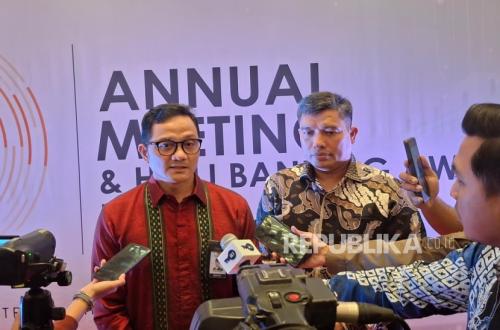
The Hajj Financial Management Agency (BPKH) has placed approximately 70 per cent of its hajj financial portfolio into State Sharia Securities (SBSN), also known as state sukuk. This strategy is part of a conservative investment policy designed to safeguard the funds of pilgrims.
The Head of the BPKH Executive Body, Fadlul Imansyah, stated that BPKH currently manages approximately Rp 184 trillion in hajj finances. In managing these funds, BPKH does not merely pursue high returns but also considers capital security and the liquidity requirements necessary for the administration of the hajj pilgrimage.
“Around 70 per cent of the portfolio is placed in SBSN or state sukuk,” Fadlul said in a press release on Monday (21/09/2026).
According to him, in addition to state sukuk, approximately five per cent of the hajj financial portfolio is diversified into funds at the Islamic Development Bank (IsDB), including through BPKH Limited in Saudi Arabia. Meanwhile, the remaining 25 per cent of the funds is maintained as liquidity through deposits in around 30 Islamic banks in Indonesia. This composition, Fadlul noted, reflects BPKH’s conservative investment approach.
“This approach is very conservative,” he said.
Fadlul explained that a conservative investment profile places capital security and the stability of development returns as primary considerations. Consequently, BPKH does not take significant risks solely to chase higher profit rates.
“In terms of safety, the hajj funds are safe. But is it optimal? Not yet. There is indeed a mandate that BPKH must not be too aggressive. It must be conservative,” he said.
Fadlul explained that the initial deposit for regular hajj registration of Rp 25 million is part of the pilgrims’ funds, which are subsequently managed and developed in accordance with statutory regulations and the principle of prudence.
The management of these funds is conducted over the long term. Therefore, BPKH must ensure that the funds remain secure and available when needed to support the administration of the hajj pilgrimage.
“The development of pilgrims’ funds is carried out over the long term. Therefore, management must consider security, sustainability, and the liquidity needs of the hajj pilgrimage administration,” he said.
BPKH was established in 2017. The distribution of benefits to pilgrims began in 2018 as part of the management and development of hajj finances.
Fadlul also explained BPKH’s position within the hajj pilgrimage ecosystem. BPKH has the mandate to manage and develop hajj finances, whereas the Ministry of Hajj and Umrah performs the service and implementation functions of the pilgrimage according to its authority.
Regarding funding sources, BPKH manages funds originating from pilgrim deposits and the returns from financial development. Meanwhile, ministry programmes are carried out within the framework of the state budget.
“BPKH does not have regional branch offices. We only have a central office with approximately 200 employees. This differs from the ministry, which has a structure extending to the regions,” Fadlul said.
In receiving hajj fund deposits, BPKH collaborates with the Bank Receiving Deposits (BPS) for Hajj Organising Costs (BPIH), which possesses an office network across various regions. This collaboration facilitates the process for the public to make hajj fund deposits.
Source: jawawa.id (https://jawawa.id/newsitem/70-per-cent-of-hajj-funds-allocated-to-state-sukuk-explains-bpkh-1789984788)
Originally published by Republika (https://khazanah.republika.co.id/berita/tlpj81430/70-persen-dana-haji-ditempatkan-di-sukuk-negara-ini-alasan-bpkh), translated from Indonesian